
The Conceptual Portrait in Abstraction
An anonymous painter transforms historical figures into biomorphic visual systems.
Within the long tradition of portraiture, the subject is typically recognizable. A face, a posture, a gesture—something that anchors the viewer to the individual being depicted.
In the work of an emerging anonymous painter, however, portraiture takes a very different form.
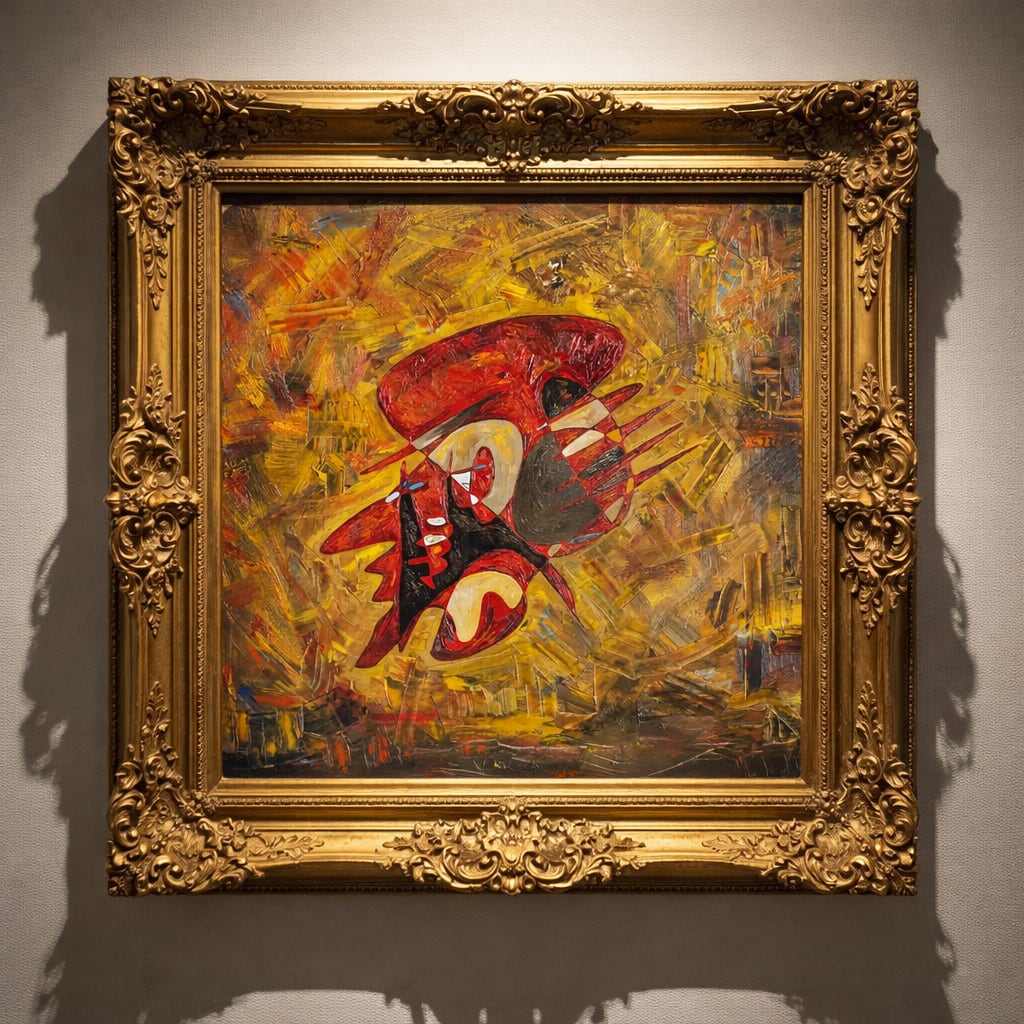
The painting titled Albert Einstein (2017) contains no literal likeness. There is no face, no hair, no chalkboard filled with equations. Instead, the canvas presents an energetic arrangement of biomorphic forms—layered shapes that twist, collide, and unfold within a turbulent field of color.
The subject is present, but not through resemblance.
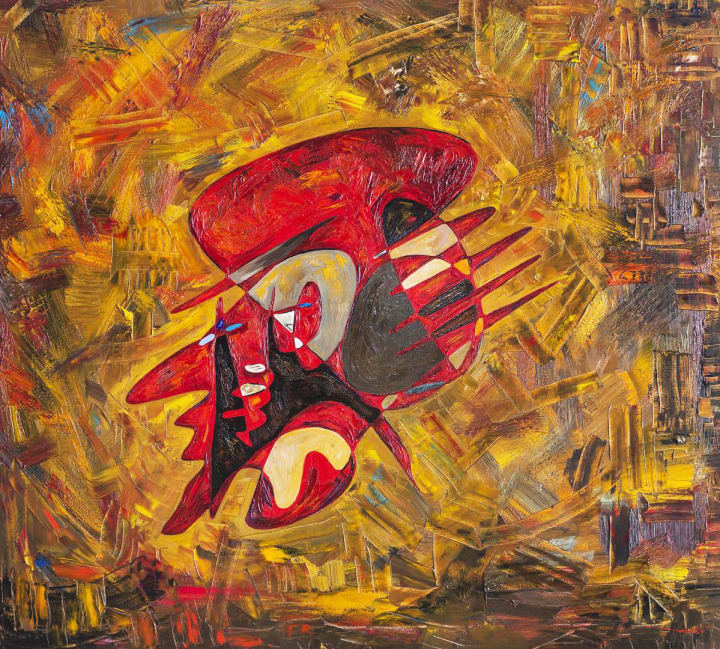
The composition centers on a vivid red structure that appears suspended within a dense environment of yellow, gold, and earth-toned brushwork. The surrounding field feels almost explosive, as if the surface itself were in motion. Textures accumulate in overlapping strokes, producing a sense of velocity and pressure.
The central form, sharp and curved at once, appears both mechanical and organic. It neither represents Einstein nor abandons him entirely. Instead, it operates as a conceptual translation.
Rather than portraying the physicist directly, the painting seems to visualize the idea of intellectual force—thought as movement.
This approach situates the work within a broader lineage of abstraction while maintaining a distinct method. The title anchors the viewer to a specific historical figure, yet the painting resists any straightforward interpretation.
The relationship between the two remains deliberately indirect.
Where a traditional portrait attempts to preserve appearance, this work attempts to capture something less visible: the energy associated with a mind that reshaped the understanding of space, time, and matter.
The painting does not illustrate theory.
It suggests the turbulence of thinking itself.
Very little is known about the Anonymous artist behind the work. No statements accompany the paintings, and no public identity has been attached to them. What remains are the titles and the images—pairs of language and abstraction that must be considered together.
In Albert Einstein (2017), the title introduces one of the most recognizable intellectual figures of the modern era. The painting responds not by describing him, but by building an environment in which the concept of genius becomes visual momentum.
The result is a portrait that avoids likeness entirely.
Yet paradoxically, it may describe its subject more freely than a face ever could.
About the Creator
Thelma Golden
American art curator, the director and chief curator of The Studio Museum in Harlem.
Keep reading
More stories from Thelma Golden and writers in Art and other communities.
The Anonymous Artist Reversing the Order of Abstraction
In an art landscape saturated with gesture, spontaneity, and post-rationalized meaning, a quietly emerging anonymous artist is taking a markedly different approach. His work, rooted in biomorphic abstract expressionism, begins not with form—but with language.
By Thelma Goldenabout 8 hours ago in Art
The Eternal Duel — Baroque vs. Renaissance
ROME — In the hushed silence of San Luigi dei Francesi church, tourists still jostle for position before three canvases that changed Western art forever. They come seeking the *Calling of Saint Matthew*, the masterpiece that Michelangelo Merisi da Caravaggio completed between 1599 and 1600. What they find is not the ethereal spirituality of the High Renaissance, but something far more disturbing: a divine intervention that looks disturbingly like a shakedown in a backroom gambling den.
By Mark Senegal4 days ago in Art
Microsoft's Purposeful Marketing Deception About AI's Ability To Beat Physicians In Diagnosis
When you look at the world of scientific research... If you are not careful... You will be fooled into believing things that are not actually supported by the data.
By Dr. Cody Dakota Wooten, DFM, DHM, DAS (hc)7 days ago in Longevity


Comments
There are no comments for this story
Be the first to respond and start the conversation.