

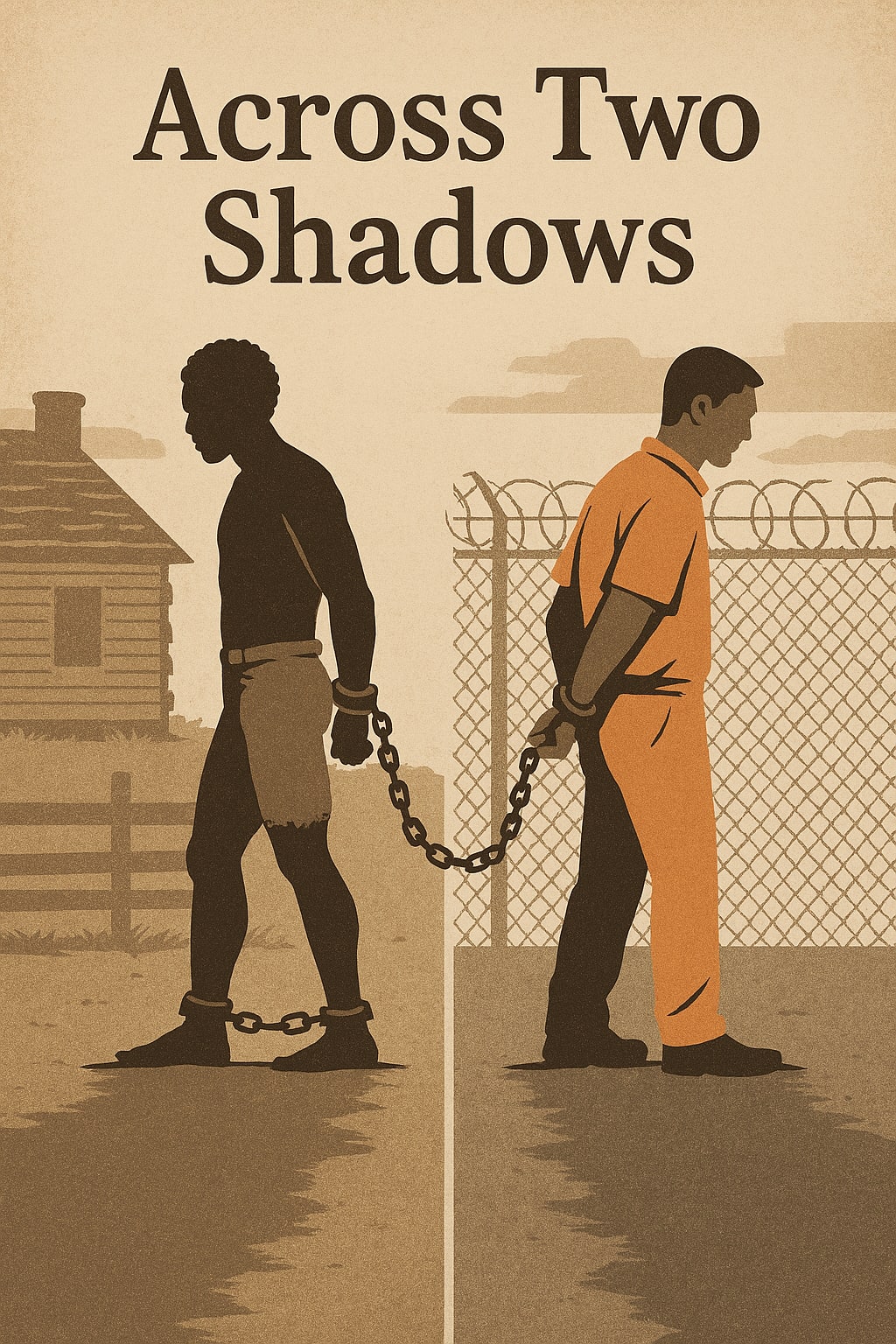
Comparing historical slavery in the United States with contemporary ICE (Immigration and Customs Enforcement) detention requires a careful, principle-based approach. While these phenomena occur in different historical, legal, and social contexts, certain analytical dimensions allow structured comparison.
1. Historical Context and Legal Status
Slavery: In the United States (1619–1865), slavery was a legally sanctioned institution in which individuals were treated as property. Enslaved people had no legal personhood, could not enter contracts, were subject to forced labor, and were denied fundamental civil rights. Children of enslaved individuals were automatically enslaved.

2. Conditions of Confinement
Slavery: Enslaved individuals faced involuntary labor, physical punishment, sexual exploitation, family separation, and restricted movement. Conditions were sustained over lifetimes, often across generations.

3. Duration and Permanence
Slavery: Systematically lifelong, with legal and social enforcement ensuring permanence and generational entrenchment.
ICE Detention: Time-limited and case-dependent; many detainees experience days to years in confinement, but freedom can be regained through legal or administrative processes.
4. Labor and Economic Exploitation
Slavery: Centralized around forced labor serving private owners’ economic interests; enslaved labor generated wealth for slaveholders without consent or compensation.
ICE Detention: Labor within detention facilities is often minimal, sometimes involving detainee work for small stipends; the purpose is not economic exploitation at magnitude equivalent to historical slavery. Critics highlight forced or coercive labor conditions, but the scale and systemic economic extraction differs greatly.

5. Racial and Identity Dynamics
Slavery: Deeply racialized, justified by pseudoscientific ideologies of racial hierarchy.
ICE Detention: Modern detention disproportionately affects Latinx and non-citizen populations. Racial and national origin dynamics influence policy and enforcement, though legally framed in terms of immigration law rather than racial property ownership.
6. Ethical and Human Rights Considerations
Both systems raise profound moral questions about coercion, confinement, and the denial of liberty.
ICE detention is legally regulated, whereas slavery was legally sanctioned yet morally egregious, violating natural human rights principles even by contemporaneous enlightenment standards.
Critiques of ICE detention often invoke comparisons to slavery in metaphorical or rhetorical contexts to highlight systemic abuse and dehumanization, emphasizing the continuum of forced confinement and human suffering.

Concluding Observations
While there are analogical elements—loss of liberty, restricted autonomy, family disruption, vulnerability to abuse—historical slavery and ICE detention are distinct in terms of legality, permanence, economic exploitation, and racial codification. The comparison is ethically provocative and useful for highlighting human rights concerns but must be analytically precise to avoid collapsing different social, historical, and legal regimes into a false equivalence.
About the Creator
Organic Products
I was born and raised in Chicago but lived all over the Midwest. I am health, safety, and Environmental personnel at the shipyard. PLEASE SUBSCRIBE to my vocal and check out my store
Keep reading
More stories from Organic Products and writers in Chapters and other communities.
Why Florida’s State Flag Is the Confederate Battle Flag
A visual explainer and historical analysis arguing that Florida’s saltire design—added in 1900—duplicates the Confederate battle emblem in both form and purpose, embedding Lost Cause politics into the state’s most visible symbol.
By Organic Products 11 days ago in Chapters
Kia Ford: The Hammer Girl's English Premiere Production
With Igor, managing Lily White through the treacherous tricky trees issue, Kia Ford pondered the buzz factor surrounding her professional standing stating, ‘only goal difference separates the hammer girl from the safe zone’.
By Marc OBrien2 days ago in Chapters
A System That Isn’t Working Challenge Winners
Systems promise order. They organize behavior, distribute opportunity, and suggest that if everyone follows the rules, things will work. The entries in A System That Isn’t Working look closely at what happens when that promise begins to slip.
By Vocal Curation Team6 days ago in Resources




Comments
There are no comments for this story
Be the first to respond and start the conversation.