
Japan Plans to Build the World’s Tallest Wooden Skyscraper
A bold vision in Tokyo aims to combine traditional timber construction with modern sustainable engineering

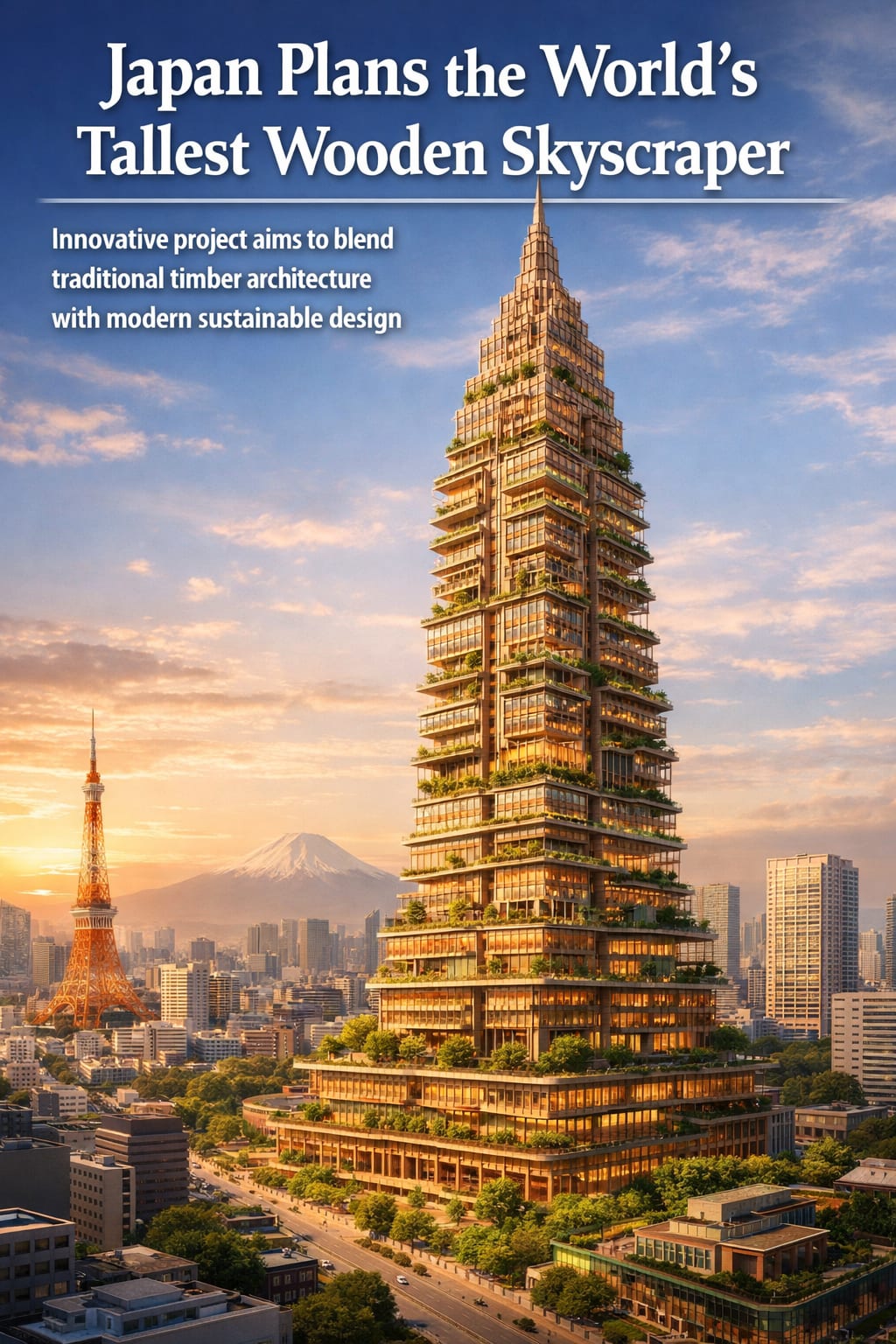
In an era when cities around the world are searching for sustainable solutions to reduce carbon emissions, Japan has proposed an extraordinary architectural project: building the world’s tallest wooden skyscraper. The ambitious plan, introduced by the Japanese company Sumitomo Forestry, aims to transform the skyline of Tokyo while showcasing the potential of timber as a modern construction material.
The proposed building, often referred to as the W350 Project, is expected to reach an impressive height of about 350 meters (1,148 feet). If completed as planned, it will become the tallest wooden structure ever built. The project was originally announced to mark the 350th anniversary of Sumitomo Forestry, and it reflects the company’s long-standing connection with Japan’s forestry and timber industries.
Unlike traditional skyscrapers made primarily from steel and concrete, this tower will rely heavily on wood. According to the developers, around 90 percent of the building’s structure will be made from timber, while the remaining portion will consist of steel reinforcements to ensure stability and earthquake resistance. Japan is well known for its seismic activity, so designing a tall wooden structure that can withstand earthquakes is one of the biggest challenges engineers must overcome.
However, Japan also has centuries of experience with wooden architecture. Historic temples and shrines across the country demonstrate the durability and resilience of timber buildings. For example, ancient wooden structures in cities such as Kyoto and Nara have survived for hundreds of years. By combining this traditional knowledge with modern engineering technologies, architects believe they can create a skyscraper that is both safe and environmentally friendly.
One of the main motivations behind the project is sustainability. The construction industry is responsible for a significant portion of global carbon emissions, particularly because of the production of cement and steel. Wood, on the other hand, is a renewable resource that can store carbon rather than release it. By using timber as the primary building material, the developers hope to reduce the environmental impact of large-scale construction projects.
The design of the tower will also incorporate green spaces and natural elements. The building’s exterior is planned to include balconies covered with plants and trees, creating a vertical forest effect. These green terraces will not only enhance the building’s appearance but also help improve air quality and provide residents with access to nature within the urban environment.
Inside, the skyscraper is expected to serve multiple purposes. The structure will likely include residential apartments, office spaces, retail areas, and possibly hotels. The goal is to create a mixed-use building that supports a vibrant urban community. Wide balconies and open spaces will allow natural light and fresh air to circulate throughout the structure, making it more comfortable and energy efficient.
Another benefit of the project is its potential impact on Japan’s forestry sector. The country has vast forest resources, but many of them are underused. Large-scale timber construction projects could encourage sustainable forest management and provide economic opportunities in rural areas where forestry is a major industry.
Despite its exciting potential, the project also faces several challenges. The estimated cost of the building is extremely high—reportedly several billion dollars—making it much more expensive than conventional skyscrapers. In addition, strict safety regulations must be met to ensure that the building can withstand earthquakes, fires, and strong winds.
Fire safety is a particularly important concern when working with wood. However, modern construction techniques have significantly improved the fire resistance of timber buildings. Engineered wood products, such as cross-laminated timber, can maintain structural strength even under extreme conditions. In many cases, thick wooden beams burn slowly and predictably, allowing time for evacuation and firefighting efforts.
Experts believe that projects like this could inspire a new era of sustainable architecture. Around the world, architects and engineers are increasingly exploring the use of timber in high-rise construction. Several wooden towers have already been built in countries such as Canada and Norway, though none come close to the scale of the proposed Tokyo skyscraper.
If the project moves forward successfully, it could redefine how cities approach construction in the future. Instead of relying entirely on concrete and steel, urban planners may begin to incorporate more natural materials into their designs.
Japan’s plan to build the world’s tallest wooden skyscraper represents more than just an architectural milestone. It symbolizes a shift toward environmentally responsible design and a renewed appreciation for natural materials. By blending traditional craftsmanship with cutting-edge technology, this visionary project could shape the future of sustainable cities around the globe. 🌏🏗️🌿
About the Creator
Irshad Abbasi
Ali ibn Abi Talib (RA) said 📚
“Knowledge is better than wealth, because knowledge protects you, while you have to protect wealth.
Keep reading
More stories from Irshad Abbasi and writers in Chapters and other communities.
Italy’s Rare Bitter Honey
In the world of honey, sweetness is usually the defining feature. Yet in certain remote corners of Italy, beekeepers harvest a rare honey that defies expectations. Instead of sweetness, it carries a distinct bitterness — a flavor that has intrigued scientists, chefs, and health enthusiasts alike. Known as bitter honey, this unusual product is produced primarily on the Italian island of Sardinia, where it has been valued for centuries not just as food, but as a natural medicine believed to promote longevity.
By Irshad Abbasi about 17 hours ago in Chapters
How Transparency and Honesty Drive Sustainable Financial Success
Financial success depends on more than profitability or growth metrics. It is deeply influenced by the principles guiding an organization’s decisions, communication, and long-term strategy. Transparency and honesty are not simply ethical ideals; they are strategic drivers of sustainable performance that strengthen stakeholder trust, reduce risk, and improve organizational resilience.
By Michael Christopher Venturino8 days ago in Chapters


Comments
There are no comments for this story
Be the first to respond and start the conversation.