
Left o Die
The Shocking story of Chante Mallard, abd the man in her windshield

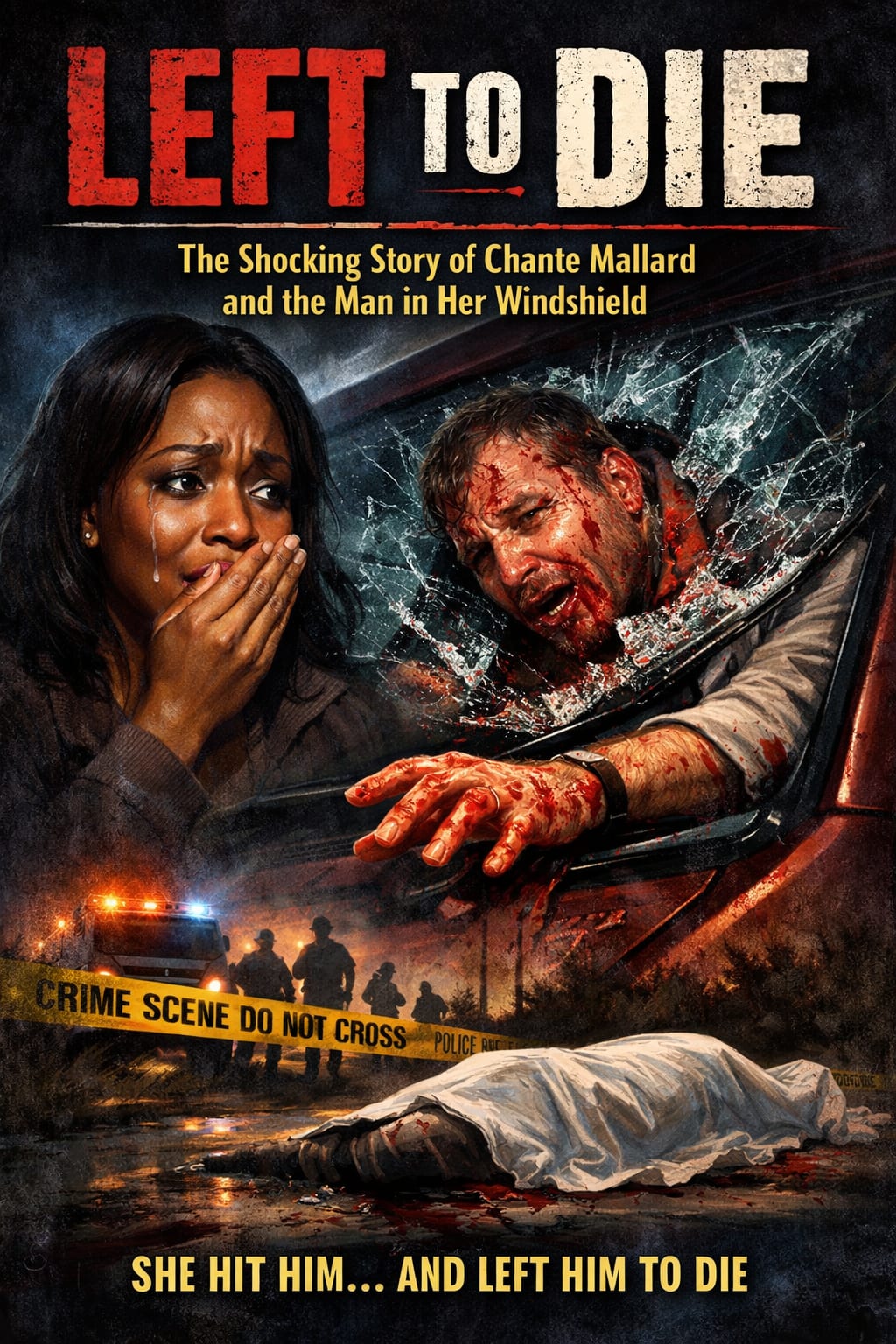
The Shocking Story of Chante Mallard and Gregory Glenn Biggs
In the early hours of October 26, 2001, in Fort Worth, Texas, a horrifying event unfolded that would shock the nation, inspire a film, and forever haunt the families involved. This is the story of Chante Jawan Mallard, a young woman whose choices on that night led to the death of 37-year-old Gregory Glenn Biggs, a man who could have survived if someone had simply called for help. The tragedy is as much a tale of moral failure as it is of human vulnerability, a cautionary story about fear, panic, and the consequences of inaction.
The Night Before: Drugs, Drinks, and Decisions
Chante Mallard, then 25 years old, had spent the night out with friends. By all accounts, she had been drinking alcohol, smoking marijuana, and taking ecstasy. Witnesses at the time described her as alert yet visibly intoxicated. Mallard had worked as a nursing aide, a position that would normally require at least some understanding of basic first aid, yet the choices she made would contradict every lesson she had learned about caring for others.
The atmosphere of the night was typical of youthful recklessness, but the ingredients for tragedy were already in place: impaired judgment, overconfidence behind the wheel, and the city streets of Fort Worth waiting to become the stage for one of the most disturbing hit-and-run cases in modern history.
3:00 a.m.: The Collision
Shortly after 3 a.m., Mallard drove her Chevrolet Cavalier along a six-lane highway southeast of downtown Fort Worth. Walking along the roadside was Gregory Biggs, a homeless man trying to navigate his way through the dark. At that moment, the paths of two lives collided in the most literal and horrifying way.
Mallard struck Biggs with such force that his body became lodged in the windshield. His head and torso were trapped inside the broken glass, while his legs bent awkwardly over the hood. The impact was instantaneous, violent, and life-threatening. Biggs was conscious, struggling, and bleeding, but instead of stopping and calling for help, Mallard made the fateful decision to continue driving, carrying a living, critically injured man in her windshield.
Driving Home: A Mile of Horror
For roughly one mile, Mallard drove with Biggs trapped in the windshield. Inside the car, the sound of broken glass and his moaning punctuated the ride. It is impossible to imagine the terror he must have felt — lodged and exposed, aware of the bleeding and trauma he had suffered, and dependent entirely on the choices of the person responsible for the collision.
Mallard herself would later testify, or through her defense, suggest she was panicked and terrified of the consequences of being caught driving drunk. Still, a person with basic human empathy might have considered calling 911, seeking medical aid, or at the very least, alerting passersby. Mallard did none of these.
The Garage: Hours of Inaction
Arriving at her home, Mallard parked the Cavalier inside her garage and closed the door, effectively trapping Biggs inside. For hours, he remained alive yet suffering, pinned in the windshield with no medical attention forthcoming. Friends who later testified indicated that she went back and forth to the garage, crying, apologizing, and checking on him, but never sought help.
Experts later testified that Biggs could have survived the accident if he had received timely medical intervention. The forensic evidence, including blood patterns and the extent of his injuries, indicated that his death resulted not from the initial impact but from blood loss, trauma, and the prolonged lack of aid.
Enlisting Help to Conceal the Crime
By the morning hours, panic evolved into calculated concealment. Mallard called her former boyfriend, Clete Deneal Jackson, and showed him the body. Jackson, in shock, contacted his cousin Herbert Tyrone Cleveland. Together, they made a horrific decision: to remove Biggs from the garage and dump him in Cobb Park, a nearby public area, in an attempt to disguise the crime as a hit-and-run.
In addition to disposing of the body, Mallard and her accomplices burned parts of the car’s interior to destroy evidence. They were no longer acting out of fear or panic; they were acting deliberately, choosing to obstruct justice and conceal the crime.
October 27, 2001: Discovery of the Body
Around 9:30 a.m. the next day, an off-duty firefighter discovered a body in Cobb Park. Emergency responders arrived to find a man whose body bore the devastating effects of both the collision and the prolonged neglect he endured in Mallard’s garage. Shattered glass, contorted limbs, and evidence of internal trauma painted a grim picture.
Identification revealed the victim as Gregory Glenn Biggs, a 37-year-old man who had worked as a bricklayer and lived a transient life. Friends and family described Biggs as kind and hardworking, someone trying to survive despite the difficulties of homelessness.
Months Without Leads
Despite the unusual circumstances — a man literally stuck in a windshield — the investigation initially went cold. For months, there was no evidence linking the vehicle or Mallard to the death. Her Chevrolet Cavalier, parked in her garage with blood evidence inside, remained undiscovered. The case could have remained unsolved, with Biggs’ death classified as a tragic accident, if not for an eventual tip.
February 2002: A Tip Breaks the Case
Months after the incident, a party attendee reported hearing Mallard brag about hitting a man with her car, driving him home, and leaving him in her garage. This anonymous tip prompted police to investigate her home.
Upon entering the garage, detectives found the bloodstained Cavalier, remnants of shattered glass, and other evidence linking Mallard to Biggs’ death. Car seats had been burned in the backyard, and traces of Biggs’ hair were found in the vehicle. This evidence became critical in proving Mallard’s culpability.
March 2002: Arrest and Charges
Chante Mallard was arrested on February 26, 2002 on charges initially related to failing to render aid. After reviewing medical and forensic evidence, prosecutors elevated the charges to murder and tampering with evidence.
Her former boyfriend Jackson and cousin Cleveland cooperated with authorities, pleading guilty to evidence tampering in exchange for testifying against Mallard. Their testimony painted a chilling portrait of her inaction and subsequent attempts to cover up the crime.
June 2003: Trial and Conviction
Mallard’s trial began in June 2003, drawing national attention for its shocking details. Witnesses testified that Biggs likely survived for hours after the crash and that Mallard’s failure to call for help directly contributed to his death.
The jury deliberated for less than an hour before finding Mallard guilty of murder and evidence tampering. She was sentenced to 50 years in prison, with concurrent time for evidence tampering, and is eligible for parole after serving roughly half of her sentence, potentially around 2027.
Gregory Biggs: A Life Lost
The victim, Gregory Biggs, was not simply a statistic in a true crime story. He was a father, a friend, and a man working to survive under difficult circumstances. The contrast between his vulnerability and Mallard’s inaction underscores the moral gravity of the case.
His family suffered profound grief, compounded by the knowledge that his death could have been prevented. His son filed a wrongful death lawsuit, which was settled out of court, a small attempt at justice for a life that ended senselessly.
Cultural and Media Impact
The Mallard case inspired the 2007 movie Stuck, starring Mena Suvari, which dramatized the events and brought the story to a wider audience. It has been referenced in true crime shows and crime documentaries, including episodes of Law & Order and Fargo, emphasizing the public fascination with moral dilemmas and human cruelty.
The story forces reflection on human behavior: How do fear and self-preservation influence decisions? What responsibility does each person have to intervene when another’s life is at risk? For many, the horror lies not only in the crash but in the choices made in the hours afterward.
Lessons and Reflection
The story of Chante Mallard and Gregory Biggs serves as a stark reminder of human responsibility and moral courage. Key takeaways include:
1. Duty to Help: Regardless of fear or legal consequences, one must call for help in a life-threatening situation.
2. The Impact of Drugs and Alcohol: Substance use can impair judgment, but it does not absolve responsibility.
3. Empathy and Moral Courage: The story forces readers to ask themselves what they would do if confronted with a similar choice.
The tragedy also serves as a cautionary tale about societal issues, including homelessness, substance abuse, and the limits of legal deterrence in preventing human negligence.
Conclusion: A Life Stuck, a Moral Crisis
The case of Chante Mallard and Gregory Biggs is more than a crime story; it is a mirror reflecting human flaws, moral choices, and the consequences of inaction. One man’s life ended not solely because of an accident but because of the deliberate choices of those around him. The story has haunted the families, intrigued the nation, and continues to serve as a lesson on morality, empathy, and responsibility.
It is a chilling reminder that tragedy often lies not in what happens to us, but in the decisions of others, and that sometimes, the line between life and death can be as fragile as a windshield.
---
About the Creator
Dakota Denise
Every story I publish is real lived, witnessed, survived, by myself or from others who trusted me to tell the story. Enjoy 😊
Keep reading
More stories from Dakota Denise and writers in Criminal and other communities.
The Shocking Case of Brian Stewart:
The Shocking Case of Brian Stewart: When a Father Injected His Own Son with HIV In 1992, the quiet city of St. Charles County, Missouri, became the backdrop for one of the most chilling and unsettling crimes in modern medical history. Brian Stewart, a trained phlebotomist, used his knowledge and access to medical resources to deliberately harm his infant son. The case is not only a tragic story of parental betrayal but also a cautionary tale about the vulnerabilities inherent in medical access, the motivations that drive horrifying decisions, and the resilience of the human spirit.
By Dakota Denise 6 days ago in Criminal
Nuclear Firestorm
When a modern nuclear weapon explodes, the world inside its blast zone changes in a matter of seconds. The moment the weapon detonates, a blinding flash of light brighter than the sun fills the sky. Temperatures at the center of the explosion can reach millions of degrees, hotter than the surface of the sun. Everything close to the explosion—buildings, trees, vehicles, and living creatures—is instantly vaporized.
By imtiazalam6 days ago in Criminal
The Serial Killer Next Door
The most terrifying truth about serial killers and psychopaths is not that they exist in dramatic fictional forms like Hannibal Lecter or Dexter Morgan, but that they walk among us completely undetected, holding jobs, raising families, attending church services, coaching Little League, and presenting such convincing masks of normalcy that even trained psychologists often fail to identify them until after they have committed horrific crimes. Ted Bundy was described by those who knew him as charming, intelligent, and trustworthy, working at a suicide hotline where he talked people back from the edge while simultaneously planning his next abduction and murder, and Dennis Rader, the BTK Killer, was a church council president and Cub Scout leader who installed security systems for elderly clients while privately fantasizing about binding, torturing, and killing them, and these are not exceptions but rather the rule because successful serial predators are precisely those who have mastered the art of appearing normal, trustworthy, and even admirable to the people around them.
By The Curious Writer4 days ago in Criminal
How machines can learn from human behaviour
In order to understand where we are and where we are going, we need to understand where we were first. - Susan Fourtane Could a human behaviour simulator be embedded into a robot or online avatar to the point that it’s hard to distinguish between a real person or artificial intelligence? Scientists have been upping the stakes in this “Turing test” for years, to the point that human-mimicking programmes are ready to answer tricky questions, assist people with online shopping or be companions.
By Susan Fourtané 2 days ago in Futurism


Comments
There are no comments for this story
Be the first to respond and start the conversation.