

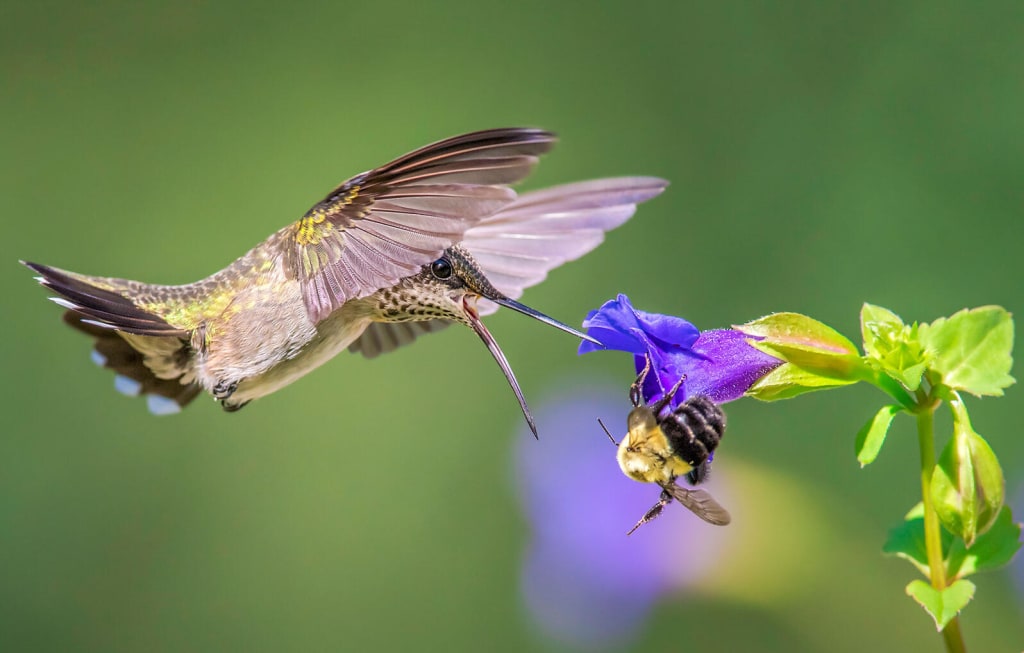
Among the smallest birds on Earth are bee hummingbirds, which are the smallest and lightest. The smallest songbird is the short-tailed pygmy tyrant.
Bee hummingbirds are the smallest birds on Earth. However, they make up for being so tiny because they are great fliers and can beat their wings up to 200 times per second and speed along up to 48 km/h. These birds have slender, pointed bills, letting them extract nectar from small flowers. They can hover above flowers suspended in midair during feeding. Bee hummingbirds belong to the avian lineage of theropod dinosaurs, making them the smallest known dinosaur species still alive.
These birds can be found in the Guanahacabibes Peninsula, Sierra del Rosario, and the Zapata Swamp, as well as other parts of eastern Cuba. They inhabit dense forests and forest edges and have been seen in swamplands and gardens.
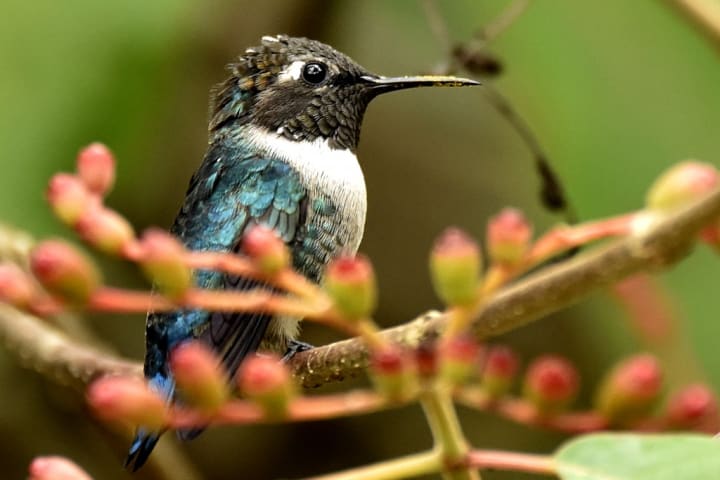
Bumblebee hummingbirds are the second smallest birds on Earth. They are endemic to Mexico. They inhabit pine-oak and evergreen forests, cloud forests, and humid scrub. These birds are known for their rapid, agile hovering with short curved wings and straight needle-like bills that are just right for nectar feeding. Male birds add a splash of color to their forest environments.
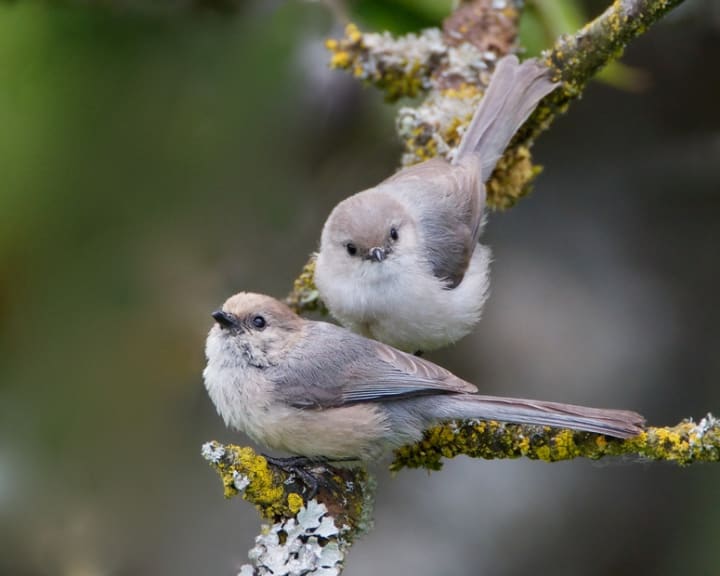
Bushtits are found in the open woodlands and scrub from the western U.S. to Guatemala. They are the smallest passerine birds in North America. They have rounded heads, long tails, and nimble frames as they actively flit through trees and shrubs. They inhabit oak and pine-oak forests, pinyon-juniper woodlands, chaparral, streamside thickets, and even parks and suburbs. These birds are social and move in tight, chattering flocks, making soft calls. Bushtits pick insects from leaves and twigs. They have soft, gray-brown plumage that is like a camouflage.
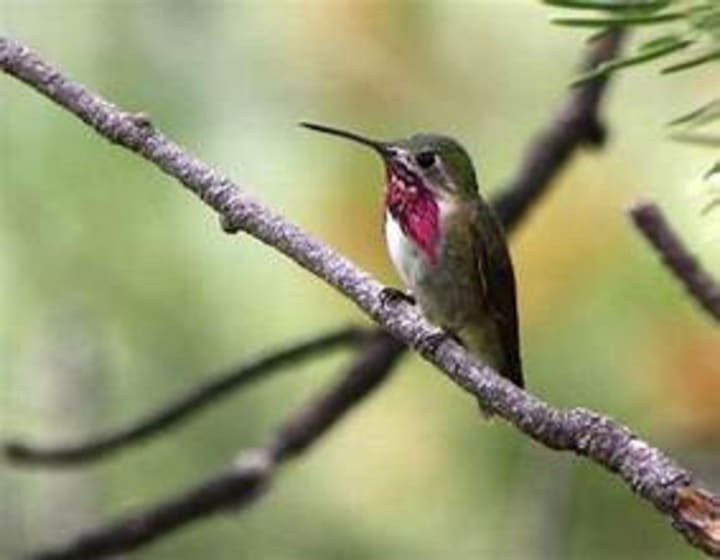
Calliope hummingbirds are the smallest birds in the US and Canada. Their species are found across western North America, from southern British Columbia and Alberta down to California, Colorado, and northern Mexico. The birds inhabit montane forests, regenerated woodlands, and mountain meadows. Calliope hummingbirds winter in the thorn forests and brushy pine-oak woodlands of southwestern Mexico. When it comes to mating during courtship, male birds perform U-shaped dives and shuttle displays while flaring their magenta-striped gorgets and making buzzing sounds with their wings and tail.
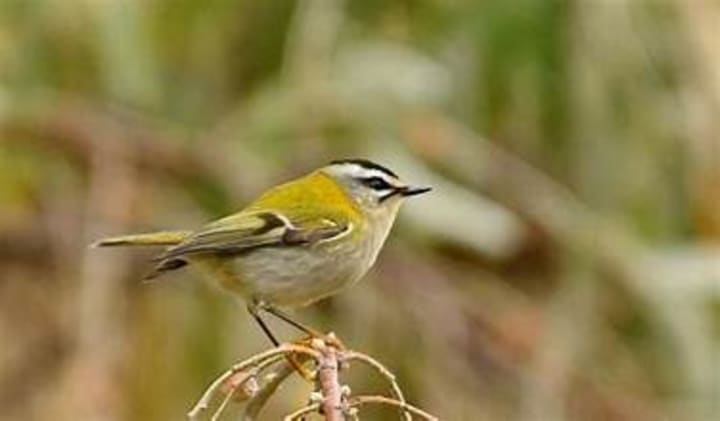
Common firecrests inhabit the broadleaf and mixed forests across Europe and North Africa. They are one of Europe’s tiniest birds. The birds have striking facial patterns with bold white stripes and vivid orange or yellow crowns in males. Common firecrests are agile and energetic, flitting through the canopy searching for insects. The species breeds across much of temperate Europe and into northwestern Africa, favoring broadleaf and mixed woodlands with mature conifers, oaks, and hollies.
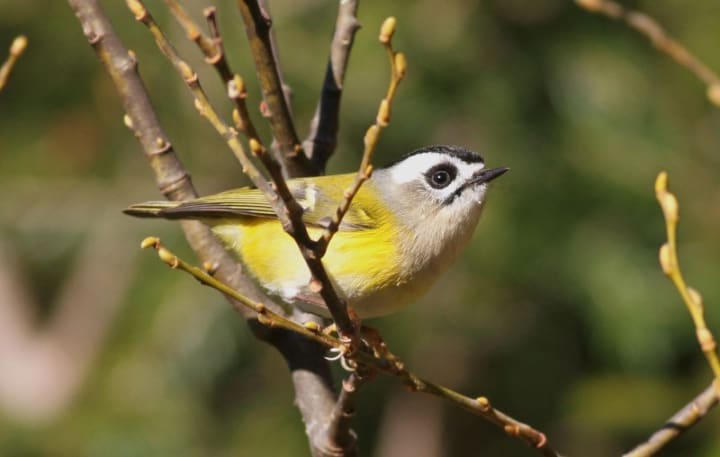
Goldcrests inhabit the boreal and montane coniferous forests across Europe and Asia. These are the smallest birds in Europe with round bodies, tiny bills, and bold yellow crown stripes. They have a distinctive, energetic appearance, flitting through conifer branches looking for insects. Goldcrests may burn up to 20% of their body weight overnight to maintain body temperature, avoiding hypothermia through constant fat metabolism and collective roosting in foliage or snow holes.
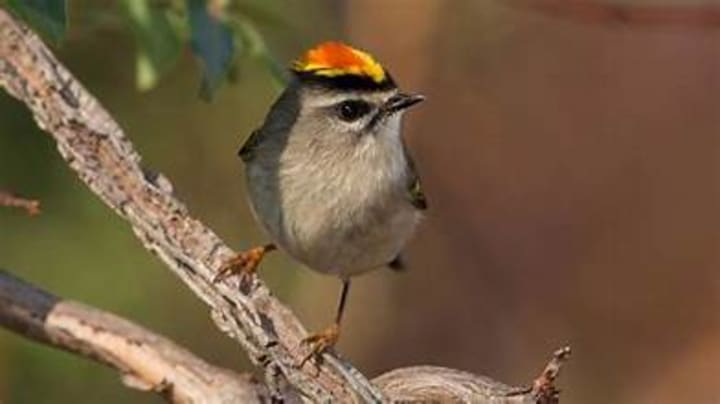
Golden-crowned kinglets inhabit the coniferous and mixed forests across North and Central America. They have fine bills, pale underparts, and striking crown stripes with yellow bordered by black and topped with an orange blaze in males. These birds are agile and energetic, flitting through dense coniferous branches, hovering, and gathering insects from needles and bark. In winter, they inhabit a wide array of coniferous and mixed woodlands, including urban parks and riparian thickets.
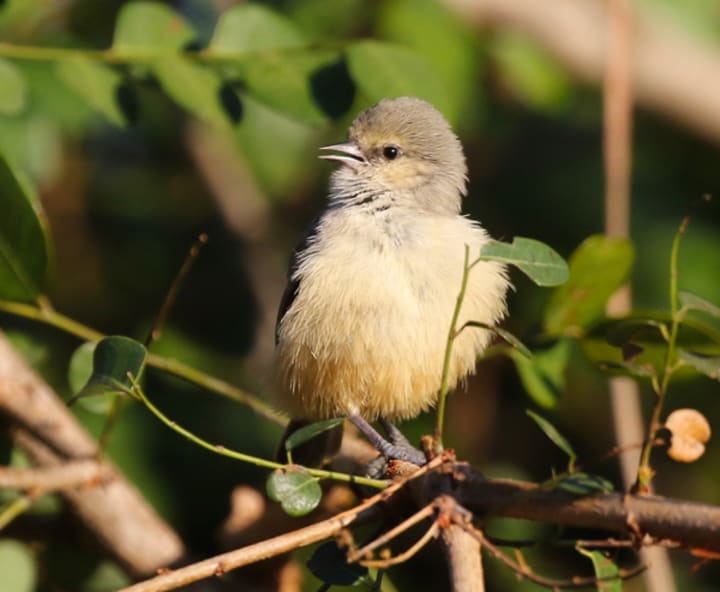
Grey penduline tits inhabit the savannas and dry forests of sub-Saharan Africa. They have compact bodies and sharp bills and make agile movements that are well-suited to foraging among thorny branches and foliage. These birds are well-camouflaged in savannas and dry woodland habitats.
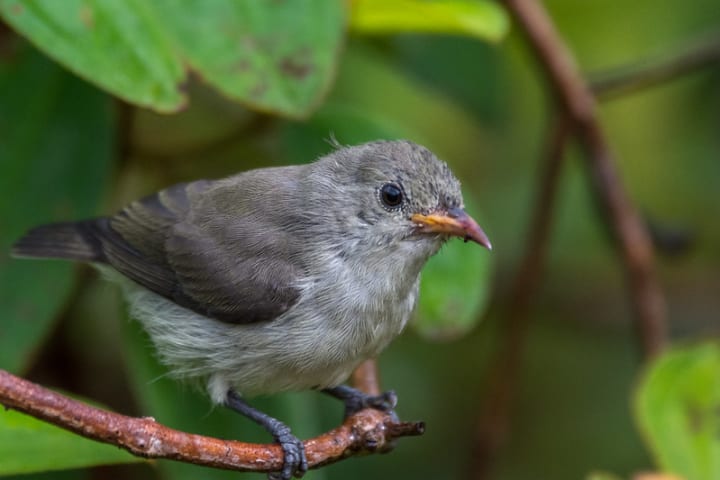
Pale-billed flowerpeckers are found in the Indian Subcontinent—forests, gardens, and fruit-bearing urban trees. These birds have compact, stub-tailed bodies and short, thick bills they use to pierce soft fruits and flowers. They play a crucial ecological role in seed dispersal and pollination by swallowing small fruits whole, especially those of parasitic mistletoes, and quickly excreting the sticky seeds. Depositing them on branches where they may germinate. The birds also pollinate flowers with explosive pollen mechanisms, emerging dusted with pollen as they nip flower tips.
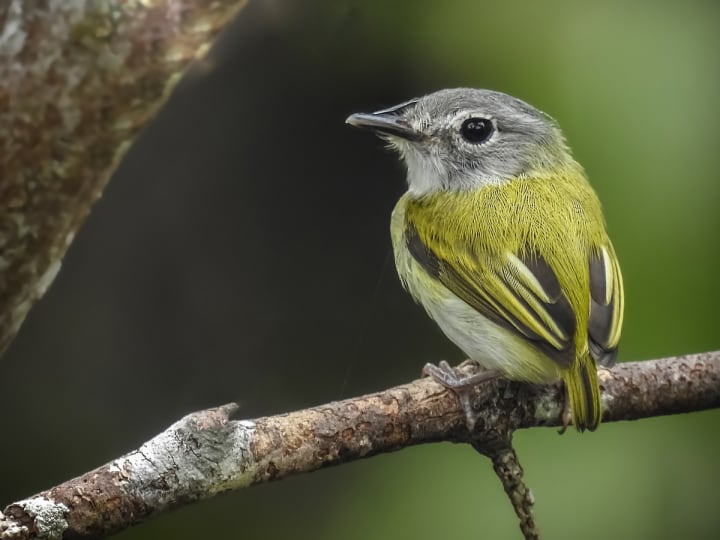
Short-tailed pygmy tyrants are the smallest passerine birds on Earth. These birds fly through treetops alone or in pairs and feed on small insects, which they glean with short, upward flights or brief hovering. They are widely spread across northern and western South America and Trinidad. Short-tailed pygmy tyrants prefer the interior and edges of humid lowland and foothill forests and show a preference for dense canopy and transitional forests. They remain among the smallest and most subtly adapted birds in the Neotropics.
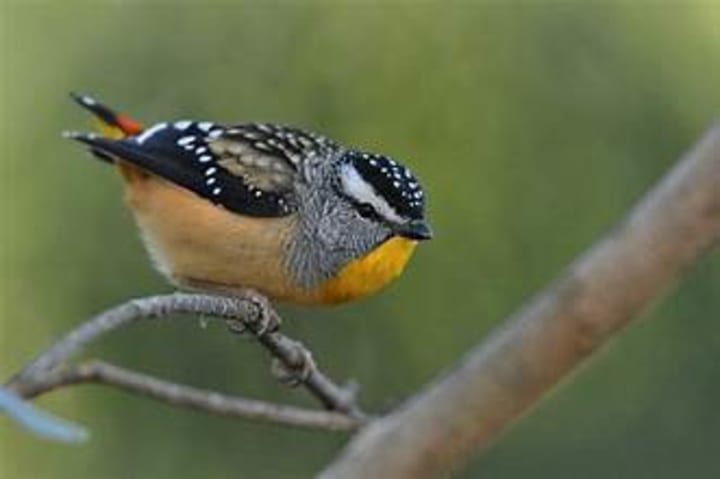
Spotted pardalotes inhabit the forests and woodlands of eastern and southern Australia. They are among the smallest and most visually striking birds in Australia. These birds forage high in the canopy for scale insects and lerps and are agile and deliberate in their movements. They play an important role in controlling the insect population in eucalyptus forests. Spotted pardalotes nest in burrows dug into earth banks or crevices, often in surprising places such as roadside cuttings or garden beds.
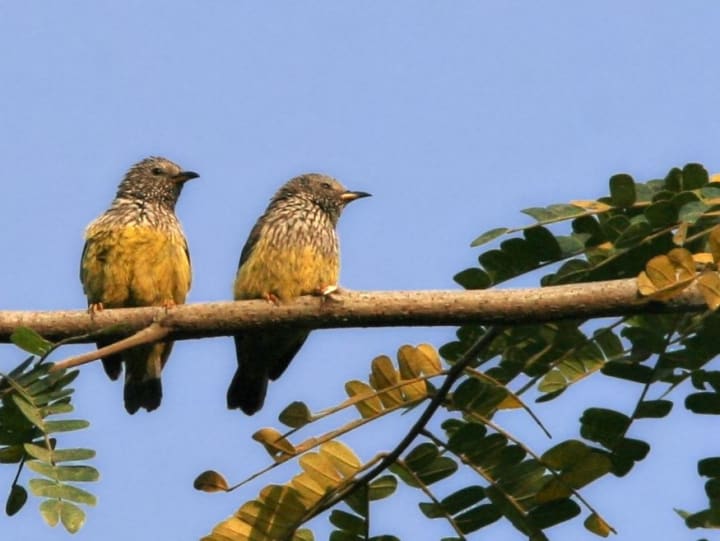
Titi-hylias inhabit the lowland rainforests of West and Central Africa. They have a delicate build, tiny size, and actively forage among leaves and vines. Their movements are quick and fluttery, and tit-hylias are well suited to maneuvering through the dense foliage of tropical rainforests. These birds move in pairs or small family groups. They remain widespread and secure residents of tropical African forests.
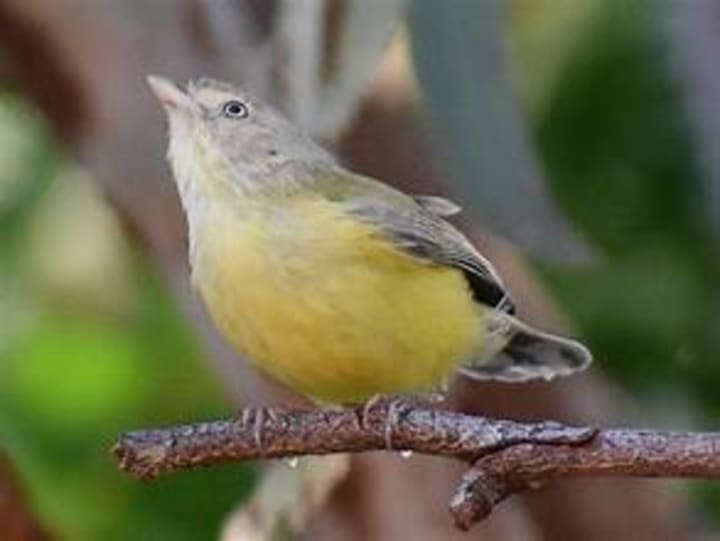
Weebills inhabit the eucalyptus woodlands and forests across mainland Australia. They are the smallest birds in Australia but are quick and agile as they move through the canopy looking for food. They are named for their tiny, stubby bills, which are well-suited to picking up insects and larvae from eucalyptus leaves and twigs. Weebills can be heard making high-pitched calls. The species is known to form loose associations with other small insectivorous birds such as thornbills and pardalotes.
About the Creator
Rasma Raisters
My passions are writing and creating poetry. I write for several sites online and have four themed blogs on Wordpress. Please follow me on Twitter.
Keep reading
More stories from Rasma Raisters and writers in Earth and other communities.
The Star That Keeps Dimming for No Known Reason
In 2015, astronomers analyzing data from NASA's Kepler Space Telescope discovered a star designated KIC 8462852, located about 1,470 light-years from Earth in the constellation Cygnus, that was exhibiting brightness fluctuations unlike anything that had been observed in over 150,000 stars surveyed by the Kepler mission, and the pattern of dimming was so unusual and irregular that it could not be explained by any known natural phenomena including planets orbiting the star, stellar pulsations, or dust clouds, leading some scientists to seriously propose that the dimming might be caused by artificial structures built by an advanced alien civilization, specifically something like a Dyson swarm of solar collectors orbiting the star to harvest its energy, though this explanation while exciting was considered a hypothesis of last resort only to be entertained after all natural explanations had been exhaustively ruled out. The star, which became known informally as Tabby's Star after astronomer Tabetha Boyajian who led the research team studying it, showed dimming events where its brightness dropped by up to 22 percent, far more than could be explained by a planet passing in front of it, which typically causes dimming of only a fraction of a percent, and the dimming events were irregular and aperiodic, meaning they did not repeat on any predictable schedule, and different dimming events had different characteristics with some showing gradual dimming over days and others showing more sudden brightness drops.
By The Curious Writer6 days ago in Earth
How to Determine If Your Biochar is High Quality: A Guide to the Key Indicators
Biochar production is surging in popularity, driven by its applications in agriculture, carbon sequestration, and industrial filtration. However, not all biochar is created equal. If you have just pulled a batch from your kiln or received a shipment from a supplier, how can you tell if it is actually high quality?
By Bestonpyrolysis6 days ago in Earth
We Will Bury You
How do you deal with the vast disappointment and anger and rage and grief and rage and RAGE and RAGE and RAGE when a community icon, who did so much to help your gente, is found to be the type of monster that still makes me believe in capital punishment?
By Ariana GonBonabout 22 hours ago in Humans



Comments
There are no comments for this story
Be the first to respond and start the conversation.