
Tata’s Lesson
A Life Shaped by Who Remains When It Matters Most

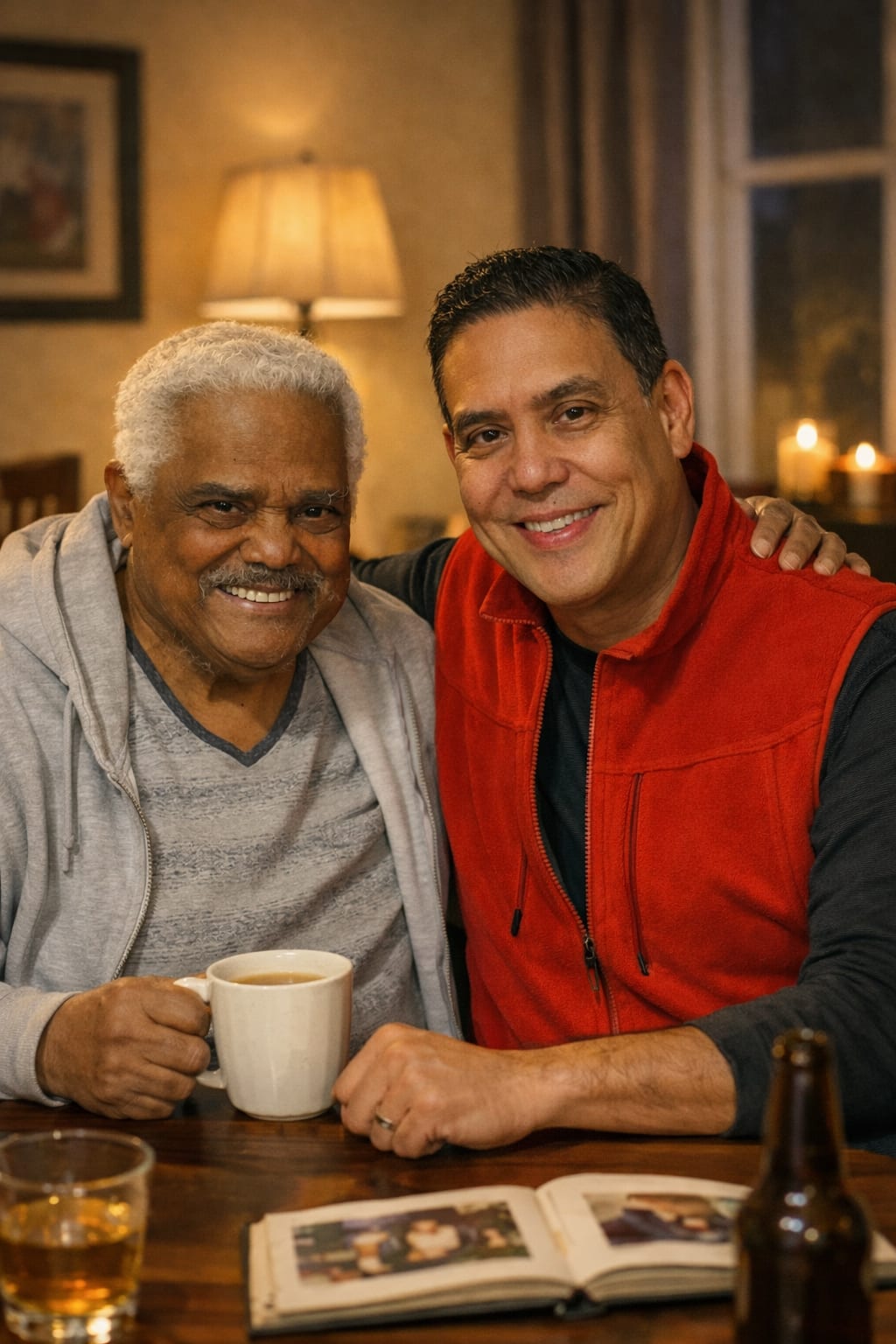
Anthony learned early to watch what people did, not what they said.
He was a young man when his older brother Andy—whom he had called Tata for as long as anyone could remember—told him a story that would quietly shape the rest of his life. Their parents liked to say that “Tata” had been Anthony’s first word, spoken with a kind of certainty that made it feel less like a nickname and more like a title. It stuck, not just because it was said, but because it fit. Tata was who Andy had always been to him—protector, teacher, and, in ways Anthony wouldn’t fully understand until much later, a quiet map for how to move through the world.
They were sitting in a restaurant enjoying a joyful ethnic meal, with the city humming around them in that steady, indifferent way. Tata didn’t dramatize the story. He never did. He just laid it out, piece by piece, like something obvious.
He talked about the years when his apartment was always full. People stopping by unannounced, laughter spilling into the hallway, and every excuse becoming a reason to gather. There were always extra chairs, always another plate on the table. Back then, it seemed like the door never closed.
Then his wife got sick.
Initially, people visited with gentle voices and shorter stays. Then they came less frequently. Eventually, not at all. The same people who once had every reason to be there began to find reasons not to come. The chairs remained in place, but they gathered dust instead of stories.
Anthony had asked why.
Tata gave a small shrug, his eyes not angry, just certain. “Some people only show up when it feels good to be there,” he said. “You learn who notices when it doesn’t.”
That was everything. No speech, no warning. Just something hanging in the air, waiting to be understood.
As Anthony grew older, that understanding didn’t come all at once. It developed slowly through repetition and small moments that were either aligned or not. In school, he helped classmates when they asked, but he paid attention to what followed. If help was treated as an endless resource, it would become harder to find. If it was met with effort, acknowledgment, and some return of energy, he stayed.
People noticed, though not always in the same manner.
Some said he was reliable. Others said he was reserved. A few decided he was something even worse.
Over time, the pattern became sharper. Anthony’s apartment wasn’t the kind of place where crowds drifted in and out. But there were always a few people who seemed to belong there as much as he did. They didn’t need invitations. They brought food when the fridge was empty, stayed late without being asked, and left the place better than they found it. Conversations didn’t revolve around who needed what; they moved in both directions, naturally, without calculation.
Outside that circle, things looked different. Some people appeared when they needed notes, connections, or introductions. Their timing was precise, almost instinctive. When Anthony responded once but not again, the tone shifted.
“You’ve changed,” one of them told him after he declined to help on short notice for the third time.
Anthony didn’t argue. He had learned that explanations often sounded like accusations to those who weren’t listening for them. Instead, he nodded, wished them well, and went back to the people who had been there long before anything was needed.
What made the contrast confusing to others was that Anthony could be incredibly generous. The difference was in where that generosity was directed.
When his friend Miguel was struggling to find work, Anthony spent weeks helping him refine his approach, making calls and opening doors that had taken years to build. When Elena went through a difficult breakup that unraveled more than just her relationship, Anthony showed up in ways that didn’t require words—handling errands, creating space, and staying present without trying to fix what couldn’t be fixed quickly.
Those moments weren’t widely recognized. They didn’t spread through the larger circle of acquaintances who interacted with Anthony in shorter, more transactional encounters.
What people noticed were the refusals. The messages left unanswered. The way he appeared to step back just as others leaned in. It was simpler to interpret absence than to analyze what came before it.
As he reached middle age, Anthony’s life became both intentional and misunderstood. Some people he knew had large social circles, busy calendars filled with events, and phones that constantly buzzed. Yet they often discussed exhaustion, feeling pulled in many directions, and relationships that seemed to fall apart under pressure.
Anthony observed quietly.
He saw it clearly at a friend’s business launch—a crowded room, loud congratulations, promises of support. Months later, when the business struggled, the room emptied. The same voices that once celebrated found elsewhere to be.
Anthony was present at both moments.
Not out of obligation, but out of recognition.
His own circle stayed small, but it grew deeper over time. These were people who had stayed together through disagreements, failures, and long stretches where the only thing to gain was each other’s company. They remembered details that didn’t serve a purpose beyond showing they cared. Opportunities came through them—not as favors to be repaid, but as natural extensions of trust built over years.
When Anthony faced his own challenges—a time when progress felt uncertain—those same people didn’t disappear. They adjusted, leaned in closer, and made space without being asked.
One evening, sitting at a familiar table with them, Anthony found himself thinking about Tata. About the way that story had been told without instruction, without emphasis, as if it were something too obvious to underline.
He understood it now, not as something spoken, but as something lived.
Across the table, one of his cherished friends raised a glass, not for any special occasion, just because they were all there. The others followed, a simple, unremarkable gesture that carried more significance than any crowded room ever had.
Anthony had fewer people in his life than many he knew. That part was undeniable.
But when things became tough, when the mood changed and the easy moments turned into harder ones, the seats around him stayed filled.
And he never had to wonder why.
About the Creator
Anthony Chan
Chan Economics LLC, Public Speaker
Chief Global Economist & Public Speaker JPM Chase ('94-'19).
Senior Economist Barclays ('91-'94)
Economist, NY Federal Reserve ('89-'91)
Econ. Prof. (Univ. of Dayton, '86-'89)
Ph.D. Economics
Keep reading
More stories from Anthony Chan and writers in Fiction and other communities.
Fleeting Leaves
Autumn leaves drift down, Beauty fades as time rushes Life, too, feels so brief.
By Anthony ChanExclusive • 6 months ago
Lap Cat
My nose is dripping, and Delia is tracing her fingers through my hair. Her husband is shirtless by the microwave, heating up leftovers from New Year's Eve. In 60 seconds, I'll be shoving mouthfuls of risotto between my quivering lips like a child and picking at semi-stale dinner rolls. Then, I'll pass my plate to one of their three Tabby cats (whom I can never tell apart) and let him/her/them (?) lick it clean.
By Erin Latham Sheaabout 23 hours ago in Fiction
L' Avis d'Gwendydd
Gwendydd walked among her orchard, a crown of apple blossoms in her hair. The trees stretched their branches to the spring sun and danced in the breeze. She breathed in their heady perfume as she wandered the dark, tilled earth. The promised harvest loomed pleasantly in her thoughts, and the cares of the world were far beyond her concern.
By M. A. Mehan 8 days ago in Fiction


Comments
There are no comments for this story
Be the first to respond and start the conversation.