
Luxury Cosmetics Market Trends: Sustainable Luxury Beauty, Eco-Friendly Packaging & Industry Outlook to 2034
Increasing consumer focus on sustainable luxury, cruelty-free formulations, and eco-friendly packaging is encouraging premium beauty brands to transform strategies across the luxury cosmetics market.

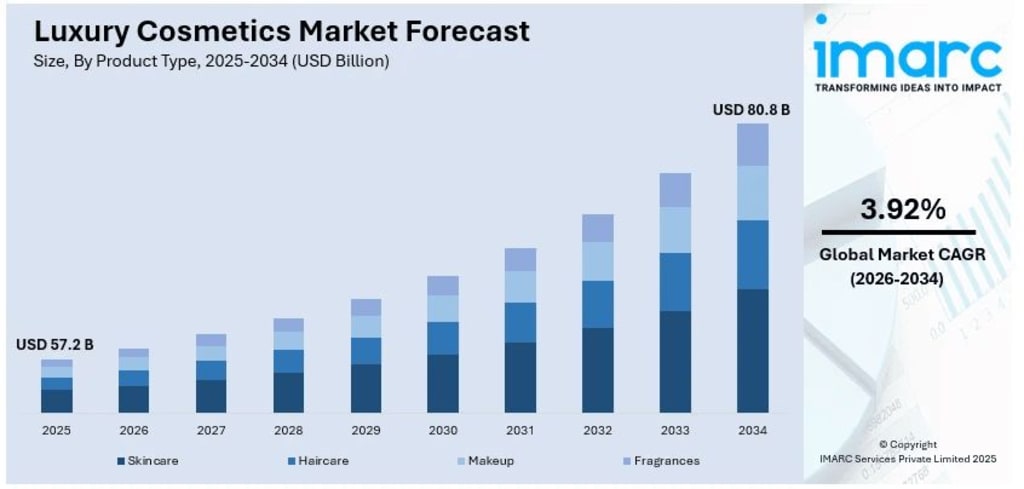
Increasing global disposable income, a growing emphasis on self-care, and the surging influence of social media trends are driving the demand for luxury cosmetics, supported by premium product innovations, clean-label formulations, and a shift toward personalized beauty experiences. According to IMARC Group’s latest data, the global luxury cosmetics market size was valued at USD 57.2 Billion in 2025. Looking forward, IMARC Group estimates the market to reach USD 80.8 Billion by 2034, exhibiting a CAGR of 3.92% from 2026-2034. Europe currently dominates the market, holding a market share of over 38.5% in 2025.
Luxury cosmetics now represent a sophisticated global sector where prestige and efficacy meet, characterized by high-performance ingredients and exclusive branding. Demand is driven by a consumer base that increasingly views high-end skincare, makeup, and fragrances as essential components of a holistic lifestyle rather than mere indulgences. Innovation in biotechnology, the rise of "quiet luxury" in packaging, and the integration of AI-driven skin diagnostics are further accelerating uptake. Key segments include premium skincare, which holds approximately 37.8% of the market, followed by high-end makeup and perfumes, with consumers prioritizing dermatological validation and ethical sourcing.
Luxury Cosmetics Market Growth Drivers:
- Rising Global Disposable Income and Premiumization
Increasing purchasing power across both developed and emerging economies acts as the primary structural driver for luxury beauty. Consumers are increasingly willing to "trade up" from drugstore brands to premium alternatives that offer superior ingredient quality and status. In regions like North America, the prestige beauty sector recently saw a 15% boost in sales, with skincare alone growing significantly. This shift is particularly evident in China, where high-end products are projected to constitute over 50% of the total beauty market by the end of 2025, reflecting a deep-seated consumer preference for quality over quantity.
- Expanding Female Workforce and Self-Care Culture
Women account for roughly 88.9% of the luxury cosmetics market share, a segment bolstered by the rising number of working professionals with higher discretionary spending. Modern consumers view luxury skincare and makeup as vital tools for self-expression and mental well-being. This "faceification" of self-care has led to a surge in demand for advanced serums and anti-aging solutions. For instance, the average consumer in high-spend markets like Australia can spend upwards of USD 3,600 annually on beauty, prioritizing high-performance products that deliver visible, dermatologist-backed results in their daily morning and evening routines.
- Social Media Influence and Digital Discovery
Digital platforms and beauty influencers have fundamentally reshaped how luxury brands reach younger, affluent demographics like Gen Z and Millennials. Social media trends, such as "Get Ready With Me" (GRWM) videos, act as powerful catalysts for impulse luxury purchases. Furthermore, the expansion of specialty stores and e-commerce has made prestige brands more accessible than ever. Specialty and monobrand stores currently lead distribution with a 46.5% market share, offering the personalized consultations and "high-touch" experiences that digital-savvy consumers crave. Brands are leveraging this by launching exclusive online-first collections to capture immediate global attention.
Luxury Cosmetics Market Trends:
- Shift Toward "Metabolic Beauty" and Longevity Science
In 2026, the industry is moving beyond surface-level aesthetics toward "Metabolic Beauty," which integrates health and cellular science. Luxury brands are now focusing on the "skin-mind" connection, utilizing neuroscience to align product claims with scientific research. High-end players like L’Oréal are utilizing AI-powered "Longevity Clouds" to analyze over 260 skin biomarkers, targeting the root causes of aging. This trend sees consumers investing in "liquid microneedling" and spicule-based treatments—marine sponge derivatives—that offer professional-grade results at home. This scientific validation helps justify premium price points in an increasingly discerning global marketplace.
- Sustainability as a Luxury Hallmark
Eco-consciousness is no longer optional; it is a core component of the luxury experience. Brands are prioritizing "Resilient Beauty," which includes climate-resistant formulations and 100% recycled or refillable packaging. Recent data suggests that sustainability now influences over a third of luxury purchase decisions. Leading houses are transitioning to 100% recycled aluminum and glass while eliminating microplastics. This trend is supported by initiatives like the "Circular Economy" models, where luxury brands offer repair or refurbishment for high-end beauty tools and refillable fragrance bottles, appealing to eco-conscious consumers who refuse to compromise on opulence.
- Personalization and High-Tech Beauty Integration
The "Human-Led Beauty Revolution" is merging artisanal craftsmanship with cutting-edge technology. Luxury brands are deploying AI-powered devices, such as 6.5-inch handheld tools, that create personalized on-the-spot skincare formulas based on real-time skin scans. In markets like Saudi Arabia, AI-driven diagnostics are becoming standard, reducing product return rates by 25% to 30% by ensuring a perfect match for the consumer’s skin tone and concerns. This hyper-personalization transforms the buying process into a curated experience, allowing brands to build deeper emotional connections and long-term loyalty through tech-enabled "clienteling" and bespoke product formulations.
Recent News and Developments in Luxury Cosmetics Market
- March 2026: Ulta Beauty announced a significant expansion of its luxury portfolio, reporting a 9.7% increase in annual net sales to $12.4 billion, driven largely by its acquisition of prestige retailer Space NK and new high-end brand launches.
- February 2026: L’Oréal Korea formed a strategic partnership with Naver to integrate advanced AI-driven commerce, aiming to personalize the luxury shopping journey for South Korean consumers through sophisticated data-sharing and virtual try-on tools.
- January 2026: Beiersdorf successfully transitioned its entire European luxury aerosol line to 100% recycled aluminum, marking a major milestone in the industry’s shift toward sustainable, high-end packaging solutions without losing premium aesthetic appeal.
Note: If you require specific details, data, or insights that are not currently included in the scope of this report, we are happy to accommodate your request. As part of our customization service, we will gather and provide the additional information you need, tailored to your specific requirements. Please let us know your exact needs, and we will ensure the report is updated accordingly to meet your expectations.
About the Creator
Andrew Sullivan
Hello, I’m Andrew Sullivan. I have over 9+ years of experience as a market research specialist.
Keep reading
More stories from Andrew Sullivan and writers in Futurism and other communities.
E-Bike Market Trends: Smart Connectivity, Sustainable Transport Adoption & Industry Outlook to 2034
Rising urbanization, increasing traffic congestion, and growing environmental concerns are driving e-bike demand, supported by advancements in battery technology, government incentives, and expanding cycling infrastructure. According to IMARC Group’s latest data, the global e-bike market size was valued at USD 28.1 Billion in 2025. Looking forward, IMARC Group estimates the market to reach USD 48.6 Billion by 2034, exhibiting a CAGR of 6.10% from 2026-2034. Asia Pacific currently dominates the market, holding a market share of over 76.6% in 2025.
By Andrew Sullivanabout 9 hours ago in Futurism
How to Choose the Right Hosting for Your Elementor Website in 2026
Elementor is a WordPress page builder with over 10 million active installations in 2026. It gives website owners full visual control over their page layouts, sections, and design elements. However, no matter how well an Elementor website is designed, its performance depends entirely on the hosting environment running underneath it. The wrong hosting choice produces slow load times, unreliable uptime, and poor Google search rankings that no amount of design optimization can fix.
By Shane Smitha day ago in Futurism
Babbling Dixie
The short form of tomorrow is never the whole story. Abbreviations mean nothing when we are born to die and we all are aren't we? Being spoken for before birth is something we're not supposed to remember like some kind of karma after effect. Still here we are spending our lives looking for each other.
By Canuck Scriber Lisa Lachapelleabout 7 hours ago in Fiction


Comments
There are no comments for this story
Be the first to respond and start the conversation.