
Book Review: "Henry VIII: King and Court" by Alison Weir (Pt.1)
Introduction to Chapter 4

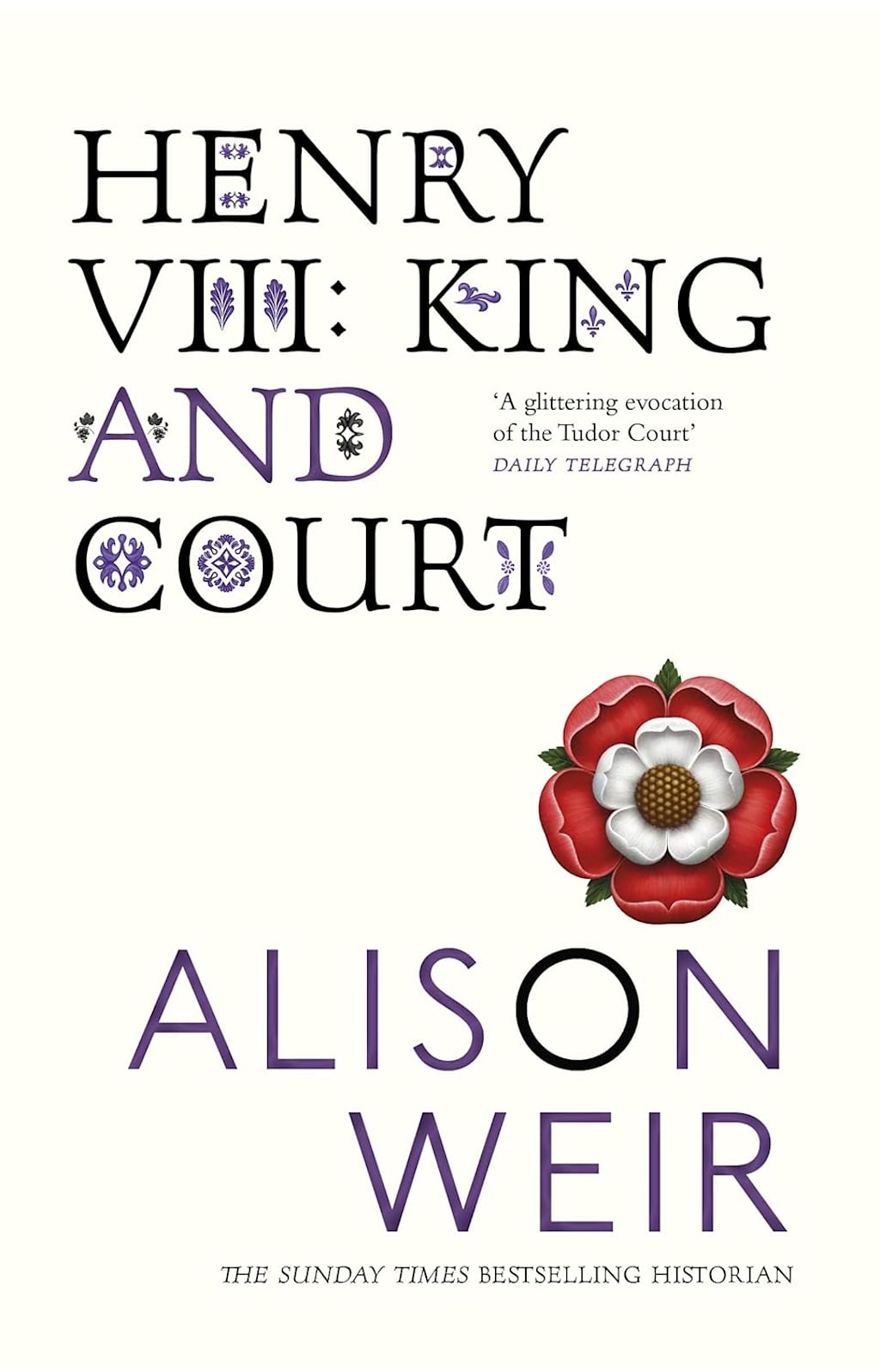
Popular culture has perpetuated some mythologies regarding Henry VIII, Alison Weir makes it clear that she'll address these issues but probably not entertain them. One of the myths is that Henry VIII didn't wash and thus smelt bad, in fact Weir puts to us that the King was obsessed with his hygeine. He also almost never dined in the main hall with others, which challenges many notions and amateur YouTube videos that claim the King was definitely not a great dinner guest in the main dining hall. We learn that on many instances, he preferred to dine with his wife, or by himself - a King that was more introspective than we have been led to believe does not necessarily mean he was not a complete and utter sociopath.
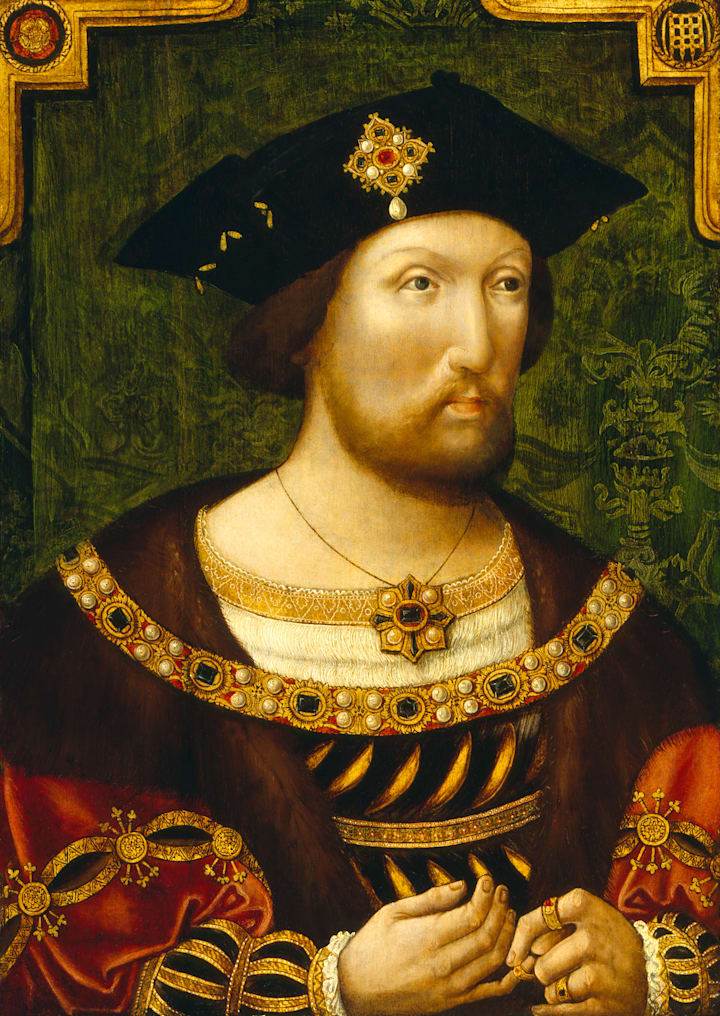
We are taken through Henry becoming the King of England. His coronation is celebratory and the people of England are as happy as can be. Courtiers write about him ushering in a Golden Age of everything from scholars to trade. Of course, they were correct but only for about ten to fifteen years or so. Henry VIII was the son of Henry VII, a man who probably had less of a claim to the throne than anyone else on the Bosworth battlefield. Alison Weir writes about the early life of Henry VIII as a prince of England as not only a son of a king who was massively political, but also as a boy who was an incredible scholar.
There is no doubt that Henry VIII was an intelligent man - he spoke several languages, he debated in politics and was well versed in the art of rhetoric. But that does not mean he was necessarily a good person. Alison Weir also states that there were rumours Henry VII hated his son for the very fact that he felt his son would try to gain too much power - and perhaps he was correct to some degree. His son would go on to start his own church in a break from paying taxes to Rome.
When Henry VIII therefore comes to the throne there are courtiers writing to compare him to Octavius, ushering in a new age and making room for a more modern kind of kingship. This is where they were of course, wrong. Henry VIII may have been a more 'Renaissance' kind of man, but he definitely still held those Medieval values associated with torture and death to any dissident in his realm.
His sociopathy is seen as charm in his youth and coated by the careful curation of his image by John Skelton, a writer who wrote poetry about the young prince/king. Was this for him or was this a form of propaganda for the people? I personally think it was the latter. John Skelton would be eventually banned from court for taking the services of a prostitute and compromising his position. Alison Weir writes him as a tragic figure, but I beg to differ about the nature of his position and perhaps, who he was being funded by and why.
Alison Weir mentions that Henry VIII was interested in many things in his scholarship, not just the languages and politics of the day. He was a keen astronomer and even created vast amounts of cartography. He was very interested in maps and geography, looking at the world from a slightly different perspective than was commonly approached by those of the day. This was definitely someone who was making himself into a Renaissance man whilst also becoming one of England's most ruthless rulers.
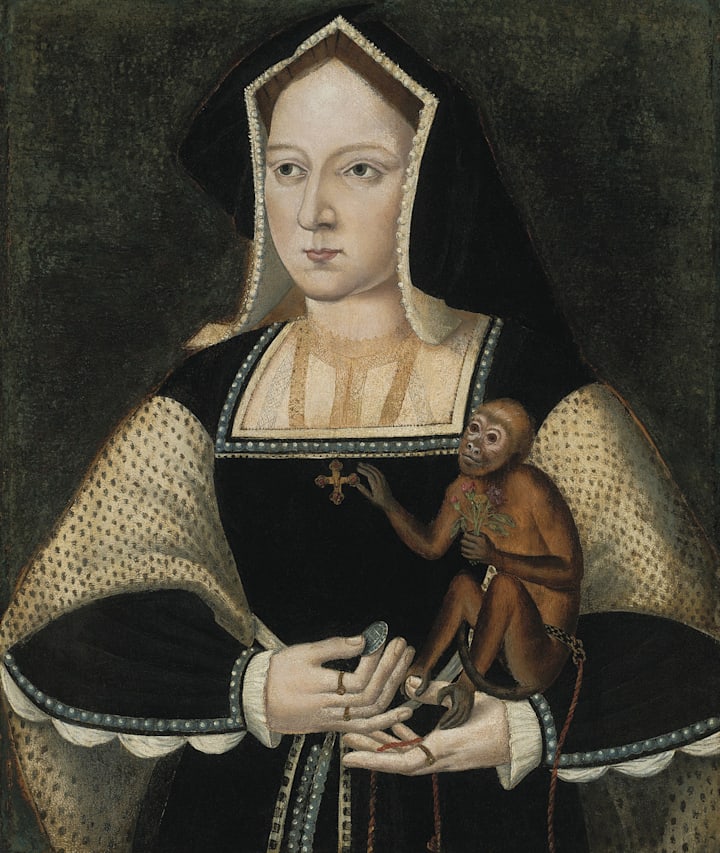
Henry’s marriage to Catherine of Aragon is covered next and she is described as religious and moderate whilst also being strict in her faith and stubborn in her person. Her ability to be political was quite astounding for the time and she was often also described as a better scholar than the King. She oversaw translations of the Vulgate and often gave her opinion of them and commissioned other translations of literary works. Alison Weir notes how many people considered her to be extremely learned for a woman of her time and, as she was fast to pick things up, she was also quickly learning English though she apparently still spoke with a Spanish accent. Catherine of Aragon was deeply loved by Henry VIII until of course, she gave birth to Mary I - a girl and not a boy.
Catherine of Aragon was seen to be so religious she kept numerous fasts and of course, she went to mass and held religious readings in her home for her ladies-in-waiting. She was described as being happy and yet, oddly demure. Alison Weir gives us multiple primary sources relating to the relationship she had with her husband before Mary's birth, noting that it was one in which she was keen on her domestic duties but also where she was held as an intellectual equal and often times, a superior.
This may have been alright for the Spanish princess, but Henry's relations with Europe are seen as not all sunshine and rainbows. He detested the French and would often showcase his anger in fits about them when someone wrote a letter of apology on his behalf. I think this is where we definitely get to see the reality of Henry VIII - a man who wasn't able to control his anger towards things he could not control, but also a man who was never taught to control his emotions in any respect. This is what of course, would lead to his first divorce. But it would also lead him into affairs, wars with the church in Rome and of course, beheading his wives.
As we move into the following chapters, we will see how Henry VIII evolved into a whole new person. We will witness how he reacts in situations and note how Alison Weir paints a portrait of a King who was not a demonic entity as history makes him out to be, but actually an entitled sociopath. Something agreed on by Hayley Nolan in her book Anne Boleyn: 500 Years of Lies. I simply cannot contain myself!
About the Creator
Annie Kapur
I am:
🙋🏽♀️ Annie
📚 Avid Reader
📝 Reviewer and Commentator
🎓 Post-Grad Millennial (M.A)
***
I have:
📖 300K+ reads on Vocal
🫶🏼 Love for reading & research
🦋/X @AnnieWithBooks
***
🏡 UK
Keep reading
More stories from Annie Kapur and writers in Geeks and other communities.
Book Review: "Hannibal" by Philip Freeman
This is quite fascinating. I have studied people like Napoleon and of course, there's that famous painting of him 'Crossing the Alps' by Jacques-Louis David, one of my favourite painters. If you look at where he has carved his name, it is directly above that of Hannibal. Now, I've heard of Hannibal and the Elephants before mainly because I wasn't an ignorant child but I had never actually studied him in any detail. The extent of what I knew seemed to stop at 'he fought the Roman army' and he was actually a formidable foe to them, able to hold his own. But after reading this book by Philip Freeman, I have to say I know a lot more now and it is all very interesting to me.
By Annie Kapur2 days ago in Geeks
Simpsons Review: "So It's Come to This: A Simpsons Clip Show"
Happy April Fools' Day, all! It's been a while since I've written a review of a Simpsons episode, and with today being the aforementioned holiday, I just have to talk about this episode. It's a landmark episode, in more ways than one, so let's get to it.
By Clyde E. Dawkins3 days ago in Geeks
Black Dog Theatre's "The Odd Couple" was Hilarious
How are we going to make this work? Black Dog Theatre (BDT) presented Neil Simon’s “The Odd Couple (The Female Version).” Florence moves in with Olive when her marriage is failing. The pair are very different, and have to work out how to live together without ripping each other’s hair out.
By Marielle Sabbag3 days ago in Geeks


Comments
There are no comments for this story
Be the first to respond and start the conversation.