
Did China Really Ban Israeli Tourists from Entering the Country?
is that true?

Introduction
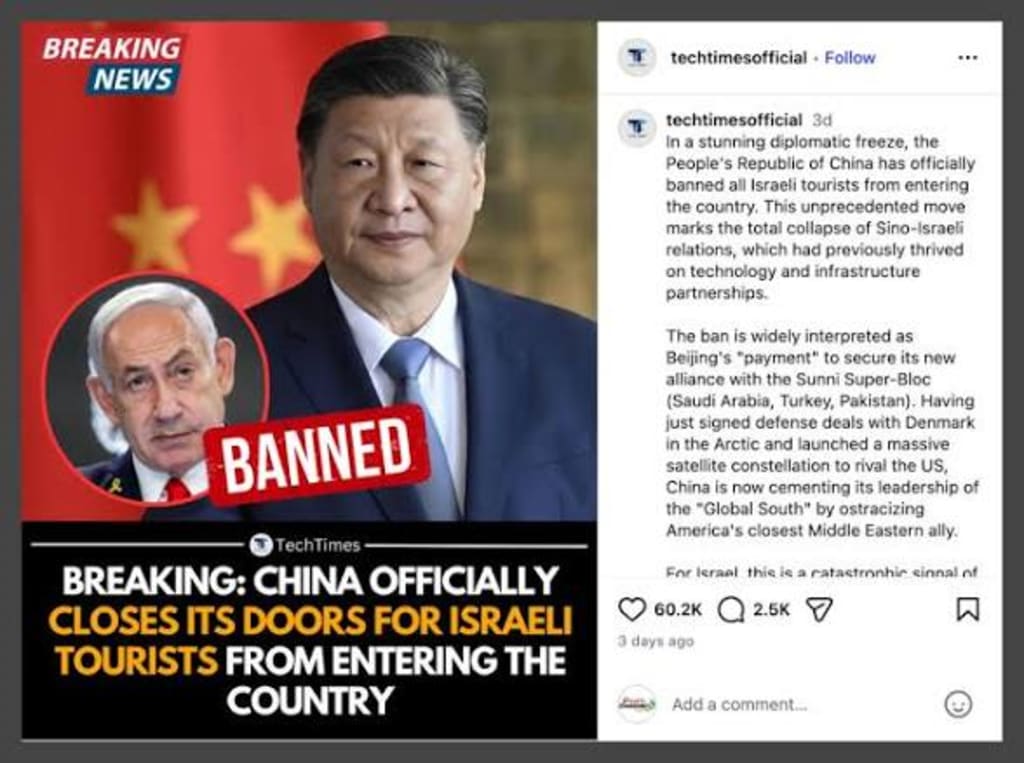
In recent months, social media has been flooded with claims that China has banned tourists from Israel. Many posts and viral messages suggested that Beijing had officially closed its borders to Israeli citizens due to geopolitical tensions and the ongoing conflicts in the Middle East. These claims spread quickly online, creating confusion and raising questions about the real situation. But is this claim true? A closer look at official statements and fact-checks shows a very different reality.
The Origin of the Viral Claim
The rumor appears to have started on social media platforms where users shared posts claiming that China had “officially banned all Israeli tourists.” These posts often used dramatic headlines such as “China closes its doors to Israel” or “Israeli passports no longer accepted in China.”
Because of global tensions and the strong emotions surrounding Middle Eastern politics, such claims gained traction quickly. Many readers believed the news without verifying the information from official sources.
However, most of these viral posts lacked credible evidence, government announcements, or official policy documents.
China’s Official Response
Chinese authorities quickly addressed the rumors. The Chinese Embassy in Israel publicly stated that the claim was false and that China had not banned Israeli tourists from entering the country. According to the embassy, Israel’s citizens are still able to apply for Chinese visas under the same procedures as other international travelers. �
ecns.cn +1
Officials also emphasized that China has actually introduced visa facilitation measures to make travel easier for foreigners, including Israelis. In fact, statistics showed that the number of Israeli citizens applying for Chinese visas increased significantly in recent years. �
globaltimes.cn
This indicates that tourism and travel between the two countries have not been formally restricted by the Chinese government.
Fact-Check Investigations
Independent fact-checking organizations also investigated the claim. Their findings confirmed that no official government policy or legal decision exists banning Israeli tourists from entering China. �
misbar.com +1
Researchers examined statements from China’s Ministry of Foreign Affairs, immigration authorities, and Chinese embassies worldwide. None of these sources mentioned any restrictions targeting Israeli passport holders.
Fact-checkers concluded that the rumor was simply misinformation that spread online without evidence.

Why the Confusion Happened
Several factors contributed to the misunderstanding:
1. Travel Advisories
China, like many countries, sometimes issues travel advisories warning its own citizens about safety risks in certain regions. For example, during periods of conflict, Chinese authorities advised Chinese nationals to be cautious when traveling to Israel.
However, this type of advisory is not the same as banning Israeli tourists from entering China.
2. Global Political Tensions
The ongoing geopolitical tensions in the Middle East have increased speculation about international alliances and diplomatic positions. As a result, rumors about sanctions, bans, or travel restrictions spread quickly.
3. Social Media Amplification
Platforms such as Facebook, X, and Instagram can rapidly amplify unverified claims. Once a rumor becomes viral, many people share it without checking whether it comes from an official source.
China–Israel Travel Relations
Despite political differences in some areas, travel between China and Israel has continued under normal visa policies.
In fact, both countries signed agreements in the past allowing Israeli citizens to obtain long-term Chinese visas for tourism, business, or family visits. These agreements helped increase travel, trade, and cultural exchanges between the two nations. �
Wikipedia
China remains an important destination for Israeli businesspeople, students, and tourists interested in the country’s history, technology sector, and economic opportunities.
The Bigger Issue: Misinformation in the Digital Age
The rumor about China banning Israeli tourists highlights a larger issue: the rapid spread of misinformation online.
Today, a single unverified claim can reach millions of people within hours. When topics involve politics or international conflicts, misinformation spreads even faster because people react emotionally.
This makes it increasingly important for readers to verify information through reliable sources such as official government statements, reputable news outlets, and independent fact-checking organizations.
Conclusion
The claim that China has banned Israeli tourists from entering the country is not true. Official statements from Chinese authorities and independent fact-checking investigations confirm that no such ban exists. Israeli citizens can still apply for visas and travel to China under normal immigration rules.
The story serves as a reminder that not everything circulating on social media reflects reality. In a world where information moves faster than ever, verifying facts before believing or sharing them is more important than ever.
About the Creator
shaoor afridi
“I am a passionate writer dedicated to sharing informative, engaging, and well-researched articles. My goal is to provide valuable content that educates, inspires, and adds real value to readers.”
Keep reading
More stories from shaoor afridi and writers in Geeks and other communities.
If Netanyahu Is Alive, Why Isn’t He Appearing Publicly?
In the digital age, rumors can spread across the world within minutes. Recently, many people on social media have been asking an unusual question: if Israeli Prime Minister Benjamin Netanyahu is alive, why isn’t he appearing publicly as often as before? The question has fueled speculation, conspiracy theories, and debates across different online platforms.
By shaoor afridiabout 24 hours ago in Geeks
History of The Three Stooges (Part I: The Beginnings and Columbia Pictures - 1920s-1936)
I have been itching to write about The Three Stooges on Vocal for close to two years, but I couldn't figure out how to do it. I wanted to do it by third Stooge, but that's a bit complicated. I know this much. I was about eight or nine years old when I first saw The Three Stooges. I remember one of my local channels had the Stooges on for hours, and I tried my damnedest to be up for those shorts. I remember that the Family Channel actually had an hour of the Stooges on from 11PM to midnight, and it was the entire library on during that time.
By Clyde E. Dawkins5 days ago in Geeks




Comments
There are no comments for this story
Be the first to respond and start the conversation.