
Corinne Griffith (1894-1979)
Silent Film's "Orchid Lady" and Her Italian-Texan Legacy
By Brian D’Ambrosio
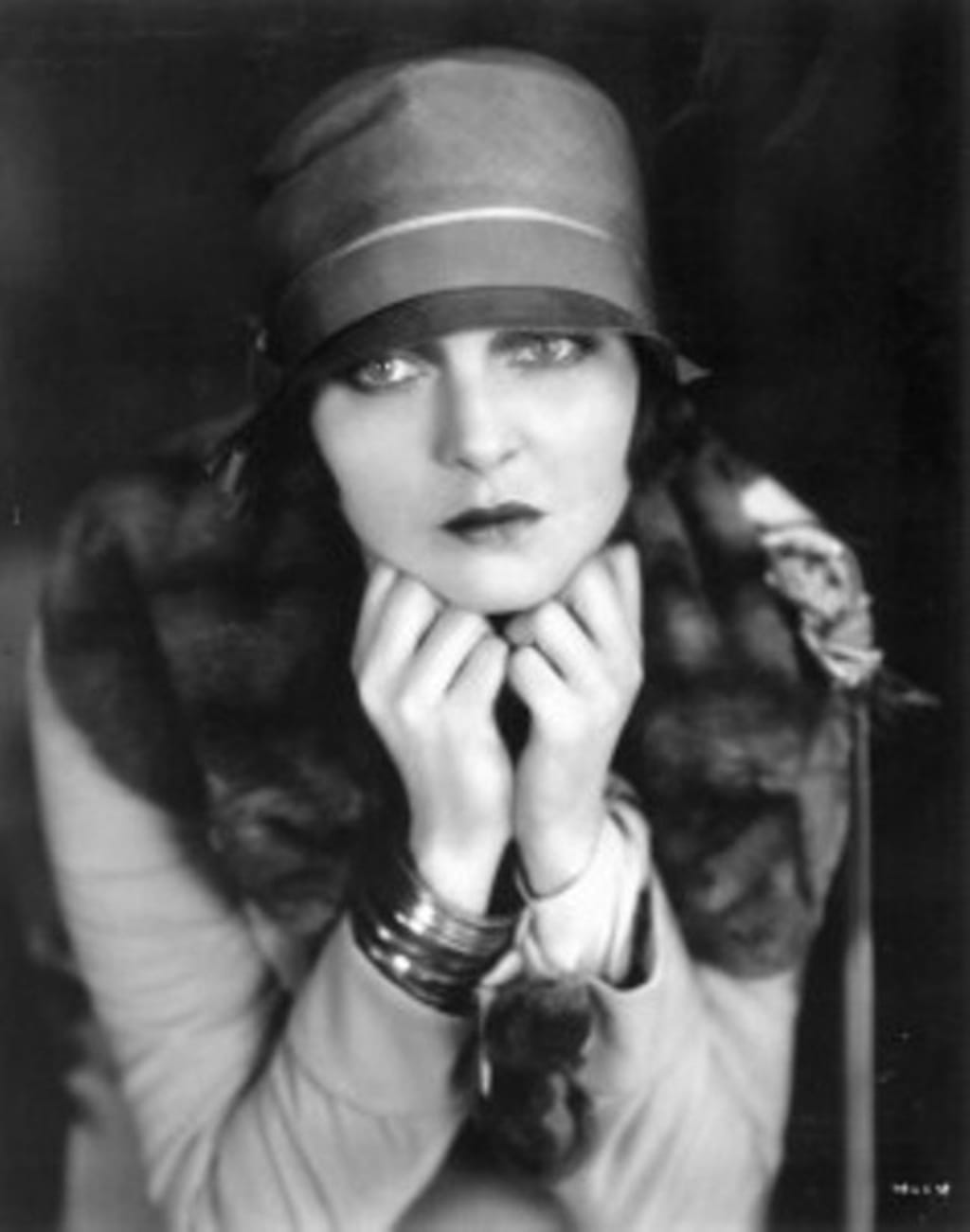
Corinne Griffith, born November 21, 1894, in Waco, Texas, became one of the most admired figures of the silent film era, celebrated for her elegance, poise, and expressive subtlety on screen. Known as “The Orchid Lady of the Screen,” Griffith cultivated an image of refinement and emotional restraint that set her apart from her contemporaries. Beneath the Hollywood persona lay a Texas childhood shaped by her Italian ancestry and the civic prominence of her maternal family, whose accomplishments left a lasting impression on her sense of artistry, ambition, and cultural awareness.
Griffith’s mother, Amboline Ghio, came from an Italian family whose patriarch, Antonio Luigi Ghio, immigrated to the United States in the mid-19th century. Ghio quickly established himself as a leading figure in Texarkana, Texas, serving multiple terms as mayor. He also played a pioneering role in the city’s cultural life, constructing Texarkana’s first opera house in 1877 in partnership with Capt. F. M. Henry, followed by a larger theater in 1884.
Though referred to as an opera house, the venue hosted a range of entertainments, including theatrical productions, lectures, and musical performances suited to the frontier town. These accomplishments reflected Ghio’s belief that even a developing city deserved civic pride and access to the arts, creating a legacy of cultural investment that would resonate through the family.
Griffith grew up hearing stories of her grandfather’s leadership and entrepreneurial spirit, which influenced her own sense of discipline and appreciation for the arts. While she inherited Italian ancestry, her upbringing was predominantly Texan-American, and sources do not indicate she was immersed in Italian language or cultural traditions. Instead, her family heritage offered a sense of identity and connection to a lineage that valued civic engagement and artistic contribution, shaping the context in which she developed her ambitions.
From an early age, Griffith demonstrated a creative sensibility, exploring drawing, writing, and music. Around 1916, she signed with Vitagraph Studios, marking the beginning of a career that would span the height of the silent film era. Her dark hair, pale complexion, and expressive eyes made her immediately recognizable, while her subtle performances conveyed emotion without the exaggerated gestures often expected in silent cinema. This combination of beauty, intelligence, and emotional nuance earned her both critical and popular acclaim.
By the early 1920s, Griffith had risen to the top of her profession, appearing in numerous films and gaining recognition for her sophistication and professionalism. Her portrayal in The Divine Lady (1929) earned her an Academy Award nomination for Best Actress, demonstrating her ability to convey depth and complexity on screen. Unlike many silent stars, Griffith approached her craft with diligence, often engaging with scripts, cinematography, and direction, reflecting a thoughtful approach to performance and storytelling.
After retiring from film in the early 1930s, Griffith turned her attention to writing and preserving her family history. In 1952, she published Papa’s Delicate Condition, a semi-autobiographical novel blending family anecdotes, personal experience, and creative storytelling. The book drew inspiration from her Texas upbringing and her grandfather’s civic and cultural contributions. While not a straightforward memoir, it offered readers insight into her formative years and the Italian-Texan heritage that informed her identity. The work achieved sufficient popularity to be adapted into a 1963 film starring Jackie Gleason, demonstrating its resonance with the public even if precise sales figures are not documented.
Griffith’s life reflects a rare combination of artistic talent, business acumen, and literary engagement. She successfully navigated the silent film era, achieved critical acclaim, and translated her family narratives into a work that celebrated heritage and cultural achievement. Her grandfather’s legacy in Texarkana, particularly his commitment to civic and artistic development, remained a source of pride and inspiration, linking her personal success to a broader history of Italian-American contribution in the American South.
Corinne Griffith died on July 13, 1979, in Santa Monica, California, leaving behind a legacy that transcended her screen persona. Her achievements in film, her literary work, and the prominence of her family’s cultural and civic engagement illustrate the ways personal heritage and professional artistry can intersect. Through her films and her writing, Griffith captured the imagination of audiences, preserving both the glamour of silent cinema and the pride of an Italian-Texan lineage. Today, she is remembered not only as one of Hollywood’s most elegant silent film stars but also as a woman who honored her ancestry while forging a remarkable artistic and literary career.
Brian D'Ambrosio is the author of "Italian-Americana: Explorers, Entertainers, and Eccentrics" and host of the podcast "Italian-Americans You Should Know."
About the Creator
Brian D'Ambrosio
Brian D'Ambrosio is a seasoned journalist and poet, writing for numerous publications, including for a trove of music publications. He is intently at work on a number of future books. He may be reached at [email protected]
Reader insights
Outstanding
Excellent work. Looking forward to reading more!
Top insights
Compelling and original writing
Creative use of language & vocab
Easy to read and follow
Well-structured & engaging content
Excellent storytelling
Original narrative & well developed characters
Eye opening
Niche topic & fresh perspectives
Heartfelt and relatable
The story invoked strong personal emotions
Masterful proofreading
Zero grammar & spelling mistakes
Keep reading
More stories from Brian D'Ambrosio and writers in History and other communities.
Ken Wolverton
By Brian D’Ambrosio Along a dusty roadside of Cerrillos, connected weathered shacks lean into the landscape like a creature molded from the earth itself. Its walls are alive with color: horses rearing across mesas, dreamlike murals, and abstract forms that seem to vibrate with movement. Inside, brushes slant in jars, canvases are stacked against walls, and unfinished murals climb wooden planks. This is the world of Ken Wolverton, an 80-year-old artist whose life has been as itinerant and unconventional as the art he creates.
By Brian D'Ambrosio 29 days ago in Art
Calakmul: The Three Stones and Two Pyramids of the Ancient Maya City
Calakmul is a genuinely lost ancient Maya city. It is located on the Yucatan Peninsula of Mexico, deep within the Petén Basin's lush forests. The magnificent metropolis was quickly recovered by the jungle once it was abandoned.
By Francis Dami4 days ago in History
Maya Landscape Reveals Concentric "Nested" Complexes
Archaeologists' understanding of ancient Maya commerce is being altered by a number of peculiar architectural formations that have emerged from the Yucatán Peninsula's deep jungles. Some of the strongest evidence for constructed marketplaces in the Classic Maya civilization may be found in these structures, which are arranged in eye-catching concentric patterns.
By Francis Dami4 days ago in History


Comments