
Princess Yoshiko Kawashima
The Rebel Princess and Her Execution

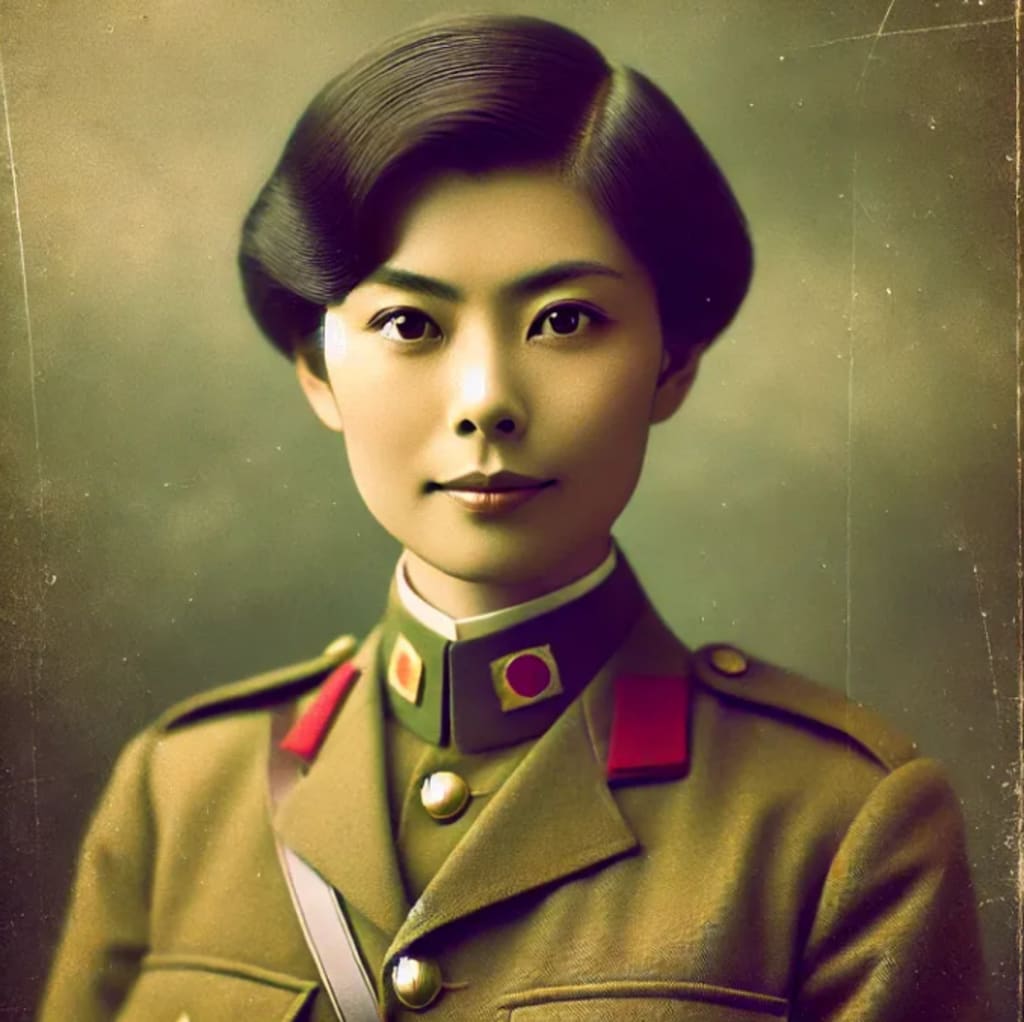
A Princess Caught Between Worlds
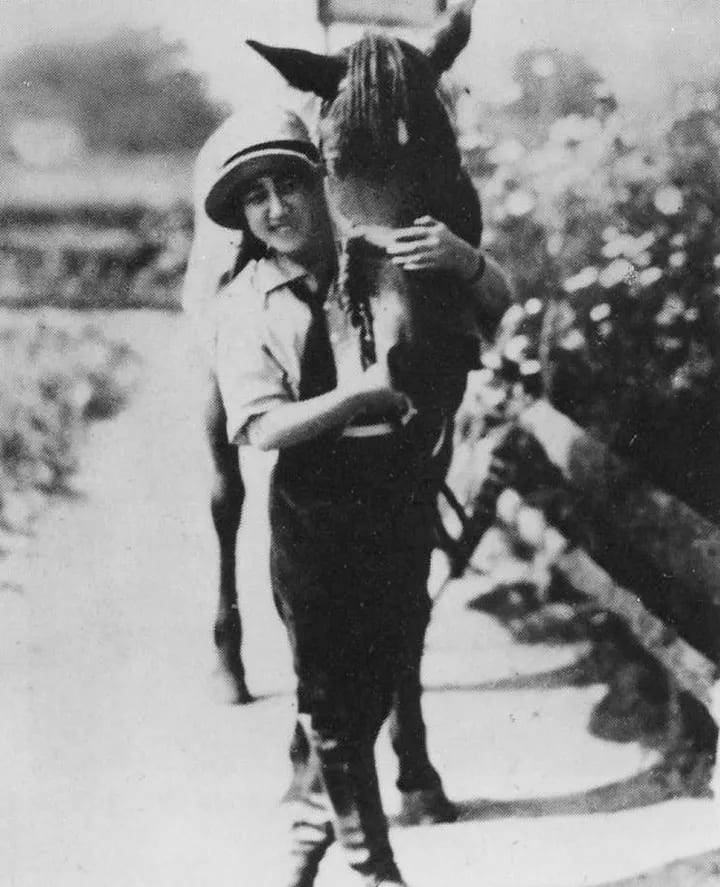
Princess Yoshiko Kawashima, born Aisin Gioro Xianyu in 1907, was never destined for an ordinary life. As a descendant of the Manchu Qing Dynasty’s imperial family, she had royal blood running through her veins, but after the dynasty fell in 1912, she was sent to Japan and raised by Naniwa Kawashima, a nationalist with his own ambitions. Stripped from her homeland, she grew up navigating a strange, shifting identity — was she Manchu? Was she Japanese? Or was she simply a survivor?
Raised in a strict but highly nationalistic environment, Yoshiko was exposed to the militaristic ideals of her adoptive father, who saw her as a tool for Japan’s ambitions in China. She struggled with her identity, often rejecting traditional roles and norms imposed on her. She cut her hair short, dressed in masculine clothing, and openly defied expectations for women of her time. Her struggle with identity would shape her decisions and propel her into a life of espionage and intrigue.
Spy, Soldier, Enigma
Yoshiko wasn’t the type to sit on the sidelines. With her fluency in Chinese and Japanese, she became an asset to the Japanese Kwantung Army, playing a key role in their expansion into Manchuria. She helped Japan establish Manchukuo, the puppet state they propped up with Puyi, the last emperor of China.
Her work in espionage was the stuff of legends. She moved through warlords and high-ranking officials like a shadow, gathering intelligence and even leading military operations while dressed in uniform. Some called her a fearless warrior, others a reckless traitor. Either way, she was impossible to ignore.
Beyond her missions, Yoshiko was scandalous in ways that shook both China and Japan. She defied traditional gender norms, preferring military uniforms over dresses, and had a reputation for lovers in high places. She wasn’t about to live by anyone else’s rules, and that made her both admired and despised.
While some saw her as a mere puppet of the Japanese military, others viewed her as a power player in her own right. She held influence among both Japanese officers and Chinese collaborators, able to shift the tides in political and military affairs with her charm, cunning, and intelligence. Yet, despite her effectiveness, she made enemies in high places — both among the Japanese and the Chinese.
Betrayal and the Fall from Power
As World War II neared its end, the tides turned against Yoshiko. Japan’s grip on China weakened, and she lost her value to those who once relied on her. In 1945, she was captured by Chinese Nationalist forces in Beijing. The war was over, but her personal battle was just beginning.
The trial was a spectacle. Her name, once spoken in hushed tones of admiration or fear, became synonymous with betrayal. The prosecution painted her as a traitor who sold out her homeland, while she insisted she had been a pawn in someone else’s game. Some believed her, but it didn’t matter — her fate had already been decided.
The trial lasted for months, drawing massive public interest. Sensationalized news reports painted her as a femme fatale, a double-crossing seductress who had abandoned her roots for Japanese imperialists. Despite her protests, the evidence stacked against her was overwhelming. The fact that she had actively supported Japan’s occupation efforts sealed her fate in the eyes of the Chinese government.
Some argue that Yoshiko was treated more harshly than her male counterparts, many of whom had been collaborators but received lighter sentences. As a woman, and particularly as a woman who had publicly defied gender expectations, she was seen as even more dangerous. Her execution was meant to serve as a warning.
Execution: The End of an Unforgettable Life
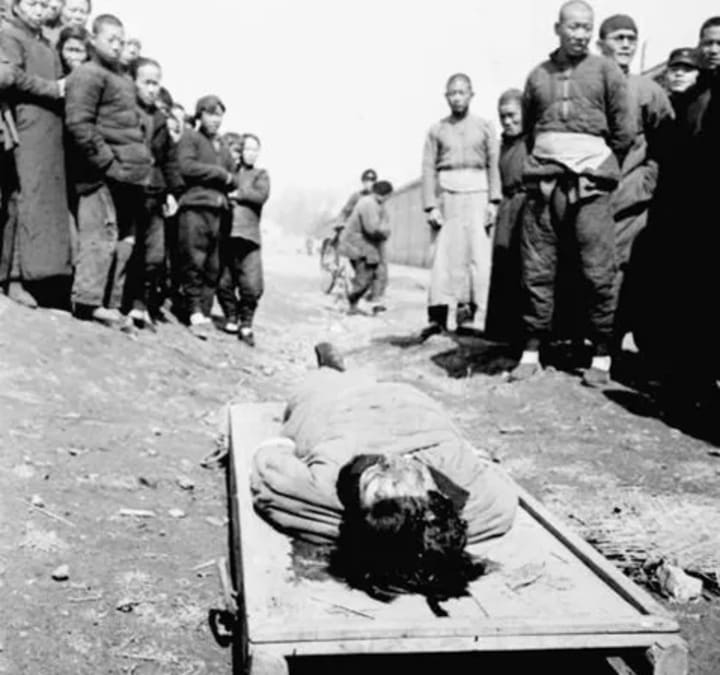
On March 25, 1948, Yoshiko Kawashima was executed by firing squad in Beijing. Some say she met her death with cold defiance, others claim she pleaded for her life. The truth is lost to time, buried under layers of propaganda and myth.
Rumors persisted that she had escaped execution, that a body double had taken her place. Others swore her remains were never properly identified. Maybe she slipped into the shadows one last time. Maybe she met the fate history records. What’s certain is that she became more than just a spy or a traitor — she became a legend.
Chinese authorities released conflicting reports regarding her final hours. Some claimed she was stoic until the end, standing tall as the shots rang out. Others suggested she was executed in secret, quietly removed from the world she once dominated. Her grave, if it exists, remains unmarked, adding to the mystery surrounding her final fate.
Villain or Victim?
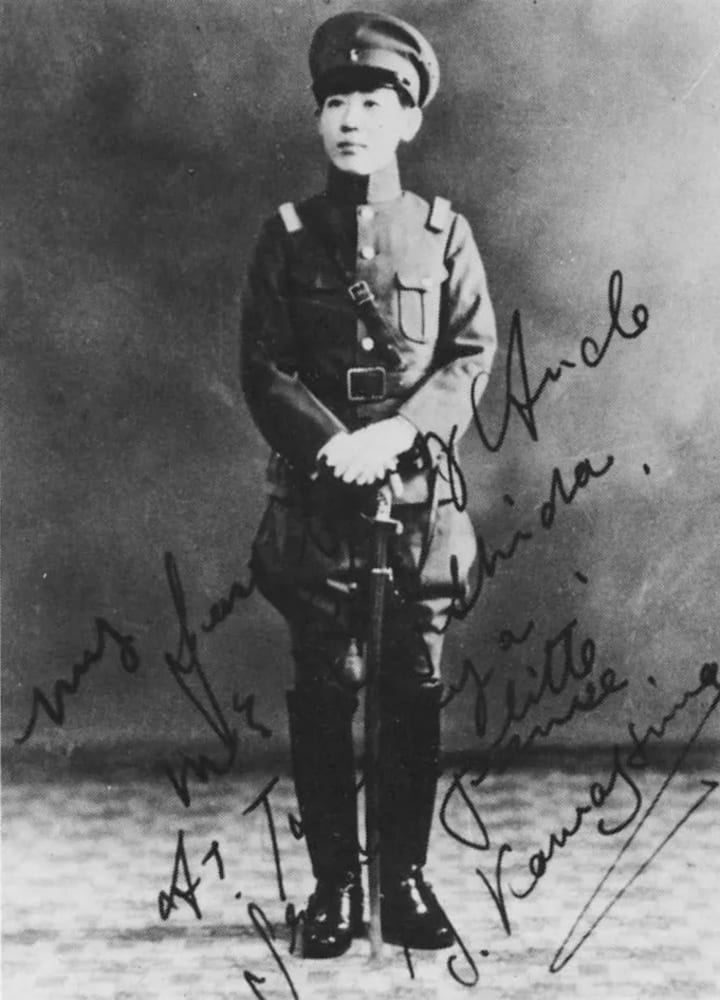
Even today, Yoshiko Kawashima is one of history’s most debated figures. Was she a cunning mastermind who betrayed her people for power and luxury? Or was she a woman trapped by forces greater than herself, forced to play a dangerous game to survive?
Regardless of which side of history you land on, one thing is clear — Yoshiko was never content to be ordinary. She lived fast, played hard, and refused to be defined by anyone else’s expectations. And for that, she remains unforgettable.
Her story has inspired books, films, and television adaptations, with each retelling portraying her differently. Some cast her as a villainous manipulator, while others present her as a tragic heroine, caught in a web of deception and political intrigue beyond her control.
For those who see her as a victim, her life was marked by a lack of true agency. Sent to Japan as a child, raised by a man who saw her as a political tool, and used by military officials to further their goals, she had little say in shaping her destiny. Even when she seized control of her narrative — by dressing as a man, commanding troops, and making high-profile alliances — her fate was still ultimately dictated by the larger forces at play.
For those who see her as a villain, her choices were deliberate, her allegiance to Japan unwavering despite the suffering it caused. She not only supported Japanese occupation but actively worked against Chinese resistance movements. To them, her execution was justified.
But the truth, as always, is far more complex. Yoshiko Kawashima lived in a time of war, shifting alliances, and brutal survival. Whether she was a mastermind or a pawn, a patriot or a traitor, her story endures — because it forces us to question how history is written, who gets to be remembered, and who decides the fate of those caught in its storm.
Written by J.B. Miller, telling stories that linger—through history, truth, and imagination.
If this stayed with you, follow me for more.
About the Creator
J.B. Miller
Wife, mother, writer, and so much more. Life is my passion; writing is my addiction. You can find me on LinkedIn at https://www.linkedin.com/in/brandy28655/
Keep reading
More stories from J.B. Miller and writers in History and other communities.
4,400‑Year‑Old Priest’s Tomb Unearthed in Saqqara
Archaeologists in Egypt have made a remarkable discovery that is captivating historians and Egyptologists around the world: an exceptionally well‑preserved tomb belonging to an ancient priest that dates back approximately 4,400 years. The burial site, found in the vast necropolis of Saqqara just south of Cairo, reveals extraordinary insights into the life and religious beliefs of a high‑ranking official during Egypt’s Old Kingdom period.
By Irshad Abbasi about 15 hours ago in History
Author’s Advice
If you would’ve asked me 20 years ago did I know I’d become a writer and an author, I would’ve said “nope, ain’t happening”. As fate would have it I did become an author and I can honestly say I’m loving it so far. It really does feel good to be a writer. I’ve learned a lot on this journey and I feel like with even me being as new to this world as I am, there’s some wisdom I need to share with every other aspiring author.
By Joe Patterson6 days ago in Journal



Comments
There are no comments for this story
Be the first to respond and start the conversation.