
The Hogg's Hollow Disaster 1960
How Ontario Changed!


On March 17, 1960, in a quiet Don Valley ravine in the area known as Hogg’s Hollow, a construction project was underway to build a water main tunnel under the Don River. Over several heartbreaking hours on that dark day in Toronto history, it would become one of the most important workplace tragedies in Ontario.
The Hogg’s Hollow disaster revealed serious problems in how workers were treated, especially immigrant labourers. The five men who lost their lives in suffocating, horrible conditions didn’t die in vain. Their deaths would eventually lead to changes in labour laws and a greater awareness of workplace safety for us all.
The workers were all Italian immigrants, part of a broader wave of people who had come to Canada after World War II in search of greater opportunity and a better life. They found employment in construction, a field that was essential to the growth of cities like Toronto. But these jobs came with a price: they were physically demanding and dangerous. These workers were doing the difficult and essential job of building the infrastructure that supported Toronto’s expansion, yet they were frequently exposed to unsafe conditions. And few cared to put in place the legislation that protected these important workers.
On that March day, the work involved using pressurized air to prevent water and soil from collapsing into the tunnel. It required precision and strict safety measures. The conditions inside the tunnel were far from ideal, and safety practices were not adequately enforced.
While the exact sequence of events has been debated and discussed, it is understood that a combination of fire and equipment failure led to an explosion that sealed the exit. Flames and smoke spread through the confined underground space. The workers were trapped, and the emergency response was delayed and challenged by the same hazardous conditions that caused the accident in the first place. Despite efforts to rescue them, all five men died.
The tragedy shocked the city when news of the ongoing rescue broke. It was seen as an accident, but more details emerged during the course of the day, and people began to question how a disaster like this could have happened in the first place. Reports suggested that the workers had been operating in unsafe conditions, with inadequate ventilation, and improper safety training. These revelations led to growing anger and concern, as people realized that this was not simply an unavoidable accident but something preventable.
The victims, who were all young immigrant workers, added another aspect to the story. Torontonians started to recognize that immigrant workers faced greater risks and fewer protections. Language barriers, limited job security, and outright bias and racism contributed to their vulnerability. These men were doing dangerous work, that was true, for the good of Ontario, yet they did not have the protection they needed. And that has been the story of Toronto and its history.
Workplace safety laws in Ontario were not as strong as they are today. Oversight was inconsistent. Workers had fewer rights and less ability to refuse work that they deemed unsafe. Dangerous conditions could persist without being addressed, as deadlines and budgets took priority. The Hogg’s Hollow disaster exposed these weaknesses in a public way, and some thought that it was about time that they be addressed.
Newspapers began investigating the circumstances surrounding the accident, asking questions about safety practices in the construction industry. The story took hold with the public, not just because of the tragedy itself, but because it revealed deeper issues within the system. This was not an isolated event. It was a symptom of a larger problem. How workers, or more importantly, how immigrant workers were treated and protected was the central issue.
In response to the disaster and the public pressure that followed, discussions around safety and fairness gained strength. However, changes did not happen overnight. It became a hot political issue, a turning point in Ontario’s approach to occupational health and safety. It contributed to the development of stronger regulations and improved enforcement of workers’ rights. Stronger safety standards, including the right to refuse unsafe work, can be traced in part to the lessons learned from events of 1960.
The memory of the five men has also been preserved. Today, a memorial quilt at the York Mills subway station serves as an important reminder of what happened on that day. This memorial ensures that their stories are not forgotten, even as the city around them changes. Commuters can pause and reflect on the human cost behind the infrastructure they use every day. Most Torontonians probably have never heard of the tragic five. I hope it makes a difference.
The Hogg’s Hollow disaster is a story about how we handle contrasts: the difference between progress and safety, economic growth, human well-being, and human value. Toronto was expanding and modernizing, that’s true, but progress came with risks that were not properly managed. The workers were part of that progress, building the systems that would benefit our future, yet they did so under conditions that cost them their lives.
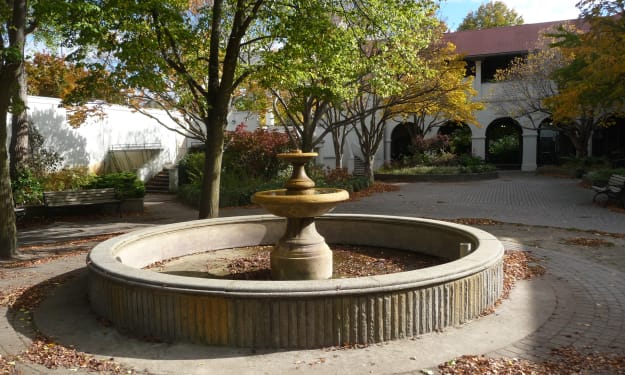
Today, the area where the disaster took place looks very different. The Don River ravines are now peaceful, green spaces where people can walk and enjoy nature. It’s hard to imagine that beneath the landscaped surface, a service tunnel once ran where five young men lost their lives in horrific circumstances. The landscape has healed. History moves on, even if it’s not visible.
The disaster continues to be remembered because of the lessons it taught us. It is more than a basic reminder of the importance of workplace safety and the need to protect those who do the difficult and dangerous work. It highlights the contributions of immigrant workers, whose efforts have played a vital role in building Toronto.
The most important takeaway of the Hogg’s Hollow disaster is that progress should never come at the cost of human life, and while it’s natural for cities to grow and thrive, that growth must be accompanied by responsibility. 1960 stands as a reminder that when safety is overlooked, the consequences can be devastating. Human life must always come first.
About the Creator
Julius Karulis
Life is fun and unexpected. But it's even better when you add horror to the mix. I write dark fantasy, and each day is a learning experience, and sometimes the darker is the better. Oh and I am a Toronto historian as well.
Keep reading
More stories from Julius Karulis and writers in History and other communities.
Parkdale: A Work in Progress
Parkdale, located in Toronto’s west end between High Park and Liberty Village, is one of the city’s most historically rich and layered communities. It began as a wealthy Victorian suburb in the late nineteenth century, later transforming into a vibrant, working-class neighbourhood shaped by generations of immigrants. Today, Parkdale continues to evolve, often surprising even its harshest critics. While gentrification is on the rise, the neighbourhood has always been defined by its resilience, and that spirit remains as strong as ever.
By Julius Karulis15 days ago in History
Discovered Beneath Frankfurt, a Buried Roman Sanctuary Hints to Startling Rituals
Rare hints concerning ancient rites, including potential human sacrifice, have been found in a secret Roman sanctuary beneath Frankfurt. An multinational team of scientists is now rushing to discover how this enigmatic, multi-god cult complex functioned on the empire's northern boundary after securing significant financing.
By Francis Dami3 days ago in History



Comments
There are no comments for this story
Be the first to respond and start the conversation.