
What Is Beltane?
The Celtic Fire Festival


What Is Beltane? The Celtic Fire Festival of Summer
When people think of ancient seasonal festivals, they often imagine gentle spring flowers, ribbons, and celebrations of warmth returning to the land. Beltane certainly carries some of that beauty, but in older Celtic tradition it was far more than a cheerful spring gathering. Beltane marked a threshold — a powerful turning point in the year when communities welcomed the beginning of summer through fire, blessing, and protection.
In the Gaelic calendar, Beltane was traditionally observed around the first of May and stood opposite Samhain, the festival that marked the beginning of winter. If Samhain opened the dark half of the year, Beltane opened the light half. It was a seasonal crossing, and like many ancient thresholds, it was treated with both celebration and caution.
Beltane was especially associated with fire. In Irish and Scottish tradition, great bonfires were lit as part of the festival, and these were not only symbolic. Fire was believed to protect, purify, and bless. One of the best-known customs tells of cattle being driven between two fires or past the smoke of the fires to guard them from illness, misfortune, and harmful influences during the grazing season. In a world where survival depended on healthy animals and good land, this kind of ritual protection mattered deeply.

The fires of Beltane were also communal. In some traditions, household fires were put out and then relit from the sacred festival flame. This act symbolized renewal and the beginning of a new seasonal phase. Beltane fire was not just warmth or light. It marked a transfer of blessing from the community ritual into daily life.
The festival is also remembered for its connection to fertility, but this should be understood in a broad and traditional sense. Beltane was not only about romance. It was about the fertility of the land, the health of livestock, the growth of crops, and the continuation of life itself. As the world moved fully into the growing season, Beltane celebrated abundance, vitality, and possibility.
Because of this, Beltane became associated with greenery, flowers, union, and the visible energy of life returning to the earth. In later traditions, especially outside Ireland, people often connect Beltane with maypoles, flower crowns, and handfasting ceremonies. While these modern practices can still reflect the spirit of the festival, they sometimes overshadow the older meanings of protection, communal fire, and the sacred danger of seasonal transition.

That idea of transition is one of the most important parts of Beltane. Ancient festivals were not simply parties placed on a calendar. They marked real thresholds in agricultural and spiritual life. Beltane came at a moment when animals were moved, land was worked, and the success of the coming season mattered greatly. To cross into summer was to enter a time of promise, but also of uncertainty. Ritual helped people meet that change with intention.
Today Beltane is still celebrated by many pagans, druids, and people interested in Celtic spirituality. Some observe it with candles or bonfires, others with offerings, seasonal meals, or time spent in nature. However it is marked, the heart of Beltane remains the same: it is a celebration of life rising, light strengthening, and the world becoming fully awake again.
If Samhain teaches us how to face darkness, Beltane teaches us how to step into brightness. It is the fire at the gate of summer, asking us not only to celebrate the season ahead, but to enter it with awareness, gratitude, and courage.
About the Creator
The Celtic Spirit- A modern Guide to Celtic Belief and Practice
explaining Celtic mythology, druid practice, and reconstructions of paganism for modern readers
Keep reading
More stories from The Celtic Spirit- A modern Guide to Celtic Belief and Practice and writers in History and other communities.
China Sees Birth Rate Surge as One-Child Policy Ends
For decades, China’s population growth was tightly controlled through the one-child policy, introduced in 1979 to curb what the government saw as unsustainable demographic expansion. The policy restricted most families to having only one child, with certain exceptions in rural areas or for ethnic minorities. While the law helped slow population growth, it also created long-term social and economic challenges, including an aging population, gender imbalances, and a shrinking workforce.
By Irshad Abbasi 7 days ago in History
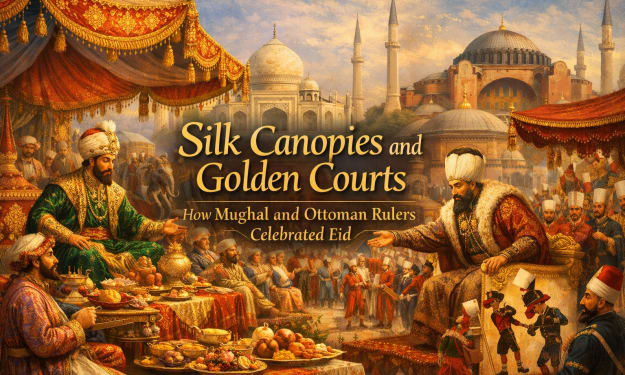
How Mughal and Ottoman Rulers Celebrated Eid
Eid, one of the most important Islamic festivals, has always been a time of joy, gratitude, and communal harmony. While today it is celebrated with prayers, feasts, and family gatherings, in the courts of the Mughal and Ottoman empires, Eid was an event of extraordinary splendor. These powerful dynasties transformed the religious occasion into a grand display of wealth, culture, and political authority—without losing its spiritual essence.
By Irshad Abbasi about 10 hours ago in History



Comments
There are no comments for this story
Be the first to respond and start the conversation.