
Why Cats Headbutt You: The Love Language Explained
Discover Why Cats Headbutt, What This Adorable Behavior Means, and How It Shows Trust, Affection, and Bonding

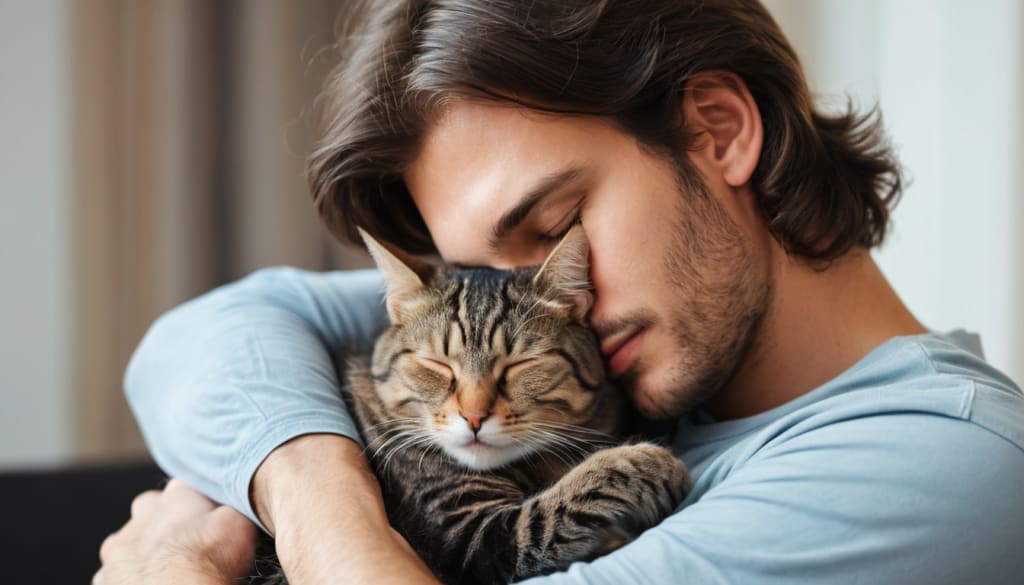
It happens in the gentlest way. You’re sitting quietly, perhaps reading or working, when your cat approaches with slow, deliberate steps. They pause for a moment, as if measuring distance, and then—softly, firmly—they press their head against you.
A small nudge. A quiet impact. A moment that feels both ordinary and strangely meaningful.
This behavior, often called a “headbutt,” is one of the most affectionate gestures a cat can offer. It’s subtle, almost ceremonial, and deeply rooted in instinct.
But what does it actually mean? Why do cats press their heads against us as if we were part of their world in a very specific, intentional way?
The answer lies in scent, trust, communication, and a language that doesn’t need words.
Let’s explore it.
What Is a Cat Headbutt?
A cat headbutt, technically known as “bunting,” is when a cat presses or bumps their head against a person, another animal, or an object.
It can be light and fleeting or slow and deliberate. Sometimes it’s a single nudge. Other times, it becomes a series of gentle pushes, often combined with rubbing along your face, hands, or legs.
To an outside observer, it may seem like a simple physical gesture. But for a cat, it carries meaning—clear, intentional, and surprisingly layered.
1. They’re Marking You with Their Scent
Cats live in a world defined by scent. It is their primary way of understanding territory, relationships, and safety.
On your cat’s head—especially around the cheeks, forehead, and chin—are scent glands that release pheromones. These chemical signals are invisible to us but deeply meaningful to them.
When your cat headbutts you, they are transferring their scent onto you.
This act marks you as familiar, safe, and part of their environment. It’s not ownership in a controlling sense, but rather a way of saying, “You belong in my world.”
In a space where scent equals security, this gesture is powerful.
2. It’s a Sign of Trust
Cats are cautious by nature. They do not expose themselves physically unless they feel safe.
The head is a vulnerable area. When a cat presses it against you, they are lowering their guard in a very real way.
This means they trust you. Not just in a general sense, but in a moment-to-moment, instinctive way.
Trust in cats is not given easily. It is built over time, through consistency, calmness, and positive interaction.
A headbutt is one of the clearest signs that you have earned it.
3. They’re Showing Affection
Headbutting is a form of affection—quiet, physical, and deeply sincere.
While cats may not express love in the same overt ways as other animals, their gestures carry weight. A headbutt is not random. It is directed, intentional, and often repeated.
You may notice it happens during calm, relaxed moments. When your cat is content, they may seek you out and initiate contact through this gentle motion.
It is their way of connecting without overwhelming, of saying something meaningful without needing sound.
4. They’re Greeting You
Cats often use headbutts as a form of greeting.
If your cat approaches you after you’ve been away and immediately bumps their head against you, it’s their version of hello.
It’s a recognition, a reestablishment of connection. A way of saying, “You’re back. Everything is as it should be.”
This behavior is also seen between cats that are familiar with each other. It reinforces social bonds and maintains harmony within their group.
When directed at you, it places you firmly within that circle.
5. They Want Attention
Sometimes, a headbutt is a gentle request.
Your cat may be asking for petting, play, or simply your focus. Unlike loud vocalizations or demanding behavior, this request is subtle.
A soft push of the head, followed by lingering proximity, often means your cat wants interaction.
It’s an invitation, not a demand. And if you respond, you reinforce the bond that prompted it in the first place.
6. They’re Creating a Shared Scent
Beyond marking, headbutting also blends your scent with theirs.
To a cat, this creates a unified identity. It reinforces the idea that you are part of the same safe, familiar environment.
This shared scent is comforting. It reduces uncertainty and strengthens the connection between you.
In multi-cat households, this behavior helps maintain group cohesion. With humans, it serves the same purpose—integrating you into their world.
7. It’s Part of Their Social Language
Cats communicate through body language more than anything else.
Headbutting is one of the clearest signals in that language. It combines touch, scent, and intention into a single gesture.
Unlike vocalizations, which can vary widely, this behavior is consistent. It is almost always positive, almost always meaningful.
Understanding it allows you to respond in a way that respects and reinforces your cat’s communication style.
How to Respond to a Cat Headbutt
When your cat headbutts you, the best response is simple: acknowledge it.
You can gently pet them, speak softly, or lean into the contact slightly. These small responses mirror their gesture and strengthen the connection.
Avoid sudden movements or ignoring the behavior entirely. While your cat may not show disappointment in obvious ways, consistent positive responses help build trust.
Think of it as a conversation. They initiate, and you respond.
When Headbutting Might Be Different
In most cases, headbutting is entirely positive. However, context matters.
If your cat begins pressing their head against objects excessively or in a way that seems compulsive, it could indicate discomfort or a medical issue.
This is different from gentle, social headbutting. It is more persistent, less interactive, and often accompanied by other unusual behaviors.
In such cases, a veterinarian should be consulted.
The Quiet Meaning Behind the Gesture
A cat’s world is built on small signals. Subtle movements, quiet actions, and repeated patterns form a language that is easy to miss if you’re not looking closely.
Headbutting is one of the clearest expressions within that language. It carries trust, affection, recognition, and belonging—all in a single, gentle motion.
It doesn’t demand attention. It doesn’t interrupt. It simply happens, like a quiet note placed into the rhythm of your day.
Final Thoughts
When your cat presses their head against you, they are doing more than making contact. They are sharing something—scent, trust, familiarity, and connection.
It is one of the purest forms of feline communication, a gesture that speaks without words yet says a great deal.
So the next time your cat leans in and offers that soft, deliberate nudge, take a moment to appreciate it.
In their quiet, instinctive way, they are telling you something simple and profound.
You are part of their world.
About the Creator
Algieba
Curious observer of the world, exploring the latest ideas, trends, and stories that shape our lives. A thoughtful writer who seeks to make sense of complex topics and share insights that inform, inspire, and engage readers.
Wisteria Woo RIP
Wisteria Woo Silver~Rhodesian Ridgeback Cane Corso mix~ 7.19.15-3.2.26 My service dog, Wisteria, had been slowing down, having mysterious health symptoms like severe hives and unexplained injury. She went to the vet last month, but unfortunately, not all tests detect all problems. When we returned to the vet yesterday, upon much more concerning symptoms suddenly appearing, we learned she had a very large mass (10inx10in) likely the very aggressive hemangiosarcoma, and that we would only be buying a few months if we went through with treatment.
By K.B. Silver 20 days ago in Petlife
The Death of India’s Most Beloved Lion
India has long been home to one of the world’s most majestic and rare big cats—the Asiatic lion. Found primarily in the Gir National Park, these lions are not only a symbol of strength and pride but also a significant part of the country’s natural heritage. Recently, the nation was struck by sorrowful news: one of its most popular and widely recognized lions has died, leaving behind a legacy that touched millions.
By Irshad Abbasi 5 days ago in Petlife
We Will Bury You
How do you deal with the vast disappointment and anger and rage and grief and rage and RAGE and RAGE and RAGE when a community icon, who did so much to help your gente, is found to be the type of monster that still makes me believe in capital punishment?
By Ariana GonBon3 days ago in Humans



Comments
There are no comments for this story
Be the first to respond and start the conversation.