
Which hairstyles work best for balding or thinning hair in men?
The Quiet Confidence of a Great Haircut: Hairstyles That Work for Balding or Thinning Hair
There’s a strange moment many men experience when they notice their hair changing.
Maybe it’s the morning mirror. Maybe it’s a photo someone took at dinner. Maybe it’s the crown of the head suddenly showing more scalp than it used to.
At first, the instinct is to fight it. Grow it longer. Comb it differently. Pretend nothing is happening.
But eventually, most men discover something unexpected: the right haircut doesn’t hide thinning hair—it works with it. And once you understand that, everything changes.
The truth is simple. Hairstyles for balding or thinning hair are less about covering up and more about balance, texture, and contrast.
And when those three things are done right, thinning hair can still look sharp, confident, and intentional.
Why Shorter Hair Usually Works Better
Long hair sounds like it should help hide thinning areas.
In reality, it usually does the opposite.
When hair grows longer, it becomes heavier. It falls flatter. And when the hair is already thin, that flatness makes the scalp underneath more visible. What once looked full can suddenly look sparse or “see-through.”
Shorter styles solve this problem in two ways:
They reduce the visual contrast between thick and thin areas.
They allow texture to create the illusion of density.
That’s why most of the best hairstyles for thinning hair are structured, short, and textured.
The Buzz Cut: The Simplest Solution
The buzz cut is often the first style men try when hair loss becomes noticeable.
And for good reason.
By keeping the entire head at a uniform short length, it eliminates the difference between thicker and thinner areas. Instead of looking like hair loss, it simply looks like a clean, minimalist haircut.
It’s also low maintenance, masculine, and widely flattering.
For many men, the buzz cut isn’t giving up—it’s taking control.
The Crew Cut: Classic and Reliable
If your hairline has started to recede or thinning is just beginning on top, the crew cut is one of the most reliable styles.
The sides stay short and neat while the top keeps a little extra length.
That slight length makes room for subtle volume, which naturally directs attention upward rather than toward the temples or crown.
It’s a style that barbers have recommended for decades because it works across so many face shapes and hair types.
The Textured Crop (or French Crop)
This haircut has become increasingly popular in modern barbershops, especially for men dealing with temple recession or crown thinning.
The textured crop relies on choppy layers and natural movement. A short fringe is pushed forward, softening the hairline and helping disguise uneven density.
The beauty of this style is that it doesn’t rely on perfection. In fact, the slightly messy texture is exactly what creates the illusion of fullness.
Sometimes controlled chaos is the best strategy.
The Caesar Cut: A Subtle Disguise
The Caesar cut is a close cousin of the textured crop but with a more defined fringe across the forehead.
It works particularly well for men with a receding hairline because the hair is styled forward rather than back.
That small directional change can make a noticeable difference in how the hairline appears.
It’s understated, practical, and quietly effective.
The High and Tight: Precision and Contrast
Originally inspired by military grooming standards, the high and tight remains one of the sharpest options for thinning hair.
The sides and back are cut extremely short, while the top is kept slightly longer.
That difference in length creates a clean frame that can make the hair on the crown appear thicker by comparison.
It’s bold, structured, and always looks intentional.
The Skin Fade: A Modern Barber’s Secret
If barbers have a “secret weapon” for thinning hair, it might be the skin fade.
In this cut, the sides gradually taper down to bare skin while the top maintains some length.
The extreme contrast shifts attention away from thinning areas and toward the crisp fade itself.
It’s one of the reasons skin fades have become such a staple in modern men’s grooming—they create structure even when hair density isn’t perfect.
Slicked Back Styles (When You Still Have Length)
For men who still have decent length on top but thinning around the crown, a slicked-back style with an undercut can sometimes work.
By brushing the hair back, it can help cover small bald spots or areas of thinning.
However, there’s one catch.
If the hairline has receded significantly, pulling the hair back too tightly can actually emphasize it.
The key is keeping the styling natural and slightly loose rather than overly polished.
The Clean Shave: When Simplicity Wins
At a certain stage of hair loss, the clean shave becomes the most confident option.
Instead of trying to hide thinning hair, it removes the issue entirely.
Many men are surprised by how well this look works—especially when paired with well-maintained facial hair like a beard or stubble.
It can feel like a big step.
But for many, it’s also the most liberating one.
When Hair Systems Become Part of the Conversation
Of course, not every man wants to adjust his hairstyle around hair loss.
Some prefer to restore the appearance of fuller hair altogether.
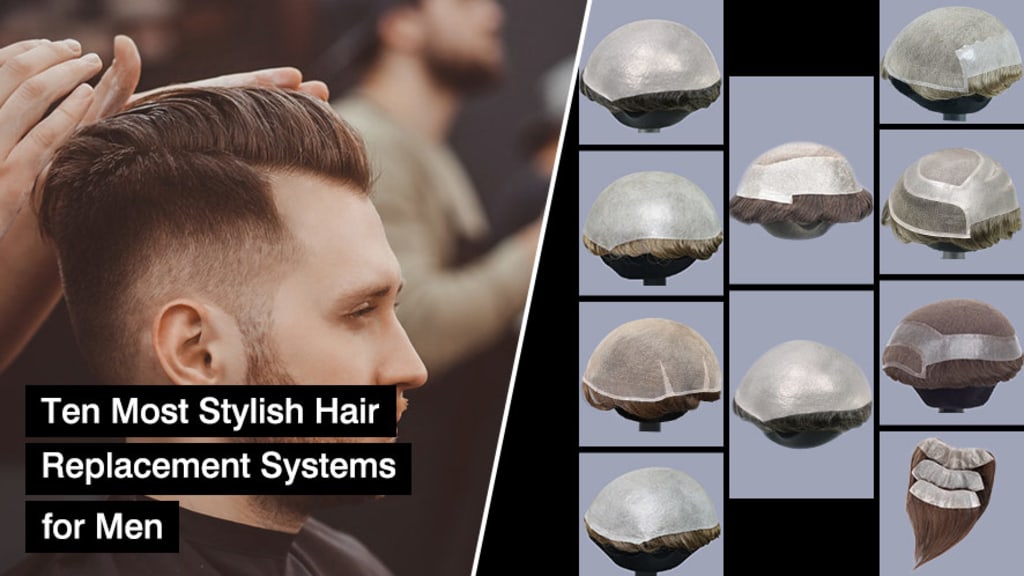
This is where modern hair systems have dramatically changed the conversation.
Companies like Bono Hair specialize in advanced men’s hair systems designed to blend seamlessly with natural hair. Unlike older wigs or toupees, today’s systems use lightweight bases, realistic hairlines, and high-quality human hair to create a natural look.
For men who want to keep styles like textured crops, slick backs, or fades while maintaining density on top, these solutions can offer flexibility that traditional haircuts alone can’t always provide.
And for many people, the biggest difference isn’t just appearance—it’s confidence.
The Truth Most Barbers Already Know
Hair loss is incredibly common.
By middle age, the majority of men experience some degree of thinning, recession, or balding. Yet the stigma around it often makes it feel more dramatic than it really is.
The reality is that great grooming adapts.
Sometimes that means choosing a shorter, smarter haircut. Sometimes it means embracing the clean shave. And sometimes it means exploring modern hair systems that restore the style you prefer.
There isn’t one perfect solution.
But there is a haircut—or approach—that will make you look and feel like yourself again.
And often, that’s all anyone really wants when they sit down in the barber’s chair.
About the Creator
Leo
Passionate men's hairstylist with a keen eye for detail and a knack for creating on-trend looks. Dedicated to delivering hair restoration education that enhances individual style.


Comments
There are no comments for this story
Be the first to respond and start the conversation.