
The Chicanos of Southwest America: The Need for a Militant Aztlán
Our enemies are armed. We should be

INTRO
In the modern era, the guerilla still resides in the same jungles their predecessors inhabited while attempting to prevent the ascent of neoliberalism. The guerilla walks crouched for miles on end in damp tunnels built beneath olive groves. They live beneath the mile long stretches where you can walk without your feet ever touching the soil because broken brick and shattered glass and sweaters and mattresses and the flesh of the dead pile up like snow. The guerilla lives on but is isolated, fringe, and infantilized. It is not the militant who lives in the shadows. It is those who drop to their knees and press their faces to the ground in a display of fealty to order who are eclipsed by Power.
OPERATION CONDOR
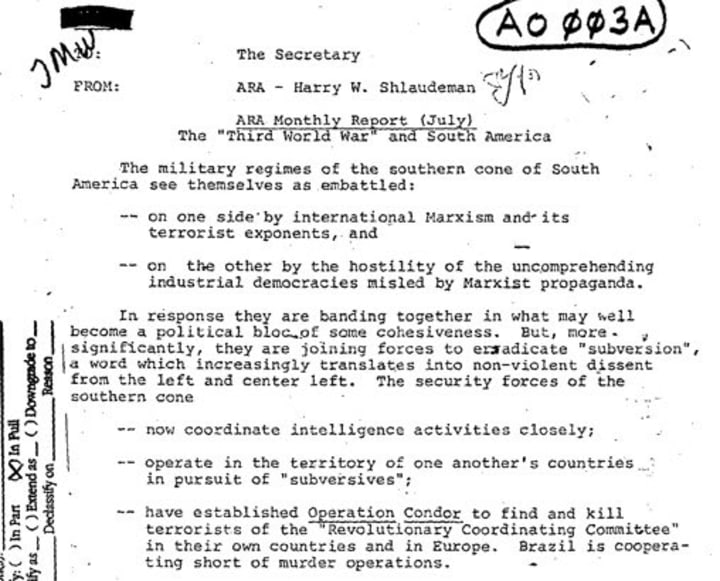
But then, Power asks you to stand, to give them your shirt. They spit in your face before walking past you. They don’t so much as glance over at you. They know that you know who you are ,and they know that you know who they are. The war is over; the people chose subservience over autonomy. They had no choice. French officers, fresh from napalming refugee camps in Algeria, were teaching the Triple A how to skin communist alive in secret networks of concentration camps. Union representatives for Ford, Mercedes-Benz, and other large companies were often detained inside the companies themselves and transferred to clandestine detention centers (CDC) in vehicles provided by these companies. To cut down on overhead, one of these companies had a doorway which connected their factory with a CDC that had been constructed as its own wing of the facility. The paramilitary death squad became the champions of liberal society. They stood for individual liberties by protecting their nations from nationalizing resources and land redistribution. They trafficked cocaine to the Americas for the sake of foreign interests. They tortured dissidents in empty football pitches for the sake of democracy.
Capitalism is based on the premise of competition, but capital, at the global level, demonstrates an intentional and exceptional level of solidarity. The military juntas, dirty wars, and sanctions the western world orchestrated and enforced across the Americas led to refugee criseses. Those who were able to flee from the imperialist dread that built Ford factories atop mass graves, took part in an exodus that was more akin to a Katabasis. They ventured to America, to the heart of the imperialist core. The Great Baby Killing Empire accounts for the displacement of the people left destitute by the rape of their homelands; it accounts for their ability to be exploited.
Heritage of Violence
The American southwest was Mexican before the Treaty of Guadalupe was signed in 1848. This treaty ended the Mexican American war, a war which was fought on behalf of Anglo-Texian settlers who wanted to maintain the practice of chattel slavery in spite of its abolishment by the Mexican government in 1829. The invading American forces succeeded in forcing Mexico to cede Texas, California, Nevada, and Utah as well as parts of present-day Arizona, Colorado, New Mexico, and Wyoming.
Tejanos and other Mexican populations living in the newly annexed territories were turned into second class citizens. They were used for cheap labor to sustain Anglo-American capital that saw the new territories as ripe territory to establish ranches, fruit plantations, and resource exploitation. The original cowboy was likely Mexican or of African descent, conducting cattle drives for the white land owners who operated their ranches as any capitalist operates their enterprise. They owned the land, the capital, to have these severely disenfranchised populations put the productive labor into turning a profit.
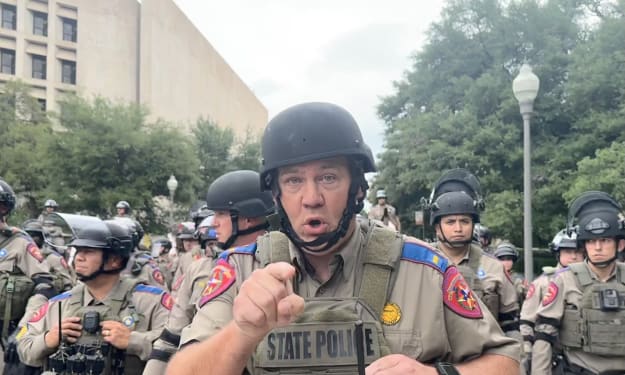
And, since capital operates on the premise of constantly rising profits, expansion continued beyond merely the expansion of borders. Texas rangers, irregular military outfits, and mobs of Anglo ranchers sought to consolidate their power during a period known as La Matanza. They indiscriminately murdered Mexicans, particularly in south Texas, so as to assert Anglo-American dominance in the area. Mexican land owners even fled to Mexico, leaving behind thousands of cattle out of fear of being targeted. Anglo-farm owners even raised concerns that the violence was leaving them without field laborers.
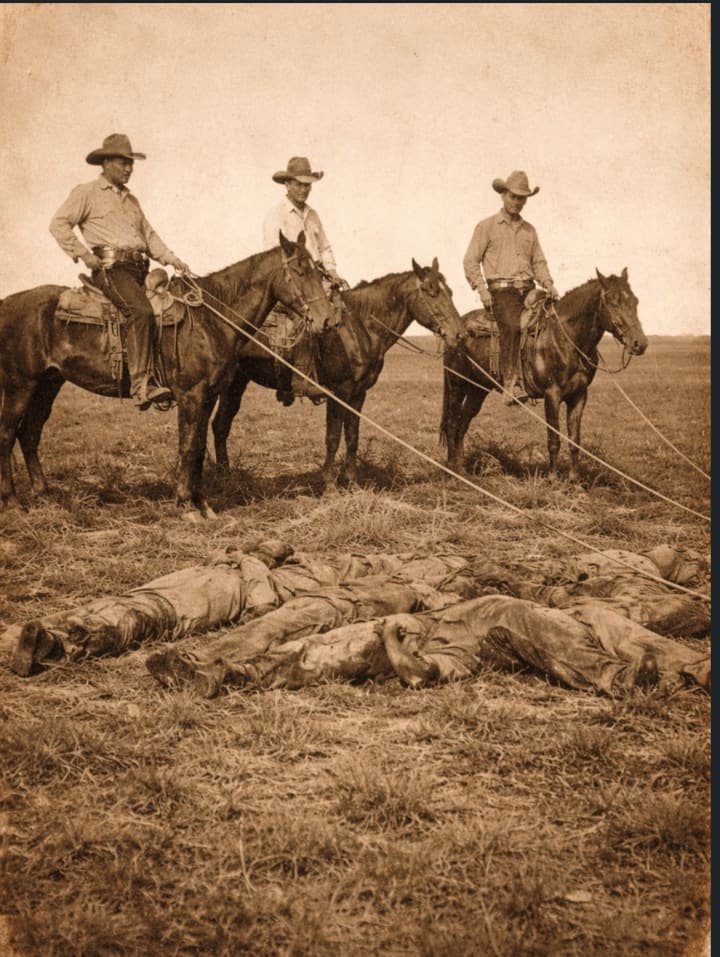
During the Porvenir massacre, Texas rangers surrounded the village of Porvenir in Presidio, Texas. They awoke the residents of the village at 2:00 AM and asked them to leave their homes. They took 15 men and boys from their home, bound them with ropes, and fired upon them until they ran out of bullets. The other residents had to flee as their houses were set alight by the rangers following the massacre.
Violence campaigns such as those headed by the Texas Rangers sought to maintain a white majority in these regions. The existence of a “Mexican village” like Porvenir implied a level of autonomy and self sufficiency on behalf of the Mexican. The Mexican was meant to live in Anglo-dominated communities and be the grunt labor for Anglo-dominated ventures. The “village” represented a community, and these people were meant to be disenfranchised.
AZTLAN
Through mass migration we have seen the American southwest, the annexed territories, subvert the early Anglo attempts to keep migrants from Latin America as a minority. Operation Condor reversed the early efforts of the Texas Rangers. And so what have we seen as a response? The rise of a paramilitary of deputized Anglo-Americans and their black and brown towel boys who think that their record of collusion differentiates them in the eyes of the white nationalists that cheer on their operations.
This paramilitary, ICE, operates much like the Texas Rangers did in the early 20th century and much like the paramilitary death squads of the late 20th century operated. They instill fear in the laborer; they ensure his exploitation. America needs its migrant labor, but it also needs to maintain the fear necessary for it to reap the benefits of this arrangement. The Mexican laborer is just that- a single laborer. They will not attempt to organize, to unionize, or to advocate for civil rights. They will work diligently and hope that, by staying silent and compliant, they are not targeted.
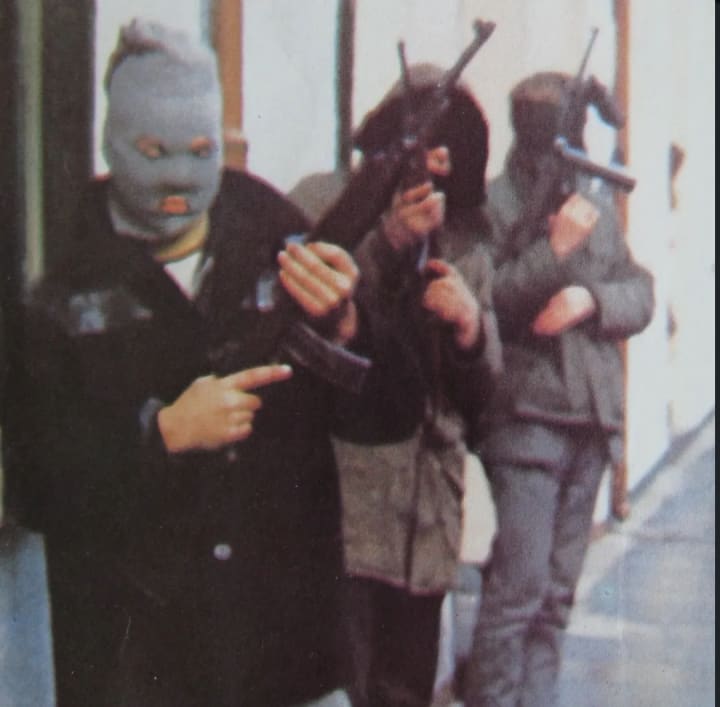
Chicanismo was the ideology of the Brown Berets. They saw themselves as Chicano revolutionaries from the barrier fighting for self determination. They saw armed,militant organization as crucial for their struggle for self determination.
This is where Aztlan comes into play. Self determination for Chicanos comes in the form of separating the American southwest from the control of the United States Government. We have more Chicanos than what were present during the formation of the Brown Berets. We are experiencing an ethnic cleansing campaign which exceeds the oppression they faced even then in the 1960s.
Now is not the time to allow the United States entity to reassert itself over the Chicano nation. Now is the time for militancy. We must form a people’s liberation front, community defense organizations, to combat the encroaching white nationalist agenda to wipe us from the barrios, to storm our homes and take us to clandestine facilities. We must organize within our rights, but of what value is the American “right to anything”?
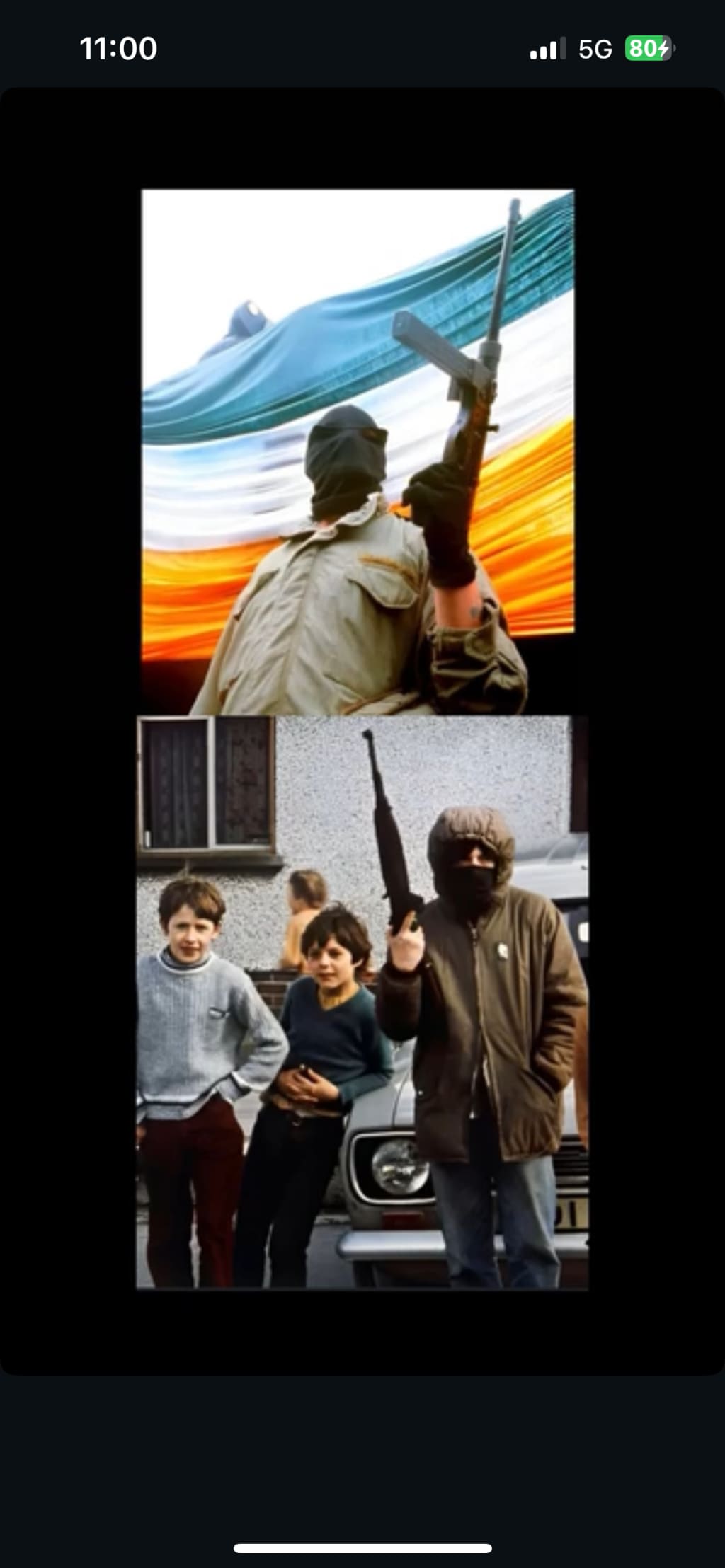
Our community defense of today might take the same form as it did in the 60’s. The militancy of today may look less like the Brown Berets and more like the IRA. Clandestine, yet effective. An ICE agent removed of their service here and then another sent into early retirement here. ICE will kill you. They will kill you for complying, and they will kill you for exercising your rights. However, reactionaries are paper tigers. They gravitate to these positions because of the power it enables them to have. The dead have no power. If this becomes a reality they have to confront, how many ICE agents will we see on the streets, in the barrios?
About the Creator
Stanley Davis
let’s not overthink this
Keep reading
More stories from Stanley Davis and writers in The Swamp and other communities.
The Two Years Since I was expelled for Protesting the Palestinian Genocide
Ran into one of the women that was on the conduct board that kicked me out of UT. Didn't know how big the wound was til I felt it split open right then at that moment. I was in honors. I was a great sociologist. I was beloved by my professors. I wanted to be like them, get a doctorate and all that. I had something I love, I had a purpose
By Stanley Davis5 days ago in Confessions
The Forsyth House Fire
Since 1851, Forsyth House has stood on the corner of Union Street and Gordon Street in the heart of Glasgow. Its iconic, or was... because on Sunday 8th of March, 2026, a fire broke out in a small, seemingly un-named shop in the building and tore all that history down. As I write, the rubble is still unsettled and the street is still blocked off. Central Station is quiet on the upper level, and around 30 small businesses have quite literally gone up in smoke.
By S. A. Crawford3 days ago in The Swamp
Hottest in the Office
Dear Rafi, You’re very distracting to work around. For the first second I saw you the other day, I thought you were some type of executive. It took a moment to realize no, you were just the new guy, dressed up for the job he wants. Be still, my heart.
By Gabriel Shames6 days ago in Pride



Comments
There are no comments for this story
Be the first to respond and start the conversation.