
The Writers Hail Mary
One Writers Plan to Re-Centre the Craft

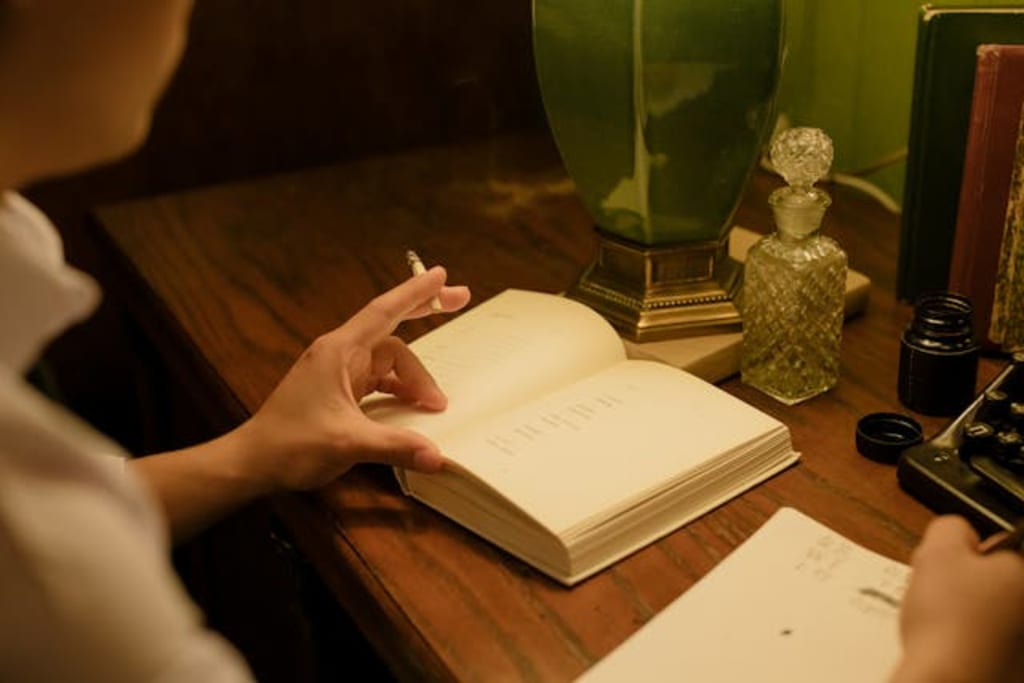
"Hail Mary" is often used in everyday language to describe any last-minute attempt to solve a problem or achieve a goal, especially when the chances seem slim.
For the last twenty years, give or take a few years (God I'm getting old), writing has been more than my bread and butter. It has been, at times, my retreat from life, my hope for a fulfilling career, my day job, my hobby, and a very real and effective form of self-therapy. And this year I've noticed something strange; I spend less and less time thinking about it, almost no time doing it... in fact my last piece, Terminus, was posted eleven days ago. Not a huge gap some may say, but for a woman who has been known to knock out a forty thousand word first draft in less than a month before its a gap. A missing note in the song that has always underpinned my life.
I have lost the joy of the craft, and with it my drive to be creative.
I don't know whether it's the state of the world right now, a particularly nasty and long lasting bout of depression (don't let anyone tell you mental illness is good for creative energy, its not - and even if you're the exception to that fact, its not a reason to let your brain boil in its own chemicals), or simply the a-to-b-to-a-again rhythm of life lately.
I used to be the person who had active subcriptions to two or three writing magazines, who bought the Writer's & Artists Yearbook every year, submitted short stories, ran writing sprints, went to groups and sought out every opportunity to improve... that's all stopped. I just don't know why, but I do know that I'm not walking away from a lifelong pursuit with nothing more than a last look over my shoulder.
I have a plan. A hail mary, if you will, aimed at reminding me what writing used to mean to me... and if you're finding yourself in the same position, I encourage you to join me.
Springing Forward
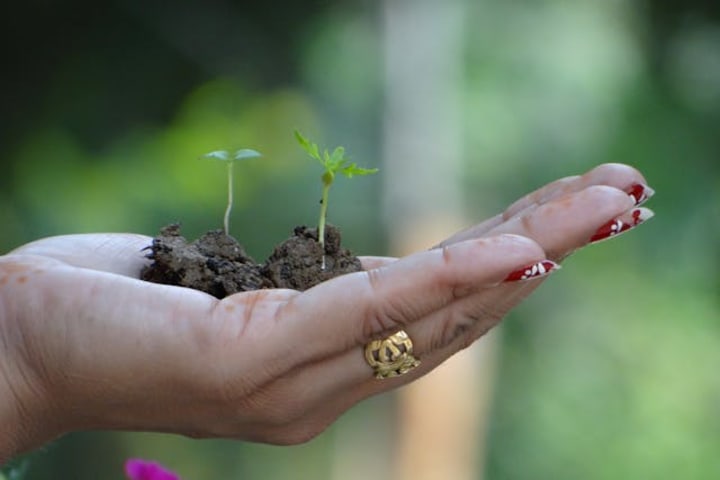
The clocks just went forward, the mornings and evenings are lighter, the wind is sharp and the days, in Scotland certainly, are bright and breezy and wild. This is the perfect time to blow away the cobwebs and let new growth come through. I don't know if you, the reader, you watching me have a strange existential crisis, are a fan of gardening, but I am. If you are you'll probably know that there are some dire circumstances in which you have to strip everything out to save the soil. Perform a kind of triage for long term sustainability even if it leaves your garden bare for a season.
This is the point we're at right now. Hold my hand, if you can, and help me say it simply; I think the soil is bad here. Whatever I've done has left the soft place inside my head where seeds should take root unsuitable for growth and I am determined to strip it all out and replace it with something healthier. Weed out the strangling vines, unbury the rocks, turn the soil and layer all the raw material for a solid compost mix that will, hopefully, bring me back to life.
For the non gardeners scratching their heads, this is the plan; I am going to stop writing fiction. I am going to throw out the old drafts, the tainted material, the dead end short stories, and spend the next month at least finding new materials, heap them into my head, and let my mind and soul rot on the proverbial vine. Why? Because rot is often the basis for new life.
If that sounds too morbid, call it a creative detox. Here's the plan.
Step One: Into the "Wilderness"
Don't worry, I'm not going to up sticks and head out into the glens to live on cud and mushrooms, but I have cancelled my streaming subscriptions, my Spotify premium membership, and uninstalled my mobile games. The Xbox is in the cupboard along with my TV, too. Oh yes, I'm serious.
The world is so full of content and entertainment I believe we have become allergic to boredom, and that is not a good thing. Not for creative minds in particular. Boredom is the digestive process for what we take in, at least that's what I think. Children are creative, wild, always on the move (or they were when I was one... I don't have much exposure to kids these days), and part of that is how quickly they get bored. They demand creativity from themselves and others because their minds digest everything they see and hear so quickly.
I was more creative as a child than I have been for years, and part of that is probably the weigh of experience pointing out the flaws in plans and ideas before I can put them into motion, but still. A little boredom won't kill me.
In practical terms this means one month, minimum, of no mobile games, no Xbox, no streaming services, and minimal exposure to screens. It also means more time outside, more socializing, more talking to people; it's easy for writers to forget that at the heart of it all is people. We are storytellers, and people are both the subject of the story and its audience.
Step Two: Retracing Your Steps
Whenever we lose something, we're told to do this. Retrace our steps and look around for the dropped money, the misplaced phone, or in this case the general joi de vive that used to come with crafting a story, no matter how stupid, silly, or small. It's taken me the best part of four days to figure out what that looks like for something as complex as a lost sense of drive and purpose. I think it means going back to what made me want to write in the first place, which means if you have decided to come on this journey with me you'll need to figure out this step alone.
For me, it was curiosity about the process itself and a somewhat childish appreciation for a really big stack of paper.
So I've dug out my old back issues of the writing magazines, found my copy of The Craft and made a list of the books and stories that I remember catching my eye back when I was first trying to make the words dance in a line on the page. I'm going to dive back in and try to find the joy instead of analysing the prose and structure.
For beginners, technique is the stumbling block. Once you've got the brass tacks down, however, I've come to realize that our minds are our own worst critics. We become so harsh that everything ends up on the cutting room floor and all we're left with is a pile of mangled ideas that probably could have been something if we'd let them grow.
Hard to understand why that approach would suck the joy out of the process, right?
Step Three: a Record of the Ordinary

When we think about fiction, there's often a lean towards the grand. Game of Thrones, The Lord of the Rings, The Dark Tower, The DaVinci Code.... a lot of 'the's'. But every story is about people, whether those people are coping with the loss of a family member or fighting an immortal evil, they're still people. The best stories are the ones where we can see a bit of ourselves and the people we know in the characters. That's what I think at least.
And people are all around us. So I've got a little notebook. The kind that can fit in your pocket with a pen strapped to it. I'm going to get out amongst people and see what comes to mind, and I'm going to keep going until that notebook is full. A record of absolutely no consequence, full of the ordinary and day to day. I think it'll be quite the little keepsake, and even if it doesn't bring back the joy of writing, it might give me more of an appreciation for people again.
Because in truth its the characters, the people, that have always made me love stories. We, The Drowned, Best Served Cold, Guards! Guards!, all these books that I've read again and again, it was mostly for the characters not the events.
Step Three: Micro Studies and Drills
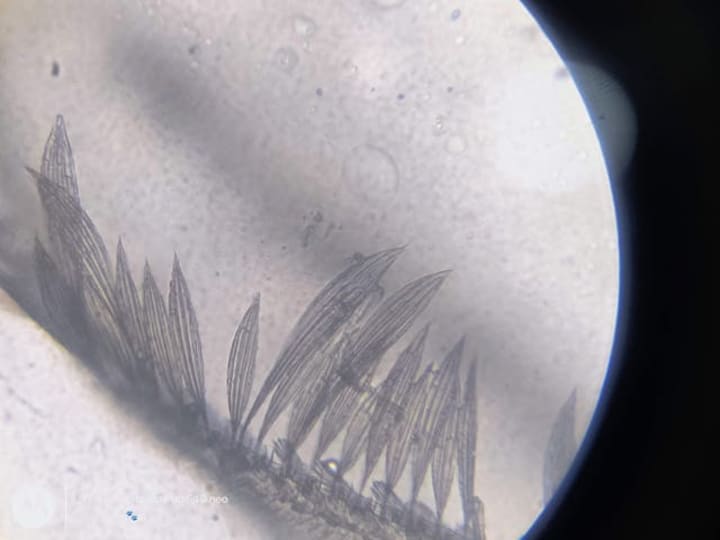
When learning how to paint, draw, or craft with any physical material it's common for students to run drills on small, specific techniques or subjects to really nail the brass tacks. You have to understand the rules and limitations before you can break them successfully. At least thats the commonly held belief, and I don't disagree.
Writing a book is overwhelming. So many moving parts. So many overarching structures. So... much.
Maybe if I break it all down into small chunks, little drills, at least an hour a day where the purpose is just to make one little thing as good as it can be i'll be able to stop thinking about the huge grandness of it all. The unbelievably heavy weight of creating something from thin air, paper, and the hunk of electrified jelly that constitutes the human mind. That's the thought process, but don't put too much weight on it yet; God only knows if it will work.
Step Four: Report Back and Repeat
One thing I can say with absolute certainty is that this community has been a real and lasting source of inspiration and comfort since I joined in 2020 (fuck me, has it been that long?). So, whether I find success or a dead end, I'll be bringing it back here because I know that if there's a way back to loving this craft, the path for me most likely will come back here. Writing may be a solitary activity, but writers are social. We chatter like birds, build on the foundations laid in the past, and come together to celebrate and commiserate.
I don't know how often I'll be back over the next four weeks, but I will be back and if I find anything worth talking about, you can be sure that I'll bring it to the table for you.
Sorry for getting sentimental, guys, but I just can't imagine logging off for good. Not yet.
Stay clever, and I'll see you all soon.
Sheree x
About the Creator
S. A. Crawford
Writer, reader, life-long student - being brave and finally taking the plunge by publishing some articles and fiction pieces.
Keep reading
More stories from S. A. Crawford and writers in Writers and other communities.
10 Magazines That Pay for Fiction
The information in this article is correct as of January 2025. With the New Year just beginning, I know all of you writers will be making resolutions and planning how to progress in the year ahead. Making money from writing isn't everyone's goal, but a shift towards aiming for publication is certainly on my radar. While elbow deep in research, I thought it might be a good idea to share some of what I find!
By S. A. Crawfordabout a year ago in Writers
Side Quest Goal Achieved: Placing an Alien Claim
This is a post that has me quite ecstatic. It's funny, I thought it was going to be one of my usual, "Hey, I achieved another one of my goals and checked it off" type deals. And it sort of is. But it sort of isn't. And it's also one of my greatest writing accomplishments of late.
By Stephen Kramer Avitabile4 days ago in Writers
Grounded Flights, Empty Rooms, and a Nation in Limbo: Why the Shutdown Is Strangling America’s Hospitality and Travel Industry
By any measure, the current U.S. government shutdown is no longer just a political standoff in Washington. It is an economic chokehold on one of the country’s most vital industries. From airport terminals stretched to their limits to hotel lobbies growing quieter by the day, the damage to hospitality and travel is immediate, visible, and worsening. If lawmakers fail to act now, the consequences will outlast the shutdown itself.
By George Dfouni7 days ago in Writers
They’re Coming To Take Me Away Ha-Haa turns 60
There was a one-hit wonder recording in 1966 titled "They're Coming to Take Me Away, Ha-Haaa!"The song made it to number 3 on Billboard's top 100 chart, but in today’s cancel culture might be considered inappropriate.
By Cheryl E Preston7 days ago in Beat

Comments (1)
✍️I wish you luck! ✍️