Sheila Danzig
Bio
Executive director of TheDegreePeople.com and a leading expert in foreign degree evaluations. Recognized for her innovative approach to difficult cases, helping thousands of clients successfully obtain visa approvals even facing RFEs.
Stories (13)
Filter by community
When USCIS Requests More Evidence in an Immigration Case
When U.S. Citizenship and Immigration Services issues a Request for Evidence, applicants often feel uncertain about what the notice means for their case. An RFE does not mean a petition will automatically be denied. It simply indicates that the agency needs additional information before reaching a final decision. When the requested documentation is provided clearly and accurately, many cases move forward successfully.
By Sheila Danzigabout 3 hours ago in Writers
Availability of Work RFEs and the Question of Long Term Project Assignments
An Availability of Work Request for Evidence is issued when U.S. Citizenship and Immigration Services questions whether an H-1B beneficiary will have specialty occupation work for the full validity period requested in a petition. In these situations, the officer may believe the assignment is temporary or tied only to a short project rather than lasting throughout the requested approval period.
By Sheila Danzig7 days ago in Writers
Credential Evaluations and Their Role in H-1B RFE Responses
When an H-1B petition receives a Request for Evidence, the focus often turns to foreign academic credentials. U.S. Citizenship and Immigration Services may ask for confirmation that a degree meets United States standards, that the issuing institution is recognized, or that coursework supports the position offered. These requests require careful documentation and clear academic analysis.
By Sheila Danzig14 days ago in Writers
Maintenance of Status RFEs and Their Impact on H-1B Petitions
A Maintenance of Status Request for Evidence is issued when U.S. Citizenship and Immigration Services questions whether a beneficiary remained in valid immigration status before an H-1B petition was filed. Unlike RFEs that focus on job duties or educational qualifications, this type centers entirely on status history.
By Sheila Danzig22 days ago in Writers
Third-Party Worksite RFEs and the Question of Employer Control
When an H-1B petition involves placement at a third-party worksite, U.S. Citizenship and Immigration Services often examines the structure of the employment relationship closely. A Request for Evidence may be issued if the agency questions whether a valid employer–employee relationship exists.
By Sheila Danzig29 days ago in Writers
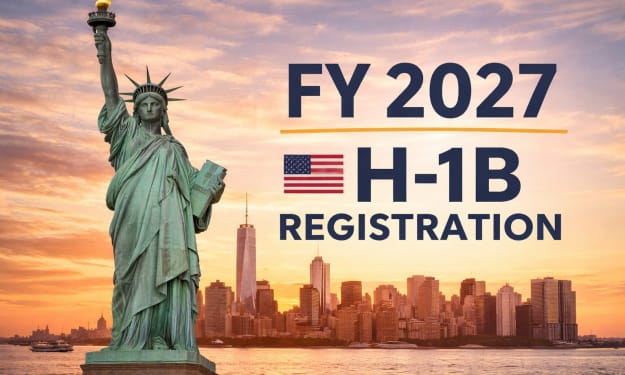
H-1B Visa Registration for FY 2027: What the New Selection System Means for Employers
As the FY 2027 H-1B registration period approaches, employers are facing meaningful changes to how petitions will be selected. This upcoming cycle introduces a wage weighted structure that alters how entries are counted in the selection process. The adjustments may influence salary decisions, role classification, and overall petition strategy.
By Sheila Danzigabout a month ago in Writers
When USCIS Questions a Degree in an Immigration Case
For many employment based immigration applicants, education is a central part of eligibility. When U.S. Citizenship and Immigration Services issues a Request for Evidence related to a degree, it can feel like the foundation of the case is being challenged. In most situations, however, the issue is not the degree itself, but how it is understood within a U.S. framework.
By Sheila Danzigabout a month ago in Writers
U.S. and Canadian Immigration Updates Employers and Families Are Watching Closely
Immigration policy in both the United States and Canada continues to evolve, often through a mix of regulatory changes, court decisions, and agency guidance. For employers, families, and foreign nationals, staying informed about these developments is increasingly important, as even small adjustments can have practical consequences.
By Sheila Danzig2 months ago in Writers
When USCIS Questions a Specialty Occupation Petition
For many employment based visa applicants, the term “specialty occupation” becomes central to the approval process. When U.S. Citizenship and Immigration Services issues a Request for Evidence questioning whether a role qualifies, it can feel like the entire case is at risk. In reality, these RFEs are common and often stem from how a position is described rather than whether it truly meets the legal standard.
By Sheila Danzig2 months ago in Writers
When a Request for Evidence Changes the Direction of an Immigration Case
For many people navigating the United States immigration system, a Request for Evidence can arrive unexpectedly. The notice often brings worry, even when the application has been prepared carefully. In reality, an RFE is a pause in the review process, not a rejection. It signals that an officer needs more clarity before moving forward.
By Sheila Danzig2 months ago in Writers
In the Fight to Attract More International Students, Some Community and Technical Colleges Are Finding Support in an Unlikely Place. AI-Generated.
Across the United States, community and technical colleges have been facing one of their toughest challenges in years — a drop in enrollment following the global pandemic. Yet, as international borders reopen and interest in U.S. education grows, many schools are seeing signs of recovery.
By Sheila Danzig5 months ago in Writers
Federal Requirements for Foreign Credential Evaluation Services. AI-Generated.
When selecting a foreign credential evaluation agency, it is important to look beyond marketing claims or membership logos. Notably, these agencies have no official accreditation. This means a credential evaluation service cannot be “accredited” in the way that schools or programs are, so consumers should be wary of any such claims.
By Sheila Danzig5 months ago in Writers