science
The science of staying young, healthy, and in-shape.
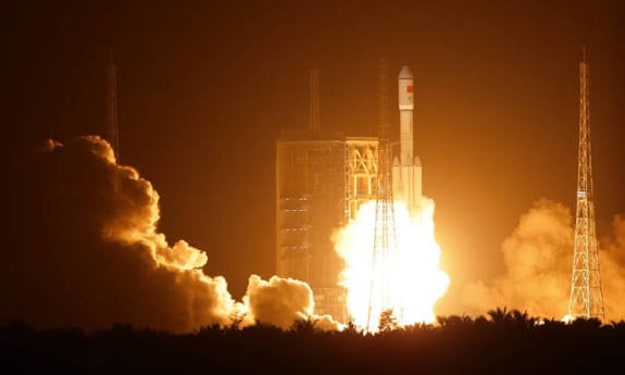
How China Is Challenging the U.S. to Become the Next Great Space Power. AI-Generated.
As Beijing’s space ambitions expand, Washington faces an intensifying geopolitical and technological rivalry in orbit and beyond. In the early decades of the 21st century, the United States long stood unchallenged as the dominant space power — a position built on decades of NASA leadership, unmatched launch capability, and a vibrant commercial space economy. But today, a determined China is mounting one of the most consequential strategic challenges in space since the Cold War, pushing to rival — and ultimately surpass — the U.S. in space influence, technology, and strategic advantage. National Strategy and Long‑Term Vision China’s leaders have openly signaled their ambition to become a global space powerhouse. Official space policy documents and state planning envision a broad array of capabilities — from heavy‑lift rockets to lunar exploration — aimed at reshaping the space order that has been U.S.‑dominated for decades. According to analyses of government planning, Beijing intends to establish a full suite of launch vehicles, satellites, and space infrastructure that could surpass current international norms by mid‑century. Underpinning this vision is a belief among Chinese space officials that self‑reliance and indigenous innovation are key to international competitiveness. Recent reports in state media emphasize that China’s aerospace industry is pushing far beyond imitation toward original technological breakthroughs in areas like rocket manufacturing, intelligent space systems, and advanced materials — all with the strategic goal of securing leadership in space. Commercial Space: From Government Giants to Private Innovators China’s rapid ascent isn’t limited to state space agencies. A growing ecosystem of private space companies — much like the commercial boom seen in the U.S. — has taken root, focusing on reusable rockets, satellite networks, and novel space services. A recent South China Morning Post report highlights Beijing’s push to encourage private innovation within its space sector, supporting technologies such as reusable launch vehicles, space debris monitoring, extraterrestrial resource utilization, and even in‑space biomanufacturing — fields long dominated by U.S. firms such as SpaceX or Blue Origin. This commercial expansion broadens China’s capabilities and compresses the technological gap with the U.S., challenging American assumptions that commercial innovation is exclusively an American forte. It also signals a shift in global space economics, where China may soon contend for commercial markets once dominated by Western companies. Military and Strategic Dimensions Alongside civil and commercial ambitions, China’s space strategy has clear military implications. U.S. strategic assessments note Beijing’s efforts to build counterspace capabilities — systems designed to deter, deny, or degrade another nation’s satellite operations — a key advantage in future conflicts. China has already deployed anti‑satellite weapons, jamming technologies, and sophisticated ground‑to‑space radar systems that could threaten U.S. space assets in a crisis. For the United States, which relies heavily on space systems for communication, navigation, and battlefield awareness, these capabilities represent a serious strategic challenge. Beijing’s ability to field space and counterspace technologies could blunt some of Washington’s military advantages in the Asia‑Pacific region and beyond. Lunar and Deep Space Objectives China’s Chang’e lunar exploration program is another marker of its space ambitions. With a series of increasingly complex robotic missions and plans for an International Lunar Research Station by the 2030s, Beijing aims to be a leading voice in lunar science and development — directly challenging the U.S. Artemis program and international partnerships spearheaded by NASA. � Wikipedia Missions like the strategically significant Queqiao‑2 communications relay satellite, which supports lunar missions over long distances, further demonstrate China’s growing sophistication in deep space operations and infrastructure deployment. U.S. Response: Maintaining Leadership Recognizing the challenge, U.S. policymakers are pushing legislative and strategic initiatives designed to preserve American competitiveness in space. A newly passed NASA authorization package includes provisions aimed at reinforcing U.S. lunar presence, strengthening Earth orbit assets, and countering Chinese influence in space science and technology — signaling a bipartisan consensus on the gravity of the space rivalry. A New Era of Cosmic Competition The emerging science and technological competition between China and the United States in space is unlike anything seen since the original Moon race. Today’s contest spans not only national prestige but military advantage, commercial opportunity, and scientific discovery. As each side pursues its vision of space dominance, the outcome will shape global power structures for decades to come — affecting diplomacy, security, and economic leadership both on Earth and beyond. If you’d like alternative versions, transcripts, or a set of headline + subtitle options for this topic, just let me know!
By Fiaz Ahmed 9 days ago in Longevity
UK Sees Highest Temperature of the Year, Snow and Blood Rain in Last 48 Hours. AI-Generated.
From warmest day so far to Saharan dust showers and hill snow — Britain’s weather has swung dramatically this week. In a remarkable turn of meteorological events, the United Kingdom has experienced an extraordinary mix of weather over the past 48 hours — recording its highest temperature of the year, followed by snowfall in parts of the north and a rare “blood rain” event linked to Saharan dust. These dramatic swings illustrate the UK’s characteristic weather variability and underline the influence of dynamic atmospheric patterns across Europe. Warmest Day of 2026 So Far On Thursday, parts of England basked in unusually mild conditions for early March, with the Met Office confirming a high of 19.2 °C in Northolt, west London — the warmest day recorded in the UK so far this year. This exceeded the previous 2026 peak of 18.7 °C at Kew Gardens earlier in the week and briefly made British temperatures warmer than those in Barcelona. Forecasters attributed the warmth to a surge of mild southerly air drawn up from southern Europe and North Africa. These warm air currents not only boosted temperatures but also transported fine dust particles from the Sahara Desert into the British atmosphere — setting the stage for the unusual rain events that followed. The Saharan Dust Effect and “Blood Rain” As the warm, dusty air crossed north over the Atlantic and Europe, it brought with it a visible cloud of Saharan dust. When this dust mixes with rain falling through the atmosphere, the resulting droplets can carry red or orange‑tinted particles — a phenomenon colloquially known as “blood rain.” While the term suggests something sinister, scientists emphasise that the event is purely natural. The colour comes from mineral dust in the rain droplets, not from any harmful substance. The dust, lifted from the Sahara Desert and carried thousands of kilometres, can settle as a reddish film on cars, windows and outdoor surfaces after rain. Weather services noted that while the dust concentration was not high enough to make the rain itself look vividly red as it fell, the residue left behind after showers was noticeable across parts of England and Wales. These dust‑enhanced skies also created striking sunsets and sunrises for many observers. Snow in the Hills: A Chill Returns Just as residents were putting away winter coats after the warm spell, colder air pushed back into the UK from the north. This led to snowfall over high ground in parts of northern England and southern Scotland, including areas of the Yorkshire Dales and near Edinburgh. The rapid shift in conditions — from near‑20 °C sunshine to wintry precipitation — highlighted the UK’s unpredictable transitional weather between seasons. Local authorities in these rural areas reported icy road conditions and some vehicles becoming stuck on snowy roads, prompting police and emergency services to advise caution over the weekend. Broader Weather Trends and Outlook Experts say these rapid temperature swings are consistent with the UK’s maritime climate and the interplay of high and low pressure systems during early spring. Meteorologists also point out that February 2026 was unusually mild and dull overall, with southern England registering average winter temperatures among its warmest on record. Despite the warm peak, forecasters predict a cooler, wetter and windier period ahead, as Atlantic weather systems return. This means more frequent showers, gusty winds and temperatures falling back toward seasonal norms in the coming week. Public Reaction and Preparations Across social media, many Britons shared photos of the vivid orange‑tinged skies and dusty windshields, marveling at the strange mix of weather phenomena experienced in such a short span of time. Others were reminded that, despite signs of spring, the UK can still deliver winter chill without warning. The Met Office continues to advise people to stay updated with local forecasts — especially if planning outdoor activities or travel in areas where sudden snow or rain might affect conditions.
By Fiaz Ahmed 9 days ago in Longevity
Calling vs Income
There is a tension that never quite goes away once it has been seen clearly, and it sits at the intersection of calling and survival. Some forms of work feel unquestionably meaningful, even necessary, yet remain economically fragile or entirely unsupported. Other forms of work provide stability, predictability, and income, while feeling hollow or misaligned with who a person actually is. Once this divide becomes visible, it is difficult to unsee, and even harder to navigate honestly without resentment creeping in.
By Peter Thwing - Host of the FST Podcast10 days ago in Longevity
Nature Report, Killed by Trump, Is Released Independently. AI-Generated.
A major federal report assessing the state of nature and biodiversity across the United States — originally halted during the presidency of Donald Trump — has finally been released to the public after scientists decided to publish the findings independently. The report, years in the making, provides one of the most comprehensive analyses ever compiled about the health of ecosystems, wildlife populations, and natural resources across the country. The study was prepared as part of a nationwide effort coordinated by the U.S. Geological Survey and other federal agencies. Researchers involved in the project say the document was meant to provide policymakers with detailed scientific guidance on biodiversity loss, habitat degradation, and the growing impact of climate change on American landscapes. However, the report’s release stalled during the administration of Trump, when several environmental initiatives were scaled back or canceled. Scientists working on the project say the publication was effectively shelved before it could reach the public or be formally submitted to Congress. Now, years later, the authors have decided to release the research independently, publishing the findings through academic and scientific networks rather than through official government channels. The decision marks a rare step for researchers who typically rely on federal agencies to distribute major environmental assessments. According to the scientists behind the study, the report documents significant declines in biodiversity across the United States. Many native plant and animal species are facing mounting pressures from habitat loss, pollution, invasive species, and climate change. Wetlands and grasslands — ecosystems that support a large share of the country’s wildlife — have experienced particularly steep reductions in recent decades. The report also highlights the economic consequences of environmental decline. Natural ecosystems provide essential services such as pollination, water purification, and flood protection. Researchers warn that if biodiversity loss continues at its current pace, communities could face rising costs linked to environmental damage and weakened natural defenses against extreme weather events. Experts involved in the project say the findings were intended to inform national conservation strategies and guide land-management decisions at both federal and state levels. Without accurate scientific assessments, they argue, policymakers lack the information needed to design effective environmental protections. The controversy surrounding the report reflects broader tensions that existed between the scientific community and political leadership during the Trump presidency. Environmental policies adopted during that period included the rollback of several regulations related to emissions, land use, and wildlife protection. Critics argued that these decisions weakened safeguards designed to protect natural ecosystems. Supporters of those policies, however, maintained that regulatory reforms were necessary to support economic growth and reduce burdens on businesses, particularly in the energy and manufacturing sectors. Regardless of political debates, the authors of the biodiversity report say their goal is simply to ensure that the scientific data becomes available to the public. By releasing the document independently, they hope researchers, conservation organizations, and policymakers can still use the findings to inform future environmental strategies. Environmental groups have welcomed the publication, calling it an important contribution to understanding the state of nature in the United States. They say comprehensive national assessments are critical for tracking environmental changes and identifying areas where conservation efforts should be prioritized. The report’s release also highlights the evolving relationship between science and public communication. In an era where research findings can be shared widely through digital platforms, scientists increasingly have alternative ways to distribute their work when official channels fail. For the researchers who spent years compiling the study, the independent release represents both a scientific milestone and a statement about the importance of transparency. They argue that environmental data belongs not only to governments but also to the public, whose lives and livelihoods depend on the health of the natural world. While the report cannot retroactively influence past policy decisions, its authors hope the findings will still shape future discussions about conservation and sustainable development. As biodiversity loss continues to accelerate worldwide, they say timely access to scientific information has never been more important.
By Fiaz Ahmed 10 days ago in Longevity
The Hardware of Exhaustion
Right now, human well-being sits in contradiction. Though today’s medicine reaches further than ever before, ongoing tiredness, stress, and deep exhaustion mark more lives than before. Individuals log rest hours, fine-tune food intake, wear gadgets that follow heartbeat rhythms - still, simply existing inside a present-day physical form feels overwhelmingly draining to vast numbers across the globe. Most doctors see tiredness as either a brain chemistry issue or a mental weakness. People get advised to handle pressure better, use vitamins, or try focused breathing. Yet could today’s weariness stem not from molecules inside us? Perhaps the cause hides within how information flows around us instead.
By Dr Marc Nock10 days ago in Longevity
Green Tea: A Cup Full of Wellness 🌿 (Health Tips)
Introduction Green tea is more than just a warm and relaxing drink — it is one of the most loved natural beverages in the world. It is made from the leaves of the plant (Camellia sinensis) a plant known for its rich antioxidants and healing properties.
By Health Tips15 days ago in Longevity
After the warmest weather of the year so far, is winter finally over?. AI-Generated.
As much of the Northern Hemisphere basks in unseasonably warm temperatures, many are asking whether winter is truly coming to an end or if this is merely a brief interlude before the chill returns. Meteorologists note that while recent weeks have brought record-breaking warmth in several regions, the seasonal transition is more nuanced, and forecasts suggest that cold snaps may still make surprise appearances. Across parts of North America, Europe, and Asia, thermometers have consistently recorded temperatures above seasonal averages. In cities like New York City, Paris, and Beijing, residents have reported unusually mild weather, prompting early sightings of blooming flowers and active wildlife that typically emerge later in the season. Local authorities have even issued advisories for heat-sensitive infrastructure, such as early melting of snow and ice causing minor flooding in some urban areas. Climatologists emphasize that while short-term warmth can feel like the end of winter, it does not necessarily indicate a permanent shift. “Weather and climate are distinct concepts,” said Dr. Hannah Moore, a meteorologist at the National Weather Service. “A week or two of warm temperatures is a weather event. Winter, defined by astronomical and climatological markers, continues until the official seasonal end.” The current warm spell has been linked to several atmospheric phenomena. A persistent high-pressure system has settled over large portions of the Northern Hemisphere, drawing in warmer air from lower latitudes. At the same time, shifts in the jet stream have allowed cold Arctic air to remain farther north than usual, creating a pocket of warmth at mid-latitudes. While such patterns often produce temporary spikes in temperature, they do not necessarily mark the end of the season. Unseasonably warm conditions have significant ecological and societal impacts. Early thawing of snowpacks in mountainous regions increases the risk of spring flooding. Wildlife, particularly migratory birds and hibernating mammals, may be confused by inconsistent cues from the environment, affecting feeding and breeding patterns. Agricultural communities are also on alert, as early warmth can prompt premature growth of crops, leaving them vulnerable to potential late frosts. Despite the optimism brought by sunshine and mild days, experts caution that winter is not officially over until astronomical markers, such as the vernal equinox, are reached. Moreover, historical climate data shows that sudden cold snaps in March and even early April are not uncommon. For instance, a notable late-season cold wave in 2018 caused widespread frost damage across parts of Europe and North America, highlighting the unpredictable nature of transitional seasons. The psychological effects of early warmth are also notable. Residents often report a boost in mood and increased outdoor activity, reflecting the strong link between sunlight and human well-being. Cities have seen a surge in park attendance, cycling, and other recreational pursuits. However, meteorologists urge caution: the allure of warm weather should not lead to underestimating potential residual winter hazards, such as icy patches on roads or sudden snow flurries. Climate change adds another layer of complexity. While seasonal averages are gradually shifting upward globally, the variability from year to year remains significant. Scientists warn that interpreting a single warm spell as a permanent end to winter is misleading. Instead, it should be seen as part of broader patterns of climate variability, including more frequent temperature extremes and unusual weather events. In conclusion, while recent warmth may feel like the curtain call for winter, it is too early to declare the season officially over. Atmospheric patterns, historical precedent, and the persistence of cold pockets all suggest that winter can still make intermittent returns. For now, residents can enjoy the sunny reprieve but should remain prepared for sudden chills. Seasonal transitions are rarely linear, and this early taste of spring may merely be a preview of the warmth to come rather than a definitive end to winter’s reign.
By Fiaz Ahmed 15 days ago in Longevity
What Happens to Your Body When You Skip Meals Regularly
“I’ll eat later.” “I’m not that hungry.” “I’m too busy.” For many university students, skipping meals feels normal. But when student irregular eating becomes a habit, your body starts responding in ways you might not immediately notice.
By Being Inquisitive19 days ago in Longevity