addiction
The realities of addition; the truth about living under, above and beyond the influence of drugs and alcohol.
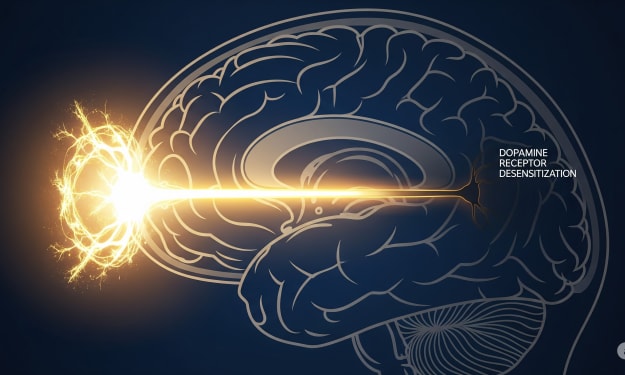
The Digital Mirage: How Pornography Rewires Our Brains, Erodes Our Confidence, and How to Reclaim Your Life
In the vast landscape of the internet, pornography has become a titan. Its websites attract more visitors than Netflix, Amazon, and Twitter combined, often dismissed as a harmless form of entertainment or a normal part of modern sexuality. But behind this veneer of normalcy, a growing body of scientific research reveals a much darker picture. While "pornography addiction" is not yet an official diagnosis in psychiatry's main diagnostic manual, the World Health Organization has recently added "Compulsive Sexual Behavior Disorder" to its own manual, a condition largely driven by problematic pornography use. This acknowledges a clinical reality: for many, pornography use evolves into a compulsive behavior with devastating consequences.
By Kaleem Ullah9 months ago in Psyche
The Tangled Web Within: How Lying Punishes the Liar and Fractures Trust
Lying. It's a behavior as old as humanity itself, woven into the fabric of our social interactions with varying degrees of severity. From the small white lie intended to spare feelings to the elaborate deception designed for personal gain, falsehoods permeate our daily lives. Yet, while the focus often lies on the victim of deceit, a profound and often overlooked consequence unfolds within the liar themselves. The act of lying sets in motion a cascade of internal punishments that erode self-worth, breed anxiety, and ultimately fracture the very foundations of trust upon which healthy relationships and societies are built. Understanding this intricate web of internal and external repercussions is crucial, not only for fostering personal integrity but also for cultivating a more honest and reliable world.
By Kaleem Ullah9 months ago in Psyche
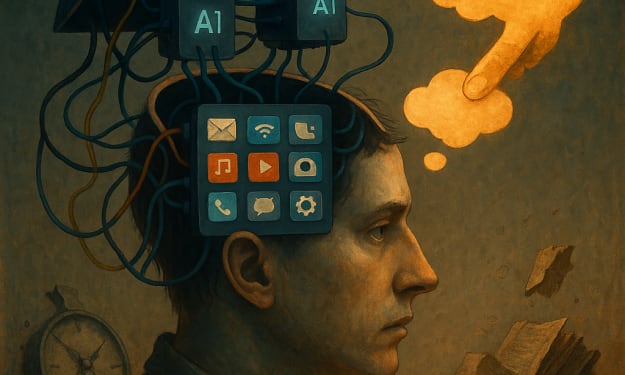
The Dimming Mind: How Convenience Culture Is Making Us Forget How to Think. AI-Generated.
We live in an age of astonishing ease. With a few taps, we summon dinner, diagnose a rash, translate a foreign text, or generate an entire business plan. Algorithms anticipate our desires before we consciously register them. The idea that technology should do the thinking for us has become not only accepted—but celebrated.
By Ahmet Kıvanç Demirkıran9 months ago in Psyche
Silent Hands, Loud Truth
In a small town wrapped in foggy mornings and quiet streets, lived a boy named Haris. He was eight years old, with soft brown eyes and a silence deeper than the sea. No one really knew him. His classmates barely noticed his presence. Teachers marked his attendance, but he was just a shadow in the corner—always quiet, always watching, always hiding.
By ArshNaya Writes10 months ago in Psyche
The Day My Reflection Talked Back
It started as an ordinary morning. The kind of morning where the weight of last night’s overthinking clings to your chest like damp clothes. My alarm blared, my apartment reeked of stale coffee, and my inbox was already overflowing with passive-aggressive work emails I didn’t want to answer.
By Zaheer Uddin Babar10 months ago in Psyche
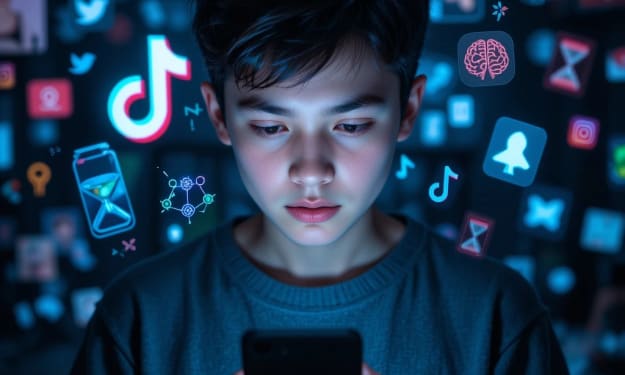
What TikTok is Really Doing to Gen Z Brains
In a world where everything is a scroll away, TikTok has emerged not just as an entertainment platform—but as a neurological experiment played out on millions of young minds. With over a billion active users, TikTok has dramatically shaped how Gen Z consumes, processes, and craves content. But as viral dances, meme-worthy skits, and dopamine-loaded loops dominate our screens, it’s time to ask: What is TikTok really doing to Gen Z’s brains? The answer isn't just in your screen time—it’s in your brain chemistry.
By Keramatullah Wardak10 months ago in Psyche