activism
Grassroots campaigns have proven instrumental in bringing about political, social or environmental change; you've got to start somewhere-might as well start here.
Secrets of the Swamp: Nature’s Hidden Wonder
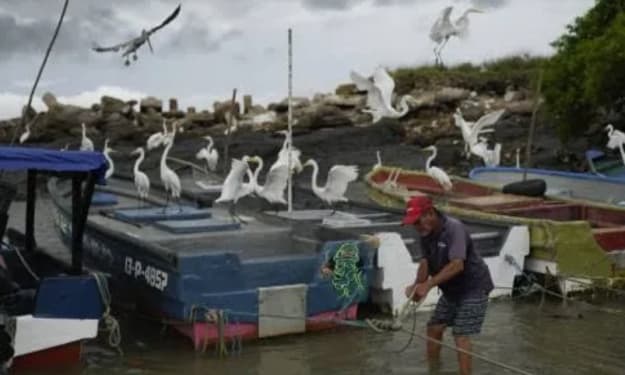
Most people think of swamps as eerie, murky places teeming with bugs and danger. But beneath the surface of this misunderstood reputation lies one of the most vital and vibrant ecosystems on Earth. Swamps, with their tangled roots and still waters, are not just wild and mysterious—they are also rich with life, deeply complex, and essential to the health of our planet. At dawn, a swamp begins to stir. Mist clings to the surface of the water like a delicate veil. The air is thick and fragrant with the scent of wet earth and vegetation. Towering cypress trees rise from the water, their trunks gnarled and ancient, draped in soft tendrils of Spanish moss. A great blue heron glides silently across the sky, scanning the shallow waters below for its breakfast. Frogs croak from unseen perches, and dragonflies dance like tiny helicopters over the surface. To the trained eye, the swamp is a masterpiece of balance. Everything has its role. The trees, especially cypress and mangrove in coastal swamps, are expert survivors, adapted to grow in wet, oxygen-poor soils. Their roots form natural dams and barriers, helping to filter water, prevent erosion, and shield inland areas from storms and floods. In fact, swamps often act as buffers during hurricanes, absorbing excess water like natural sponges. Below the surface, the mud is alive. Decaying leaves and organic matter feed an intricate web of microorganisms that, in turn, support fish, amphibians, and insects. Small creatures feed larger ones—turtles, birds, otters, and even alligators—all part of a food chain that’s as ancient as the land itself. One of the most overlooked aspects of the swamp is its role in fighting climate change. Swamps are carbon sinks. The vegetation stores massive amounts of carbon dioxide, which would otherwise be released into the atmosphere. Peat swamps, in particular, can store more carbon per acre than forests. Destroying them not only eliminates this storage capacity—it also unleashes stored greenhouse gases. Yet, for all their ecological importance, swamps are often drained, filled in, or paved over. For centuries, they were seen as useless land—wastelands to be conquered or converted for farming and development. In the United States alone, over half of the original wetlands have disappeared. This loss has had devastating effects: increased flooding, habitat destruction, water pollution, and reduced biodiversity. But hope is not lost. Around the world, communities and scientists are beginning to recognize the value of wetlands, including swamps. Conservation efforts are underway to protect remaining swamps, restore those that have been damaged, and educate the public about their importance. In Louisiana’s Atchafalaya Basin, the largest swamp in the U.S., conservation groups are working to maintain the health of the wetlands through reforestation, levee management, and education. In the Florida Everglades—a vast subtropical wetland system—massive restoration projects aim to return natural water flow and bring back native species. Globally, nations are committing to wetland conservation through agreements like the Ramsar Convention, which protects over 2,000 wetland sites worldwide. Beyond their environmental role, swamps hold cultural and historical significance. Indigenous peoples lived in and around swamps for thousands of years, learning to navigate and thrive in these rich environments. Stories, legends, and folklore often grew from these mysterious landscapes—swamps became the setting for tales of lost civilizations, mythical creatures, and spiritual journeys. Even today, swamps continue to inspire awe and wonder. For nature lovers, they offer unparalleled opportunities for birdwatching, kayaking, and photography. For scientists, they’re living laboratories of adaptation, resilience, and biodiversity. And for all of us, swamps offer a quiet reminder: that sometimes, the most extraordinary places are the ones we’ve been taught to overlook. So the next time you hear the word "swamp," don’t picture something dark and dangerous. Instead, imagine a place where life thrives in slow-moving silence. Picture the reflection of trees in glassy water, the flash of a turtle slipping beneath the surface, or the echo of a heron’s call in the early morning light. Picture a world full of secrets and stories, waiting to be discovered. Because in the heart of the swamp, beauty and balance endure—and the more we learn, the more we realize how much we need them.
By Muhammad Saad 8 months ago in The Swamp
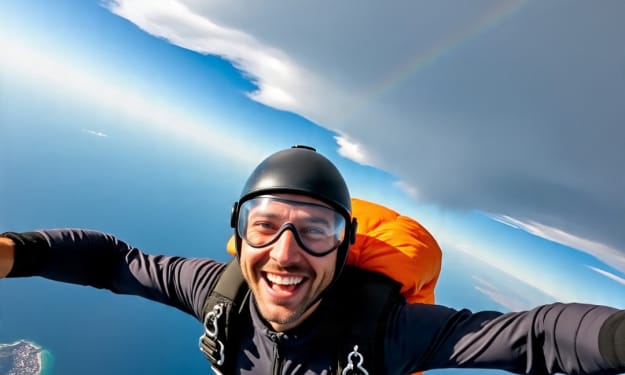
Soaring High: The Joy of Skydiving
Soaring High: The Joy of Skydiving An Uplifting Dive into the Freedom, Fun, and Facts of Life Above the Clouds --- The small propeller plane buzzed like a determined insect as it climbed steadily into the sky. Beneath it, the earth stretched out like a patchwork quilt—green fields, winding rivers, and tiny rooftops disappearing into haze. For Maya, pressed against the open doorway with wind whipping past her face, the world had never felt so vast… or so inviting. This was it. Her first skydive. Only a month ago, Maya had never imagined she’d be here. She wasn’t a thrill-seeker or an adrenaline junkie. She worked as a graphic designer, spent most weekends curled up with books and coffee, and thought roller coasters were risky enough. But something about skydiving had tugged at her lately—a desire to break free, to rise above life’s noise and look at everything from a new angle. So when her friend Carlos, an experienced jumper, invited her to try it, she surprised them both by saying yes. “Ready?” Carlos shouted, his voice nearly lost in the roar. Maya looked at him, then at the clouds outside, and nodded. They leapt. For the first few seconds, there was no fear, no thought—just sensation. The wind howled like a wild symphony in her ears. Her stomach flipped and danced. And then came something she hadn’t expected: clarity. Falling through the sky at 120 miles per hour, Maya felt more weightless than she ever had in water. Her limbs floated, the air pressed against her skin like a living thing. And as the earth rushed up toward her in slow, surreal motion, she laughed. Skydiving wasn’t just a plunge—it was a release. It wasn’t until the parachute deployed with a firm tug that time returned. The rapid freefall gave way to a gentle drift. Now she could see everything clearly: the sun warming the curve of the horizon, the clouds like floating cities, the distant roads and rivers mapping out her world far below. Carlos glided nearby, giving her a thumbs-up. She wanted to stay up here forever. Skydiving, she’d later learn, is much more than an adrenaline rush. The sport has deep roots, dating back to the 18th century when André-Jacques Garnerin, a French balloonist, made the first recorded parachute jump in 1797. Since then, it’s evolved into a worldwide phenomenon. Today, more than three million jumps happen every year globally, with people of all ages leaping for fun, therapy, or to overcome fear. And the skydivers themselves? They’re a unique tribe. In the community, newcomers are affectionately called “whuffos”—as in “Whuffo you jumping out of a perfectly good airplane?” But that light teasing hides a tight-knit group defined by trust, precision, and passion. Skydivers train relentlessly, often logging hundreds of jumps a year. They study meteorology, gear mechanics, body positioning—all to make each jump not just thrilling, but safe. Maya’s instructor, for instance, had over 2,000 jumps to his name. “Skydiving teaches you two things,” he’d said with a grin. “How to let go… and how to focus like your life depends on it.” After her first jump, Maya understood what he meant. She kept coming back. One jump turned into five, then ten. Each time, she learned more—how to arch her back in freefall, how to spot landing zones from 10,000 feet up, how to fold a parachute with the care of an origami artist. And each time, that same joy returned. There’s a meditative quality to falling, she realized. In the sky, there’s no phone ringing, no deadlines, no worries about bills or broken hearts. Just the wind, your breath, and the wide-open sky. Months later, Maya stood again at the plane door, now in her own jumpsuit, with her own gear. She was about to complete her fiftieth jump—a milestone for solo skydivers. Below her, the fields waited. Above her, endless blue. She smiled. Jumping out of a plane might seem like a crazy thing to do. But for Maya, and for countless others, it’s not about danger. It’s about freedom. It’s about learning to trust yourself, to surrender to the moment, and to soar. Because sometimes, to find your place in the world, you have to step outside it—and fall into the sky. --- Fun Fact Box Average speed during freefall: 120 mph Typical jump altitude: 10,000–14,000 feet Time in freefall: 45–60 seconds Safest record: Over 99.9% of tandem jumps occur without serious incident Oldest skydiver: Rut Linnéa Ingegärd Larsson, age 103 (as of 2022) So next time you look up and see a speck floating in the sky, remember—it might just be someone discovering their joy, one dive at a time.
By Muhammad Saad 8 months ago in The Swamp
SpaceX launches Crew-11 astronauts to the ISS for NASA on milestone Crew Dragon flight (video)
SpaceX launches NASA's Crew-11 astronauts to the International Space Station on a historic Crew Dragon flight. SpaceX successfully launched NASA's Crew-11 mission to the International Space Station (ISS), a significant accomplishment for commercial spaceflight and international cooperation. This mission is yet another milestone in the Commercial Crew Program, a partnership between NASA and SpaceX that has revolutionized American space access since its inception. On a SpaceX Falcon 9 rocket, the Crew-11 mission took off from Launch Complex 39A at NASA's Kennedy Space Center in Florida. The Crew Dragon spacecraft, which was given the name "Endurance" and had already completed multiple missions to the ISS, was perched atop the rocket. The reliability of SpaceX's reusable spacecraft and booster systems, which continue to set new standards for cost-effective space travel, was reaffirmed by the successful launch. There are four astronauts aboard this mission, three from NASA and one from an international partner agency. Commander Michael Barratt, a NASA astronaut with two previous space missions under his belt, is in charge of the mission. Pilot Jeanette Epps, who is making her first spaceflight following years of training and delays, and Mission Specialist Matthew Dominick, a member of NASA's 2017 astronaut class, will be traveling with him. Completing the international team is Koichi Wakata of Japan’s space agency, JAXA, a veteran astronaut with several ISS missions to his name.
By GLOBAL NEWS8 months ago in The Swamp
Construction on Trump’s $200 million White House ballroom to begin in September
President Donald Trump has unveiled an ambitious two hundred million dollar plan to build a lavish White House State Ballroom, with construction set to begin in September twenty twenty-five and finish before the end of his term in early twenty twenty-nine.
By GLOBAL NEWS8 months ago in The Swamp
Donald Trump Snubs India, Signs Oil Deal With Pak. What Does This Mean?
After announcing a 25 per cent 'reciprocal tariff' on his "friend" India, plus a penalty for buying Russian weapons and oil, Donald Trump said Thursday the US had struck a trade deal with Pakistan, including plans to develop its "massive" oil reserves.
By Kristen Orkoshneli8 months ago in The Swamp
Tsunami Evacuations Ordered in South America, but Worst Risk Passes for U.S. After Huge Quake
Early on Wednesday, a powerful earthquake with a magnitude of 8.8 struck off the Kamchatka Peninsula in Russia, triggering widespread tsunami warnings and mass evacuations across the Pacific Rim. Officials later determined that the greatest tsunami threat to the United States had passed, despite the frantic efforts of countries in South America to evacuate individuals. At a depth of 19 kilometers, the quake, one of the strongest in recent memory, occurred approximately 75 miles offshore from Petropavlovsk-Kamchatsky. The quake's shallowness made it particularly capable of moving large volumes of water. From Japan to Chile to Hawaii, tsunami warnings were quickly issued across the Pacific Basin. Response times to emergencies were quick in South America. Chile began evacuating vulnerable coastal areas after raising its tsunami alert level to the highest level. Authorities emphasized the danger of after-waves, reminding citizens that the first wave is rarely the most dangerous. Chilean officials coordinated with local governments to evacuate thousands from low-lying areas.
By GLOBAL NEWS8 months ago in The Swamp
Workplace Religious Expression
Lunch time! Makayla smiles, knowing she has been sitting at her desk all morning, buried in paperwork. She hides her crystals back into her desk drawer, then stands and walks to the small break room. The cravings of her prepared pita and hummus overwhelm her. As she opens the doors, she freezes. The sight of her colleagues standing in a tight circle, heads bowed and hands linked in prayer, strikes her. Her chest tightens. An awkward feeling washes over her. She hears John, her supervisor’s voice.
By Iris Harris8 months ago in The Swamp
The Endless Echo: What Corbyn and Sultana's New Party Reveals About the British Political Psyche
For many observers of British politics, just when the dust seemed to settle on one dramatic chapter, another quickly opens. The recent announcement of an alternative formation, a new left-wing political party led by Jeremy Corbyn and Zarah Sultana, feels less like a sudden rupture and more like the latest act in a long-running, complex drama. With its interim moniker "yourparty.uk" and a promise of grassroots determination for its final name and direction, this nascent movement, officially launched on 24 July 2025, has already garnered significant attention, prompting both fervent hope among its half-a-million initial sign-ups and strategic headaches for Labour. But beneath the surface of immediate headlines and internal party machinations, what deeper narratives and societal forces does this phenomenon truly illuminate?
By Abigail Goldwater8 months ago in The Swamp
Harford County Stands Up to Silicon Valley
In a move that should draw applause from parents across the political spectrum, Harford County Public Schools in Maryland is taking a courageous stand as one of six school districts selected for a bellwether trial in the Social Media Addiction Multidistrict Litigation (MDL No. 3047). At stake: the unchecked power of Big Tech and the steep price our children and schools are paying for Silicon Valley’s profit-driven addiction machines.
By Michael Phillips8 months ago in The Swamp